
Some of the best diving in the world starts with somebody yelling, “Divers, get ready!” from the back of a boat.
Boat diving opens up wrecks, reefs, walls, offshore sites, liveaboards, and places you simply cannot reach by walking in from shore. It also introduces a whole new set of procedures, equipment, terminology, and opportunities to look surprisingly awkward while wearing scuba gear.
The PADI Boat Diver Specialty is about learning how to function comfortably and safely on a dive boat, from setting up your gear and listening to the briefing to getting into the water, finding your way back, and climbing aboard when the dive is over.
Because the actual diving is usually the easy part. First, you have to survive the boat.
Who Should Take This Course?
Boat Diver is useful whether you are preparing for your first charter or you have already made a bunch of boat dives and want to understand the procedures better.
You must be at least 10 years old and certified as a PADI (Junior) Open Water Diver or hold an appropriate qualifying certification from another recognized training organization.
This is an especially good course if travel is part of your diving plans. Different boats handle divers very differently. A six-pack charter off North Carolina, a Caribbean day boat, a rigid inflatable, and a week-long liveaboard may all get you to a dive site, but the procedures onboard can be completely different.
Learning how to adapt is part of becoming a more capable traveling diver.
Not Every Dive Boat Works the Same Way
One of the first lessons in boat diving is that whatever you learned on the last boat may not be exactly how things work on the next one.
Some boats want you fully geared before approaching the entry point. Some have crew help with fins. Some use giant strides, some use back rolls, and some have platforms or ladders that make the whole process wonderfully civilized.
The same goes for getting back aboard. You might remove your fins at a ladder, hand up weights or cameras, climb out fully geared, or follow a procedure specific to that vessel.
The right answer is not, “This is how I always do it.”
The right answer is to understand the boat briefing, know the procedure for that vessel, and follow it.
What Will You Learn?
The PADI Boat Diver Specialty includes knowledge development and two open-water dives from a boat.
During the course, we will work on things such as:
- Common boat terminology and the basic layout of dive vessels.
- Understanding the captain and crew briefing before the dive.
- Locating emergency and safety equipment aboard the boat.
- Setting up, securing, and stowing scuba equipment properly.
- Preparing efficiently without turning the deck into a yard sale.
- Boat entry and exit procedures.
- Using descent, ascent, tag, trail, or current lines when appropriate.
- Navigating away from and back toward the boat.
- Maintaining buddy awareness around a busy entry or exit area.
- Surface signaling and procedures for getting the boat’s attention.
- Boat diving etiquette and how to avoid becoming the person everybody remembers for the wrong reason.
The goal is not to memorize one particular boat. It is to understand the principles well enough that when you climb aboard a different vessel somewhere else, you know what questions to ask and what you need to pay attention to.
The Boat Briefing Actually Matters
I know. Everyone is excited. The wreck is underneath us, the water looks great, and somebody is already halfway into their wetsuit.
Listen to the briefing anyway.
The crew is telling you how this particular boat operates. Where do you enter? How do you get back aboard? Is there a current line? What is the recall signal? Where are the oxygen and emergency equipment? What happens if you surface away from the boat? Where do cameras get handed up? Are there areas of the deck you need to stay clear of?
Those details can change from boat to boat and even from dive to dive.
Good boat divers pay attention before they splash because figuring out the procedure while hanging onto a ladder in three-foot seas is a lousy backup plan.
Entries and Exits Can Be the Adventure
Getting into the water from a boat can be wonderfully simple. It can also be the most physically awkward thirty seconds of your entire dive day.
We will talk about the common entry techniques and, more importantly, when each one makes sense. You will learn how to prepare before reaching the entry point so you are not standing there blocking everybody while trying to remember whether your mask is on your face.
Exits deserve just as much attention. By the end of a dive you may be tired, the boat may be moving, and you may be dealing with a ladder while carrying fifty or sixty pounds of equipment.
There is no style award. Use the procedure the crew gives you, take your time, and accept help when it makes sense.
Finding the Boat Again Is a Useful Skill
Descending directly from a boat does not guarantee that the boat will magically be above you when the dive is over.
Depending on the site, you may use an anchor line, mooring line, descent line, natural navigation, a compass, or a combination of techniques to leave the boat and find your way back.
Currents can make this considerably more interesting. A trail line or current line may be there specifically to give divers something to grab if they surface behind the vessel. On drift dives, returning to the original boat position may not be the plan at all.
Understanding the dive plan before you descend is the important part.
Surface Signaling Is Not Optional Thinking
If you surface away from the boat, you suddenly become a very small object in a very large body of water.
That is why a surface signaling device belongs in a boat diver’s kit. An inflatable signal tube or surface marker buoy can make you dramatically easier for the crew to spot, and an audible signaling device can provide another way to attract attention.
Depending on the dive and training plan, we may also work with lines or surface marker buoy procedures during the course.
The objective is simple: if the dive does not end exactly where everyone expected, you still have a plan for being found.
What Gear Will You Need?
You will need your normal scuba equipment appropriate for the dive site and conditions.
For boat diving, I also strongly recommend having a few things that become especially useful once shore is no longer twenty feet away:
- Surface marker buoy or inflatable signal tube
- Audible surface signaling device
- Dive computer
- Cutting tool
- Small spare-parts or save-a-dive kit
- Anything specifically required by the charter or dive operator
Organization matters too. Boat decks can get crowded quickly. Keeping your gear together, labeling equipment when appropriate, and carrying what you actually need makes life easier for you, your buddy, and everybody trying to move around you.
There is a time and place for spreading every piece of scuba equipment you own across six square feet of deck. That time and place is generally not a full dive boat.
How Does the Course Work?
The course includes PADI knowledge development and two open-water boat dives.
Before the dives, we will go over boat terminology, safety procedures, equipment organization, entries and exits, surface signaling, navigation considerations, and the specific procedures for the vessel we are using.
The two training dives can typically be completed during a single day of boat diving, although the actual schedule depends on the charter, location, weather, and logistics.
Boat diving has one particularly stubborn training variable: we need a boat. That is why I offer this specialty by request rather than pretending I can schedule it in a classroom on any random Saturday.
Where Do We Do the Dives?
Wherever we have the right boat and the right diving opportunity.
DWF lists Boat Diver as a by-request specialty because it is usually paired with an actual charter, boat-diving weekend, or suitable DWF dive trip.
That makes more sense to me than inventing two boat dives simply to satisfy a training schedule. If you are going to learn boat diving, we might as well go somewhere worth diving when we do it.
If you have a specific trip coming up and want the training beforehand or during the trip, reach out early. We can look at the location, operator, schedule, and whether the course fits.
Can This Count Toward Advanced Open Water?
Yes. The first dive of the PADI Boat Diver Specialty may be eligible to count as the Boat Adventure Dive toward Advanced Open Water Diver.
The credit can work the other direction too. If you have already completed a qualifying Boat Adventure Dive, it may count toward the first dive of the Boat Diver Specialty.
If you are working toward both certifications, tell me before we start so we can make sure everything is structured and documented properly.
Ready to Get on the Boat?
Boat Diver is currently offered by request and is often paired with a charter or DWF travel opportunity.
Ask Frank about Boat Diver and tell me a little about your certification level, boat-diving experience, and whether you already have a trip or charter in mind. We can figure out when and where the training makes sense.
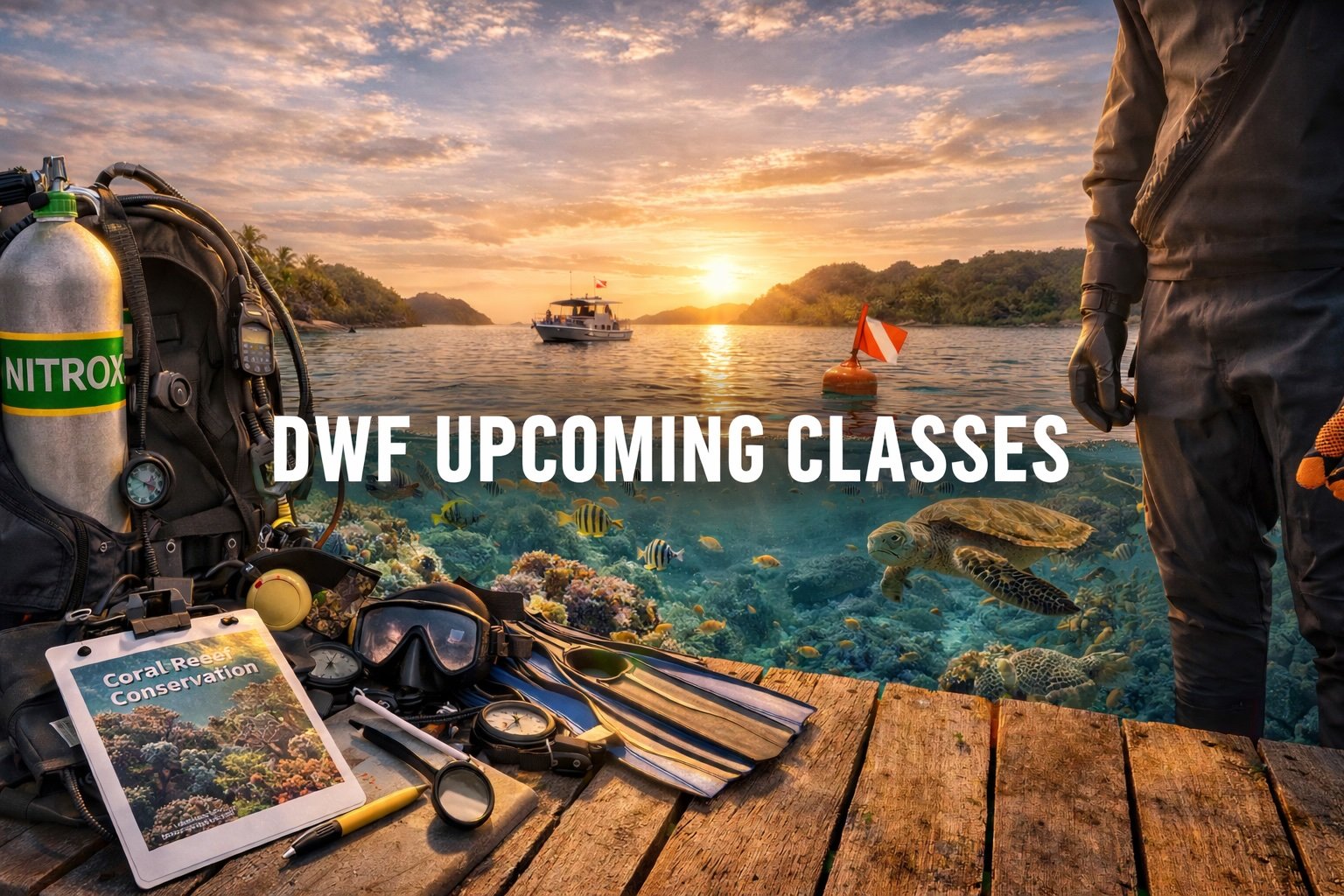
You can also browse all DWF specialty courses or take a look at upcoming DWF dive trips if you are looking for somewhere to put those boat-diving skills to work.