
Cold water is not a problem. Being miserable in cold water is a problem.
A dry suit can dramatically extend your diving season and open up places that would otherwise involve an awful lot of shivering. Around the Mid-Atlantic, that matters. A quarry can feel like summer at the surface and turn into a refrigerator once you drop through the thermocline.
The PADI Dry Suit Diver Specialty teaches you how to use a dry suit safely, manage the extra air inside it, adjust your weighting, control your buoyancy, and deal with the things that make dry suit diving different from diving wet.
Because shivering is overrated.
Who Should Take This Course?
If cold water has ever shortened a dive you otherwise wanted to continue, Dry Suit Diver is worth considering.
You must be at least 10 years old and certified as a PADI (Junior) Open Water Diver or hold a qualifying certification from another recognized training organization.
This is especially useful for divers who want to dive year-round, explore colder destinations, spend more time in Mid-Atlantic quarries, or simply stop pretending that being freezing cold is part of the adventure.
You do not need previous dry suit experience. That is what the class is for.
A Dry Suit Does More Than Keep You Dry
The name makes it sound simple. Put on suit. Stay dry. Problem solved.
Mostly.
A dry suit keeps the surrounding water away from your body. Your undergarments provide most of the actual insulation, which means the suit and the layers underneath it need to work together for the water temperature and type of diving you are doing.
The other big difference is air. Unlike a wetsuit, a dry suit contains a changing volume of gas. As you descend, that gas compresses. As you ascend, it expands. It can also move around inside the suit.
That means your weighting, trim, buoyancy, body position, and ascent control all feel a little different. The purpose of this class is to make those differences familiar before they surprise you.
What Will You Learn?
Dry suit training starts in confined water where you can get used to the suit without also dealing with depth, visibility, temperature, and everything else that comes with an open-water dive.
We will work on things such as:
- Choosing appropriate dry suit styles and undergarments.
- Putting on and removing a dry suit without abusing the seals or zipper.
- Connecting and using the dry suit inflator.
- Using the exhaust valve and managing expanding gas during ascent.
- Performing a proper buoyancy and weighting check.
- Managing suit squeeze during descent.
- Maintaining comfortable buoyancy and trim while diving dry.
- Recognizing and controlling gas moving inside the suit.
- Recovering if too much air migrates toward your feet.
- Handling common dry suit problems calmly.
- Basic dry suit care, maintenance, and storage.
The point is not simply to survive two dives while wearing a different exposure suit. I want you comfortable enough with it that the dry suit stops being the focus of the dive.
Buoyancy Gets Interesting Again
If you are already comfortable with buoyancy in a wetsuit, putting on a dry suit introduces a few new variables.
You have more exposure protection, usually more weight, and an additional air space wrapped around your body. The gas inside the suit can move toward your shoulders, legs, or feet depending on your position in the water.
None of that is particularly difficult once you understand what is happening. But it does deserve practice.
We will spend time getting your weighting reasonable, working on trim, and learning how changes in depth affect both your equipment and the gas inside the suit. You should finish the class controlling the suit instead of feeling like the suit is taking you for a ride.
Yes, We Practice the Feet-Up Thing
One of the classic dry suit concerns is gas migrating into the legs or boots and making a diver increasingly feet-up.
It sounds dramatic when somebody explains it on land. It becomes much less dramatic after you learn what causes it, practice the recovery, and discover that there is a procedure for dealing with it.
That is one of the reasons I like doing the confined-water portion before we head into open water. We can deliberately work through unusual positions and suit behavior in a controlled environment until the response makes sense.
I would much rather have you experience something for the first time because I asked you to than because your dry suit decided today was the day.
How Does the Course Work?
The course includes PADI knowledge development, a confined-water training session, and two open-water dry suit dives.
We use the confined-water session to get the suit fitted, work through weighting and buoyancy, practice the important skills, and give you time to become familiar with how the suit behaves.
Then we take those skills into open water for two dives. That is where everything starts coming together. You are no longer just practicing dry suit skills. You are actually diving while wearing a dry suit, which is the whole point.
The current DWF Dry Suit Diver course is structured over two days so we have enough time to do the confined-water work properly before heading into open water.
What Gear Will You Need?
Obviously, we are going to need a dry suit.
You can bring your own dry suit if you already have one, or use one of mine. Dry suit rental is included in the course price. You do not need to buy a suit just to take the class.
If you bring your own, we will make sure the suit, inflator connection, undergarments, and overall setup are appropriate for the training before we get in the water.
You will also need your normal personal scuba equipment, including your BCD, regulator, mask, fins, snorkel, computer, and the other equipment appropriate for the open-water dives.
Open-water tanks or fills, dive-site entry fees, and transportation are not included in the current course price. We will go over the complete equipment and logistics plan before the dives so there are no surprises when you get to the site.
Dry suit fit matters, and so do the undergarments underneath it. We will sort that out before training rather than discovering on dive day that you cannot bend your knees.
What About Weight?
Expect your weighting to change.
A dry suit and its undergarments generally create more buoyancy than the exposure protection you may already be used to. Exactly how much additional weight you need depends on the suit, undergarments, cylinder, equipment, water type, and you.
This is why we do an actual weight check instead of solving the problem with, “Eh, throw another ten pounds on there.”
Where that weight goes matters too. A diver can have the correct total amount of ballast and still fight terrible trim because all of it is concentrated in the wrong place. Part of learning to dive dry is figuring out a configuration that lets you remain balanced instead of spending the entire dive wrestling your feet.
Where Do We Dive?
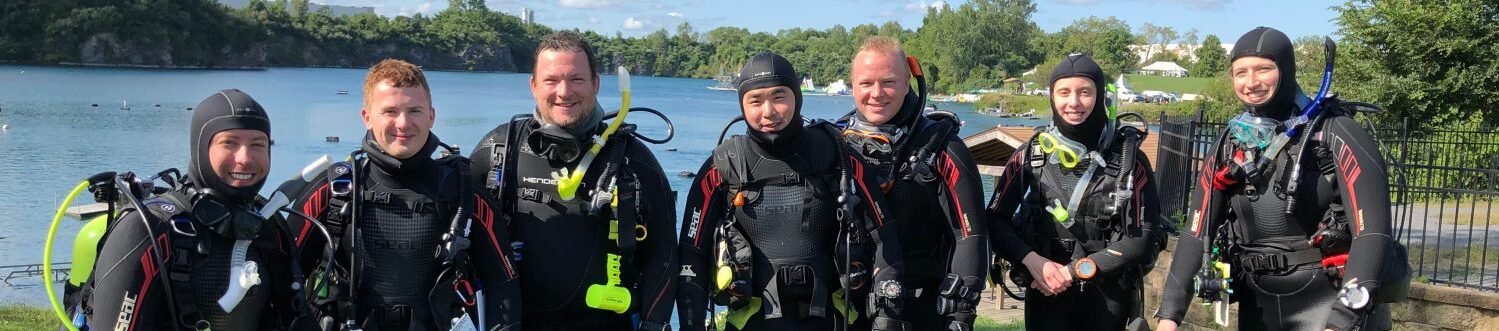
Dry Suit Diver uses both confined water and open water. The current DWF course is based around training in the Mid-Atlantic, with the open-water portion normally conducted at an appropriate quarry or similar training site.
That is actually one of the best environments for learning this skill. Water temperature can change dramatically with depth, which gives you an immediate demonstration of why good exposure protection matters.
Dates and exact locations can vary with the training schedule and open-water conditions, so check the current registration page for available offerings.
Why Learn to Dive Dry?
For me, the biggest benefit is not simply warmth. It is opportunity.
Cold water stops being an automatic reason not to dive. Your local season gets longer. Destinations that once sounded uncomfortably cold become realistic. Great Lakes wrecks, northern diving, cold-water quarries, and plenty of other environments suddenly become much more appealing.
And even during warmer months, deeper water can be surprisingly cold. Surface temperature does not get a vote once you descend through a thermocline.
A dry suit will not magically make every cold dive tropical. But being warm enough to enjoy the dive instead of counting the minutes until you can get out of the water is a pretty substantial upgrade.
Can This Count Toward Advanced Open Water?
In some circumstances, the first dive of the PADI Dry Suit Diver Specialty can also receive credit as an Adventure Dive toward Advanced Open Water Diver.
If you are considering both courses, tell me before we start. We can look at your training plan and make sure the dives are structured and documented appropriately instead of trying to sort it out afterward.
Ready to Stop Shivering?
The PADI Dry Suit Diver Specialty is an active DWF course with scheduled training and online registration.
Current pricing, available dates, course inclusions, and registration are available through the DWF booking page.
If you are not sure whether Dry Suit Diver makes sense for your diving, ask me. Tell me where you dive, where you want to dive, and what has been making you cold. We will figure out whether a dry suit is the right next step.
You can also browse all DWF specialty courses if you are still deciding what to learn next.