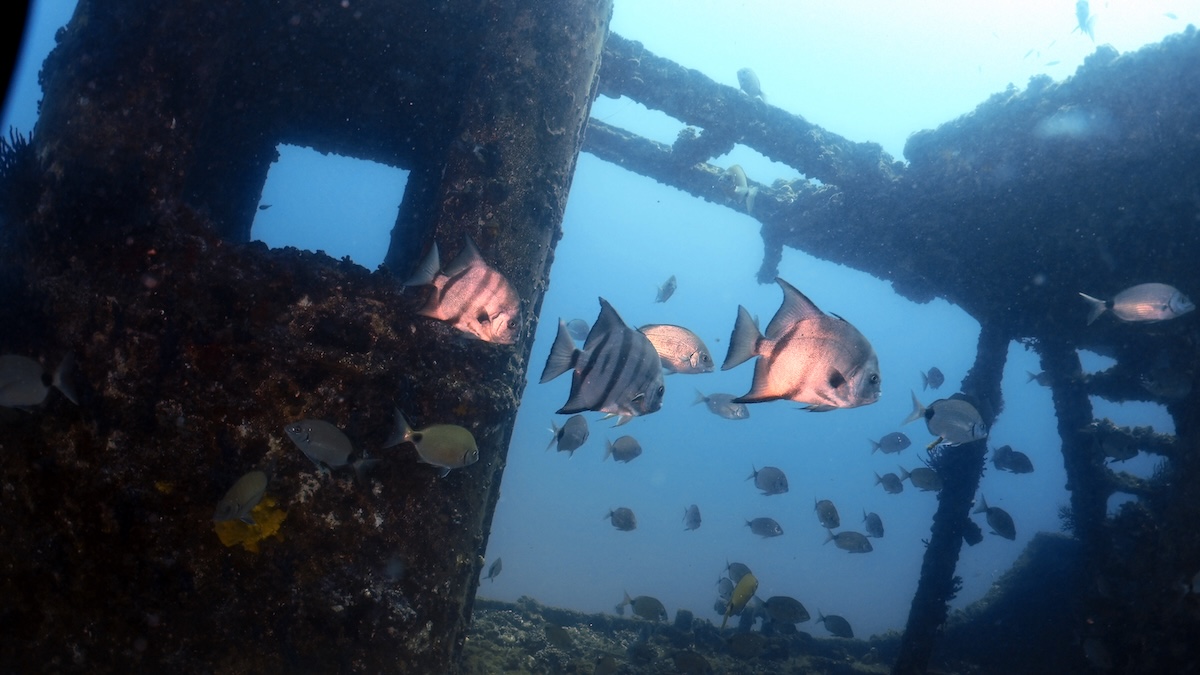
There is something different about dropping down onto a wreck.
Sometimes it is a ship that went down in a storm or an accident. Sometimes it was deliberately sunk to create an artificial reef. Either way, you are looking at a structure that has a history, attracts life, creates new hazards, and deserves a little more thought than simply swimming over and seeing what happens.
The PADI Wreck Diver Specialty is about learning to explore wrecks deliberately. You will learn how to evaluate a wreck, recognize hazards, improve your navigation around it, and use the tools and techniques that make wreck diving safer and a whole lot more interesting.
Because wrecks vary so much, I teach this course by request when the location, conditions, and training opportunity make sense.
Who Should Take This Course?
If wrecks are the dives that make you lean a little closer when somebody starts telling stories, this course is probably for you.
You must be at least 15 years old and hold a PADI Adventure Diver certification or a qualifying certification from another recognized training organization.
If you are working toward Advanced Open Water, your Wreck Adventure Dive may also be able to count toward the first dive of the Wreck Diver Specialty. If you have already completed one, let me know and we will verify your training record before we build the course.
You do not need to be an expert diver before you start, but solid buoyancy, awareness, and basic dive skills matter here. Wrecks have plenty of ways to punish sloppy diving.
Wreck Diving Is More Than Swimming Around Old Steel
A wreck changes the dive.
Sharp edges, fishing line, unstable structures, poor visibility, current, depth, silt, entanglement hazards, and overhead environments can all enter the picture. Even a wreck that looks simple from above can become surprisingly complicated once you are underwater.
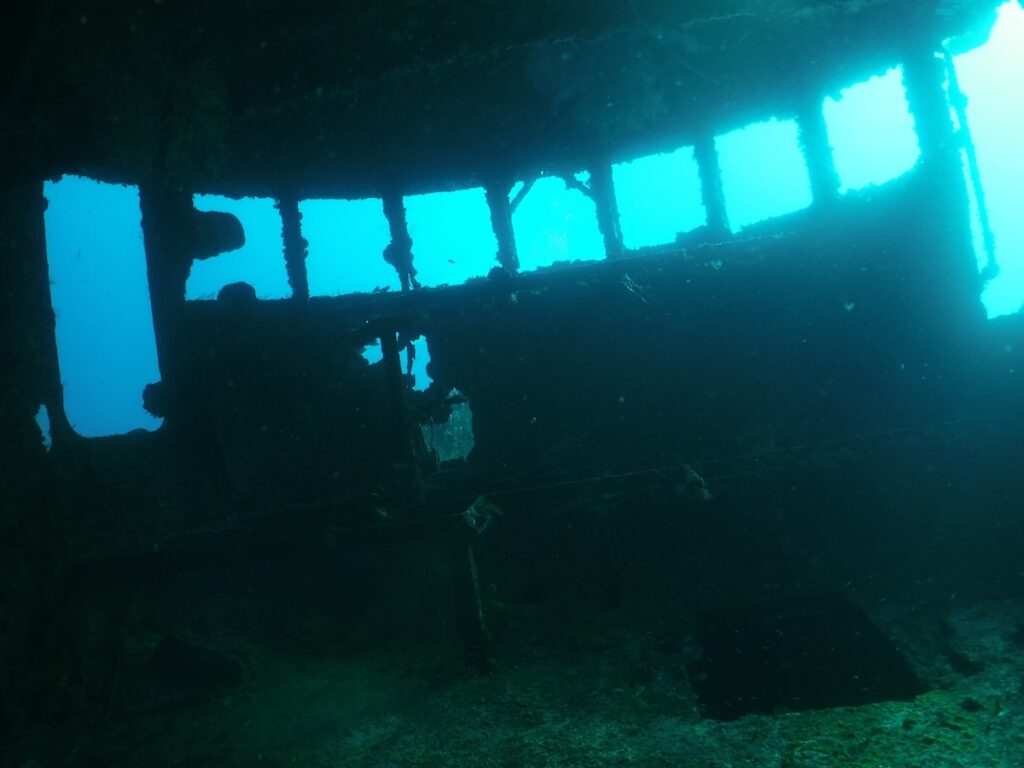
That is why I like this specialty. The real lesson is not just how to dive a wreck. It is how to look at one and start asking better questions before you commit yourself to the dive.
What Will You Learn?
The course includes four open-water training dives. We will build the skills progressively instead of treating every wreck like something you should immediately swim inside.
Depending on the wreck, conditions, and training site, we will work on:
- Researching a wreck and understanding what you are about to dive.
- Identifying hazards and planning a safe wreck dive.
- Surveying the wreck and learning its basic layout.
- Mapping important features, hazards, and points of reference.
- Navigation techniques for staying oriented around a wreck.
- Buoyancy and finning techniques that reduce contact and avoid stirring up silt.
- Using a wreck reel and maintaining a continuous guideline.
- Team communication and situational awareness around wreck structures.
- Responsible wreck diving that respects the site, its history, and the life that now calls it home.
Some wrecks and training situations may allow appropriate penetration exercises. Others will not. Getting a Wreck Diver card is not permission to swim blindly into every hole you find in a ship.
Knowing when not to go somewhere is part of becoming a better wreck diver too.
Why Lines and Reels Matter
A reel can look ridiculously simple until you try to deploy one underwater while maintaining buoyancy, watching your buddy, paying attention to the wreck, and avoiding the line you are putting into the water.
That is exactly why we practice with one.
You will learn how a guideline can help maintain orientation, how to deploy and manage a reel without creating an entanglement mess, and how line work fits into a larger wreck-diving plan.
The objective is not to turn you into a technical wreck penetration diver in four dives. It is to give you a solid recreational wreck-diving foundation and enough understanding to recognize where the boundaries of your training actually are.
Buoyancy Matters. A Lot.
Good buoyancy is useful everywhere. Around a wreck, it becomes considerably less optional.
Wrecks can have fragile surfaces, sharp edges, tight spaces, accumulated silt, and aquatic life growing on nearly every available inch. A diver who is bouncing off the bottom or bicycle-kicking through a silty area can turn a perfectly good dive into a brown cloud for everybody behind them.
We will work on positioning, propulsion, and control throughout the course. You should be able to move around a wreck without using the wreck to control yourself.
If your buoyancy needs some work first, that is not a failure. It just means we found the skill that deserves attention before we add more task loading.
How Does the Course Work?
Knowledge development is handled ahead of the dives through PADI eLearning. Before we get in the water, we will review the wreck, the dive plan, hazards, equipment, line procedures, and exactly what we are trying to accomplish.
The specialty requires four open-water wreck dives. Those dives are normally completed over at least two days.
If you have already completed a qualifying Wreck Adventure Dive as part of Advanced Open Water, it may count as your first specialty dive. In that case, the remaining three dives can often be completed during one additional day of diving when the site, conditions, and logistics cooperate.
Wreck diving is especially dependent on location and conditions, so I do not force this class onto a calendar just because a particular Saturday happens to be open. We need the right place to do the training properly.
What Gear Will You Need?
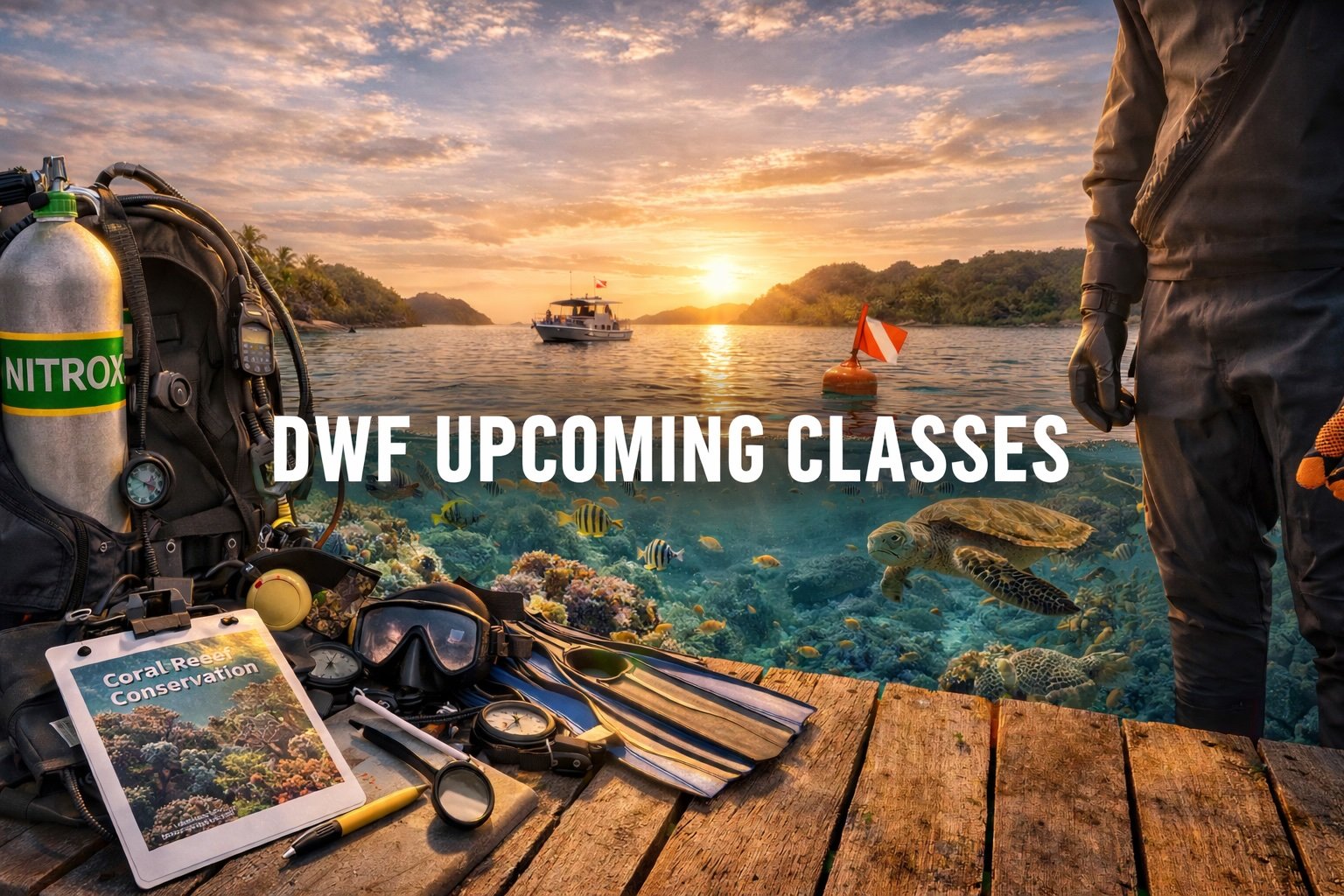
You will need standard scuba equipment appropriate for the dive site and conditions, plus some wreck-specific tools.
Depending on the training location, that will typically include:
- Dive computer
- Underwater compass
- Wreck reel and line
- Dive light
- Slate or other means of recording your wreck survey
- Cutting tool
Additional equipment may be appropriate depending on where we are diving. We will go over the exact gear list before the course so you know what you need and why you need it.
Where Do We Do the Dives?
That depends on the opportunity.
Wreck Diver is one of the specialties I teach by request because the training should happen somewhere that gives us a useful wreck to work with. That may mean a regional open-water training site or an appropriate offshore wreck-diving opportunity.
I have also incorporated Wreck Diver training into DWF dive trips when the sites and trip plan make sense. Real wrecks make pretty good classrooms.
If you are interested in the specialty, reach out. We can look at upcoming diving and figure out where the training fits instead of inventing four mediocre dives just to put dates on a calendar.
Is Wreck Diver the Right Next Step?
If you want to explore wrecks with a better understanding of what you are looking at, what can hurt you, and how to plan the dive instead of simply following somebody else around, yes.
This is also a good specialty for divers who want to improve situational awareness. Wrecks give you plenty to think about at once: depth, gas, navigation, structure, your buddy, hazards, current, visibility, and the dive plan. Managing all of that calmly is part of the lesson.
If you are mainly interested in getting inside wrecks and pushing farther into overhead environments, talk to me about that goal first. Recreational Wreck Diver training is a foundation, not the end of the wreck-training road.
Ready to Get Wrecked?
Wreck Diver is currently offered by request, so there is not a generic booking button for this one yet.
Ask Frank about Wreck Diver and tell me a little about your certification level, experience, and what kind of wreck diving you want to do. We will figure out whether this is the right next class and where we can do it properly.
You can also browse all DWF specialty courses if you are still figuring out what you want to learn next.