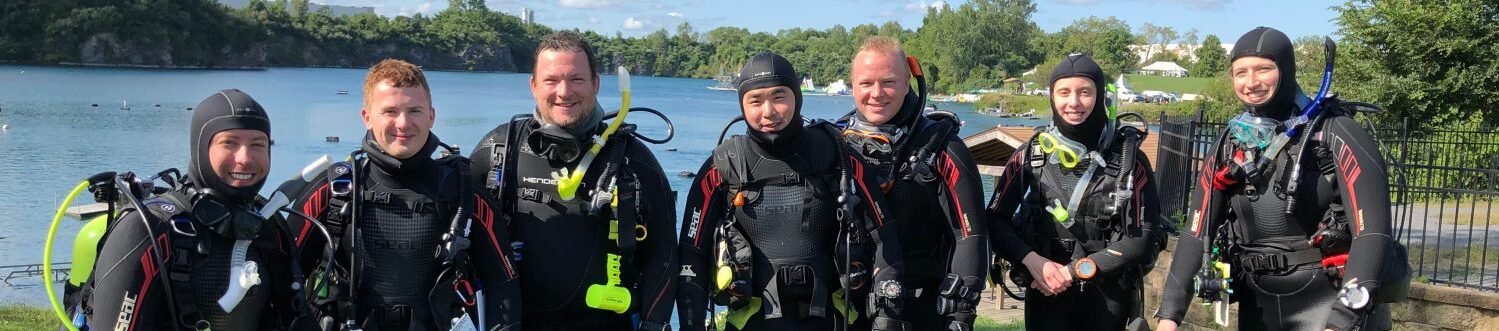
If you’re already certified, first of all: welcome back.
Already know what you’re looking for? Dive trips or upcoming classes are here.
This is the part nobody really explains. You’ve got a card. You’ve got the basics. Now you’re staring at a big ocean of options and wondering what the “right” next step is.
Here’s the truth. There isn’t one.
Diving doesn’t reward speed. It rewards time.
Time in the water. Time building comfort. Time learning how your brain behaves when it gets task-loaded. Time turning skills into something you don’t have to think about.
And if you’re feeling a little rusty or unsure, that’s normal. Most divers do not come out of certification feeling like a superhero. They come out with a foundation. Everything good happens after that.
I’ll also admit something. I’m a little envious of newer divers.
Not in a bad way. In the best way.
I’ve been lucky enough to see a lot underwater. And the more I’ve seen, the bigger it all feels. There’s always more to learn. It’s a big world.
New divers have so many firsts ahead of them. First dives that feel effortless. First wreck. First turtle. First moment where the noise in your head goes quiet and you realize you’re actually doing it.
I get to watch that happen, and I never get tired of it.
So let’s start here. What do you want to do?
Certification Is a Beginning
Sometimes when a diver gets certified, I ask them to think back to the day they got their driver’s license.
That card didn’t mean they were ready to drive in the Indy 500.
It meant they had met the minimum requirements to be trusted on the road.
Scuba certification works the same way.
It means you’ve learned the basics, demonstrated essential skills, and earned the ability to dive independently within your limits.
Everything beyond that comes from time, judgment, and experience.
Diving Is a Practice, Not a Ladder
There isn’t a ladder you’re supposed to climb or a sequence you’re expected to follow. There’s no universal timeline and no finish line you’re racing toward.
Some divers log dozens of dives before taking another class. Others take a class early because they want structure or clarity. Neither path is better by default.
What matters is how present you are underwater and how intentionally you build comfort and judgment.
Practice is what turns skills into habits. It’s what quiets task loading. It’s what makes buoyancy, awareness, and decision-making feel natural instead of forced.
That kind of progress doesn’t show up on a certification card. It shows up in how relaxed you feel, how much you notice, and how calmly you respond when something feels off.
This is why I’m far more interested in how often you dive and how you feel underwater than how many cards you’ve collected.
Experience Comes First
For a lot of certified divers, the most helpful next step is simple.
Get in the water more.
Not to chase depth or difficulty. Not to prove anything. Just to dive.
Regular time in the water builds familiarity. Familiarity builds comfort. Comfort creates the space where good judgment and awareness start to show up naturally.
Sometimes divers feel pressure to do something next. Another class. New gear. Another certification card. Those things can be useful, but they are not substitutes for experience.
I’ve seen plenty of divers try to buy confidence instead of building it. That’s understandable, but it’s not something I want to take advantage of.
If what you really need is more dives, I’ll say that. Even if it means not signing you up for anything.
Diving more often is how everything starts to click.
How I Think About Classes
I almost never tell a certified diver, “You should take this class next.”
Instead, I start with a conversation.
What do you want to do? What do you want to see? What kind of diving actually excites you?
Classes are most useful when they support a goal or help make sense of experiences you’re already having underwater. They provide a cognitive framework. They give context, language, and structure so experience has something to attach to.
But taking a lot of classes by itself does not automatically make someone a great diver.
Experience is what builds awareness and judgment. Classes help organize that experience so it sticks.
When a class makes sense, I’ll recommend it. When it doesn’t, I won’t. The goal is never to collect certifications. The goal is to help you become a calmer, more capable diver in the kind of water you actually want to dive.
Trips and Other Ways to Dive
Classes are not the only way to keep growing as a diver.
Some of the most meaningful learning happens during regular dives, especially when those dives are intentional and supported.
I run small, curated dive trips to places I know well. These are trips I would want to be on myself. I’m there with you, diving alongside you, helping you think through conditions, decisions, and small details that often get missed.
There’s no syllabus and no pressure. Just good dives, good conversations, and time to settle in.
Closer to home, that might look like fun dives, mentored dives, or relaxed pool sessions focused on comfort and refinement rather than checklists.
These kinds of dives give you space to notice more, ask questions, and build confidence without feeling like you’re being evaluated.
For many divers, this is where everything starts to feel easier.
Let’s Figure Out What Makes Sense
You don’t need to have a plan mapped out to keep diving.
You don’t need to know what your “next level” is supposed to be. And you don’t need to commit to anything just to ask a question.
If you want to talk through goals, concerns, or possibilities, I’m happy to do that. We can look at where you are, what kind of diving you enjoy, and what might actually help you feel more comfortable and capable in the water.
Sometimes that leads to a class. Sometimes it leads to a trip. Sometimes it leads to nothing more than a suggestion to go dive a bit more and see how it feels.
All of those are valid outcomes.
If this approach resonates, reach out. We’ll take it one step at a time.