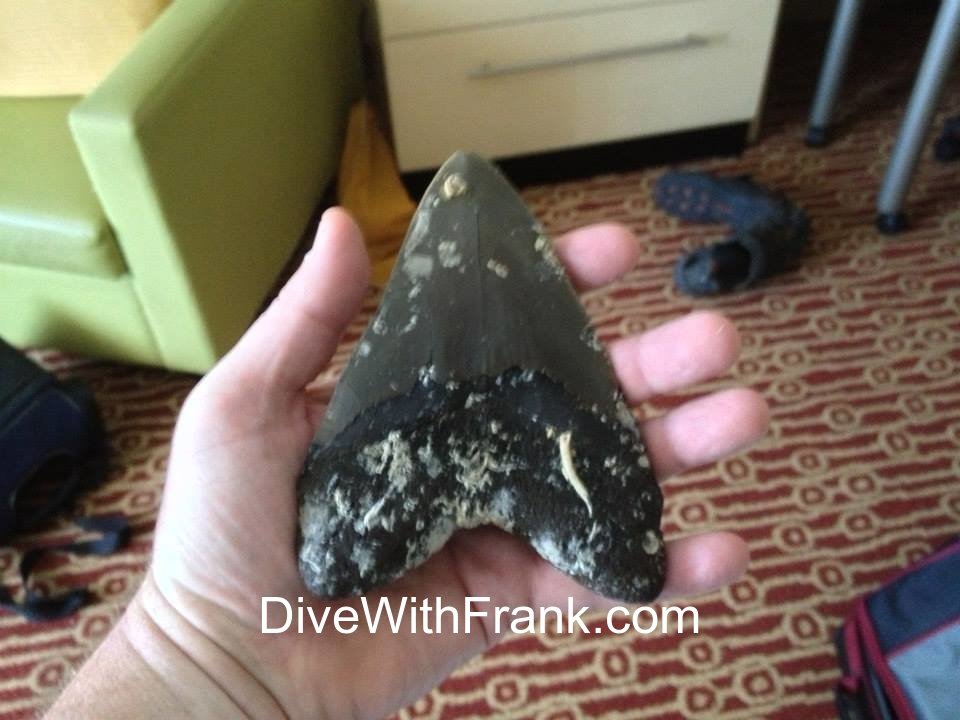
Earn your fins. Find prehistoric teeth. Bring home real history.
Ever seen a Megalodon tooth sitting on someone’s shelf and thought, “Yeah… I want one of those”?
Not from a gift shop. Not from a display case. From the ocean floor, earned one careful kick at a time.
The Megalodon Tooth Fossil Diver distinctive specialty is about learning how to safely, responsibly, and methodically hunt for prehistoric shark teeth underwater. These are real fossils from an extinct shark the size of a bus, found on offshore ledges and sand channels where patience, buoyancy, and situational awareness matter.
This is not sightseeing. This is diving with purpose.
Who should take this course?
This course is built for divers who are already Advanced Open Water certified (or equivalent) and want to do more than just swim loops around a wreck.
If you like dives that require focus, planning, and a little grit, you’re in the right place. If you’ve seen the trophies your buddies bring back from their shark tooth hunting trips down to North Carolina and thought, “Okay… my turn”, this is your specialty.
The prerequisite for this specialty is Advanced Open Water (or equivalent). Enriched Air Nitrox is not a course prerequisite, but it is required by the dive operator for the North Carolina Meg Tooth dives. With working depths around 95 feet, it’s not just a rule, it’s a smart call.
What will you learn?
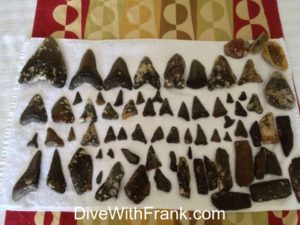
This specialty starts with the animal itself. You’ll learn about the Megalodon shark, where it lived, how it hunted, and how its teeth ended up buried offshore along the Carolina coast. And yes, why you don’t need to worry. They’re very, very extinct.
- The known history of the Megalodon shark and its fossils
- How and where Meg teeth are found offshore
- Skills and equipment needed to safely explore for fossils underwater
- A systematic, methodical approach to finding teeth without destroying visibility or buoyancy
- How to recover, clean, and care for fossils the right way
The goal is simple. You leave with better buoyancy, better awareness, and a repeatable process that works when conditions are real and the bottom is not cooperating.
This specialty can credit toward your Master Scuba Diver rating, the black belt of recreational diving.
How is this course taught?
This specialty is typically offered as an optional add-on during my North Carolina Meg Tooth trips and is not included as part of the trip itself.
The academic portion may be completed ahead of time, but most often we handle it the night before our first Meg Tooth dive. We’ll cover the shark, the fossils, search techniques, hazards, and the plan for the weekend.
The open water dives are completed on location while we’re actively hunting fossils offshore.
Because these dives are conducted offshore in the 90 to 105 foot range, Nitrox is required by the charter operator for participation on the Meg Tooth dives, whether or not you are taking the specialty.
What scuba gear will you use?
You’ll need a dive computer along with the rest of your basic scuba equipment.
For Meg tooth hunting dives, you should also have:
- Mesh goodie bag
- Dive slate
- Wreck reel
- Cutting tool
- SMB or safety sausage
If you’re missing something, reach out early. We can fix most of it. We just can’t fix it at the dock.
How long will it take?
The course includes one academic session and requires two open water Megalodon Tooth Fossil dives. Typically, the academic portion is completed just before a Meg Tooth trip, and the dives are finished offshore in North Carolina.
Want to sign up?
The Megalodon Tooth Fossil Diver specialty is available as an optional add-on on my North Carolina Meg Tooth trips. Come on one of these trips and, if you choose, you can earn the Megalodon Tooth Fossil Diver specialty while you’re there.
July 2026 North Carolina Meg Tooth Trip
August 2026 North Carolina Meg Tooth Trip
Have questions about readiness, prerequisites, Nitrox, or whether this specialty is a good fit? Contact Dive With Frank and we’ll sort it out.
Let’s do some diving.
— Frank