
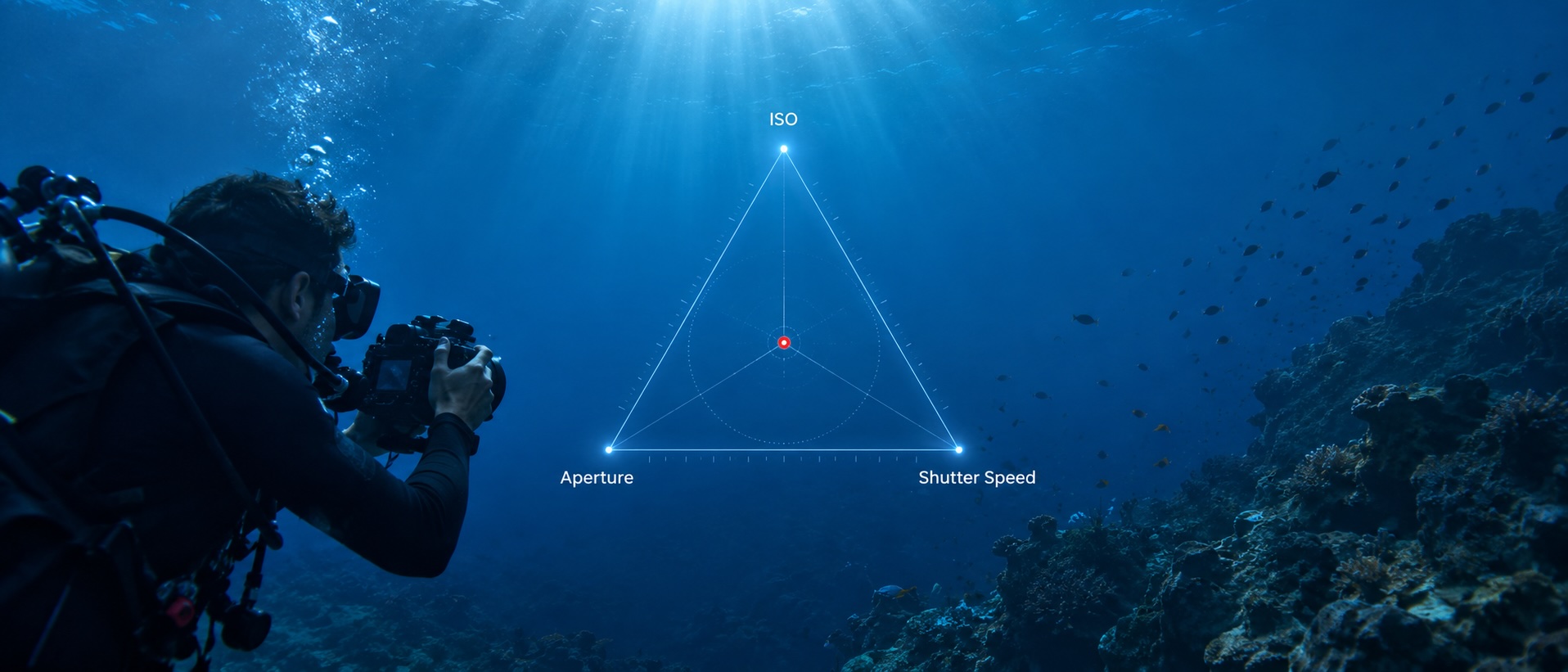
The DWF Labs Exposure Triangle Sandbox is a free interactive teaching tool built to help divers and beginning underwater photographers understand how aperture, shutter speed, ISO, white balance, and underwater light work together. Start with one of the included sample photos, drag the exposure point inside the triangle, and watch the image, histogram, and camera settings respond in real time.
This is a learning sandbox, not a camera manual. Its job is to help you see the big ideas more clearly, especially the difference between ambient light and strobe light underwater, and how small setting changes can dramatically affect the look of your image.
The Exposure Triangle Sandbox is a dense interactive teaching tool with live controls, image preview, histogram feedback, and moving exposure points. It works best on a tablet, laptop, or desktop. Phones can load it, but your thumbs may start filing complaints.
What You’ll Learn
This sandbox gives you a visual way to explore the exposure triangle underwater. Instead of reading about settings in the abstract, you can move the exposure point and immediately see how the image responds.
- How aperture, shutter speed, and ISO work together.
- How shutter speed can change the look of the background water.
- Why underwater photos often involve both ambient light and strobe light.
- How white balance can shift color without actually adding light.
- How to use a histogram and before/after view to compare changes.
Good to Know
The simulator is designed for teaching, experimenting, and building intuition. It is not trying to perfectly duplicate a specific camera, lens, strobe, housing, or dive site. Real underwater photography still depends on depth, visibility, distance, water color, subject reflectivity, strobe placement, and the gear in your hands.
Use it as a safe place to play. Move things too far. Make the photo weird. Break the exposure on purpose. That is often the fastest way to understand what your camera settings are doing before you try to make those decisions underwater.