
Scuba Weight Estimator
Estimate a practical starting weight for an in-water buoyancy check, then verify it with your actual gear.
This calculator provides an educational starting estimate only. It does not replace scuba training, professional supervision, agency standards, local dive procedures, good judgment, or an in-water buoyancy check with your actual gear.
Profile & Gear
This does not change the calculated weight.
As you relax and breathe more normally, your checked weight may change. Use the buoyancy check and personal calibration to refine your real number.
Tank selection adjusts both gas swing and near-empty cylinder buoyancy.
Enter buoyancy characteristics from the tank manufacturer. Negative numbers mean the cylinder is heavy/negative in the water.
Estimated Starting Weight
For your surface buoyancy check
If a real dive with this exact setup proved your weighting, enter the actual weight worn.
What's New
Latest updates for the Scuba Weight Estimator.
- Added the standard DWF Labs header and logo so the calculator is clearly identified on the page.
- Expanded the cylinder dropdown with common Faber and PST/Worthington-style steel tanks.
- Added a Custom tank option for divers who know their cylinder full and near-empty buoyancy specs.
- Added an Estimated End-of-Dive Check readout under the main starting-weight estimate.
- Improved tank estimates by accounting for gas swing and near-empty cylinder buoyancy separately.
- Kept display settings and personal calibration saved locally in your browser.
- Polished the calculator so normal inputs stay smooth and predictable.
Display Settings
Choose a comfortable view. Your choice is saved in this browser.
Theme
Text Size
Motion and Decoration
Estimate Here. Verify There.
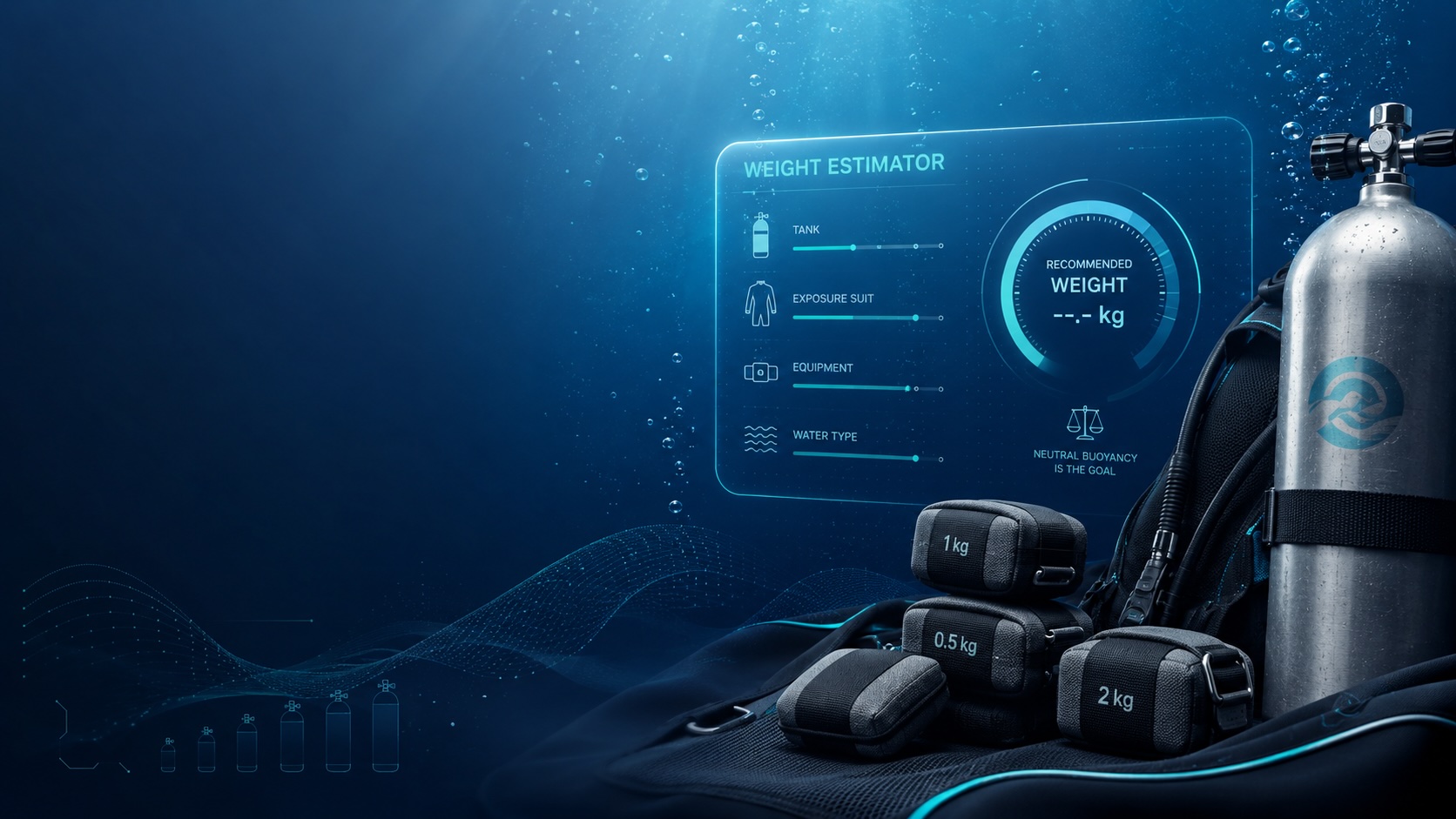
The DWF Weight Estimator is a free DWF Labs tool designed to help scuba divers find a smarter estimated starting weight before doing a real in-water buoyancy check.
It is not a magic number machine. It is not scuba instruction. It does not replace training, supervision, good judgment, or an actual buoyancy check with your real gear in the water.
What it does do is help you think through the major factors that affect weighting, including body weight, body build, water type, exposure protection, cylinder choice, neoprene accessories, gear weight, and personal calibration.
Why This Tool Exists
A lot of divers add extra lead because they want to make sure they can get down. That sounds harmless, but overweighting can make the entire dive harder. It can affect trim, gas use, comfort, descents, ascents, safety stops, and overall buoyancy control.
Even worse, a bad weighting guess can follow you through every dive on a trip. One skipped weight check at the start of a weekend, liveaboard, or dive vacation can turn into dive after dive of fighting your gear instead of enjoying the water.
The goal is not just to sink. The goal is to dive well.
What The Estimate Includes
The DWF Weight Estimator looks at your basic profile and gear setup, then breaks the estimate down by major factors such as exposure suit baseline, neoprene accessories, salt or fresh water adjustment, tank gas allowance, cylinder offset, gear and hardware offset, body composition offset, and personal calibration.
The tool also includes an experience and comfort slider, but that slider does not secretly add lead to the math. Instead, it gives guidance about how breathing, tension, fin movement, and comfort can affect what a diver observes during a buoyancy check.
Personal Calibration
One of the most useful features is personal calibration. After you confirm a real-world weighting setup in the water, you can save a correction locally in your browser. That lets the estimator become more useful for your actual body, gear, and diving patterns over time.
No diver data is stored in a Dive With Frank database. The calibration is saved locally in your browser.
The Number Is Only The Beginning
Your weight estimate is not the final answer. Your buddy’s number is not your number. Your old number may not be your current number. Your quarry number may not be your ocean number. Your 7mm number is definitely not your 3mm tropical vacation number.
Use the estimate as a smarter starting point, then verify it in the water with your actual gear.
Estimate here. Verify there.