🦈 Shark Tooth Fever

Shark Tooth Fever: Megalodon Fossil Diving and the Strange Psychology of Deep Treasure Hunting
A couple of years after moving to the East Coast, I finally joined a group of dive friends from Southern California for my first real Megalodon tooth diving trip out of Wilmington, North Carolina.
I already had plenty of diving experience at that point. California kelp forests. Cold water. Deep dives. Boat dives. I figured I knew what I was getting into. I did not.
This was a full week of diving. Wrecks. Fossil ledges. Deep dives. Long boat rides. Nitrox fills. Gear everywhere. Equal parts treasure hunting expedition and floating scuba circus. And the Megalodon tooth dives had a reputation. They were apparently so physically and mentally demanding that even the charter operators generally avoided scheduling them back-to-back-to-back. They would break the week up with wreck dives in between.
At the time, I remember thinking:
How hard can digging around for shark teeth really be?
Then I did my first one. And then another. By the second or third day of Meg diving on that trip, I was already starting to understand why people became obsessed with this stuff.
About halfway through one of those dives, I was kneeling in ancient shell rubble around 95 feet underwater when I saw something dark sticking out from beneath the sediment. Black. Triangular. Big.
I started digging around it carefully with both hands, trying not to lose it in the silt cloud I had already kicked up around myself. The visibility was mediocre at best, and every careless movement threatened to completely bury the thing again. Then suddenly it came free. I held it up underwater and immediately yelled:
WOO-HOO!
Now, yelling through a regulator mostly sounds like an angry dolphin having a nervous breakdown, but the excitement was very real. It was one of the biggest Megalodon teeth I had ever seen in person. And somewhere around that moment, I caught shark tooth fever.
Megalodon tooth diving is incredibly fun. It is also physically demanding, occasionally frustrating, weirdly addictive, and absolutely capable of distracting divers enough to get them into trouble if they stop paying attention. Which is probably why so many of us love it.
Eventually, most of my California dive buddies moved on to other kinds of trips and adventures. But Wilmington was still sitting there only about six hours away. And by then, Megalodon tooth diving had already gotten its hooks into me. I kept going back. Trip after trip. Wreck dives. Fossil ledges. More miles offshore. More time digging through ancient sediment looking for pieces of a lost world. At some point, I realized I didn’t just want to join these trips anymore. I wanted to lead them myself. And eventually, I did.
Wait… People Actually Dive for Megalodon Teeth?

Yep. And it is one of the coolest, strangest, and most addictive forms of scuba diving I’ve ever experienced. Most of my Meg dives have been off Wilmington, NC, where boats run more than 40 miles offshore to fossil ledges sitting roughly 80 to 100 feet deep.
These are not lazy tropical sightseeing dives. These are advanced dives. Nitrox dives. Pay-attention-to-your-gas-and-your-no-decompression-limits dives.
Divers spread out along the fossil ledges searching through shell hash, sediment, ancient debris, and fossil rubble by hand. Sometimes visibility is beautiful. Sometimes it feels like hunting treasure inside a snow globe somebody just shook violently. And somewhere down there, buried beneath millions of years of sediment, are the fossilized teeth of a prehistoric apex predator that once hunted whales.
The Deep Time Miracle: How Prehistoric Shark Teeth Fossilize
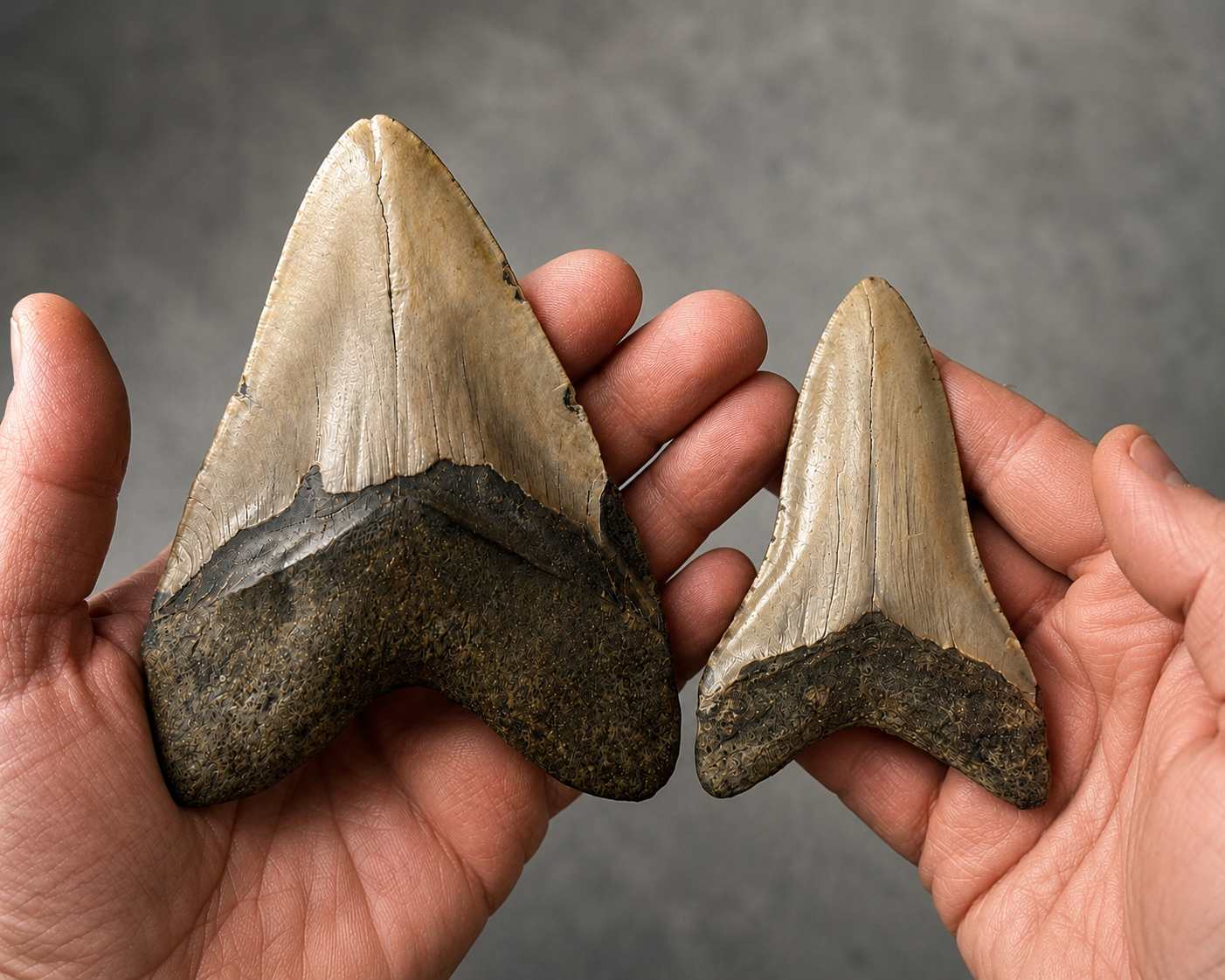
One of the things I teach during my Megalodon Tooth Fossil Diver specialty course is that finding these teeth at all is kind of miraculous when you think about it. Megalodon sharks lived all over the oceans millions of years ago. Like modern sharks, they constantly lost and replaced teeth throughout their lives. But losing a tooth is not enough for fossilization to happen.
For that tooth to survive until today, a whole chain of unlikely things had to occur. First, the tooth needed to land somewhere it could quickly be buried and protected from oxygen exposure. Left exposed long enough, nature would eventually destroy it. Then the chemistry of the surrounding sediment had to cooperate. Over immense periods of time, minerals from the environment slowly replaced the original material within the tooth itself. That process is what created the fossil.
So when divers recover a Meg tooth from the bottom, they are not just finding an old shark tooth. They are touching deep time. The odds of that tooth surviving long enough for a modern diver to recover it are almost absurdly small. They are holding a surviving piece of a creature that vanished millions of years before human beings ever existed. That realization hits differently underwater.
Shark Tooth Fever: Task Fixation and Decompression Limits at 90 Feet
Divers joke about shark tooth fever, but after enough dives, I think it deserves a little more respect than it gets. Because it sneaks up on you. At first you are calm and methodical. Then somebody nearby finds a decent tooth. Then maybe you find a small one. Then a fragment. Then suddenly your brain starts whispering:
The big one is down here somewhere.
And because these are relatively deep dives with limited bottom times, pressure starts building. You look at your computer. You’ve got a few minutes left. Maybe enough time for one more pass. One more scoop. One more pile of rubble.
The only time in 16 years of diving that I have ever unintentionally crossed into decompression was on a Meg tooth dive. I was paying attention to my computer. I knew where I was on time. I had already started heading back toward the ascent line when another diver had a problem. I stopped to help because that’s what you do. Then I looked back down at my computer. Hard zero. No-decompression time gone.
I immediately began ascending, and somewhere around 15 or 20 feet shallower, numbers finally started reappearing on the screen. I completed the emergency decompression stop my computer called for and ended the dive safely. Later that evening, though, my skin became itchy. Not severe. Not an emergency. But enough to get my attention. Because mild skin irritation after diving can absolutely be a symptom of decompression sickness.
That shook me up a little. It still does. Because shark tooth fever is real, and it only takes a little task fixation underwater for a safe dive to start drifting toward an unsafe one.
The Ocean Does Not Care About Your Ego: Managing Gas Supply Problems
Another dive taught me a completely different lesson. I once brought a diver on a Meg trip who spent an impressive amount of time talking about how hardcore he was. Former Navy diver. Tough guy. Tons of experience. Every conversation somehow circled back to how much of a badass he was underwater. Meanwhile, we were diving around 95 feet on Nitrox. These are real dives. Real air management. Real consequences for mistakes.
At one point underwater, I looked over and saw two divers maybe a hundred feet away from me. One turned to the other and gave the out-of-air signal. The other diver looked confused for a second and signaled back:
Out of air?
Yes. Out of air. They immediately began sharing air, and I ended my dive and headed over. I dive those trips with a steel 133, so my thought process was simple:
The best possible place for me to be during this ascent was donating gas.
We switched him over to my regulator and I brought him up slowly and safely. Everything ended fine. Back on the boat, I wasn’t angry. I just told him:
I need you to replay this dive in your head and figure out exactly how this happened. Then make sure it never happens again.
Because at 95 feet, little mistakes can become very big problems very quickly. The ocean does not care about your ego.
The Ethical Boundaries of Offshore Fossil Diving
Meg tooth diving occupies a weird little ethical gray area. Divers are usually taught:
Take only pictures. Leave only bubbles.
We generally do not want people stripping wrecks, damaging reefs, or hauling artifacts out of the ocean for profit. Meg dives feel different. Most of these fossils are loose within sediment fields or fossil ledges. Divers are not prying artifacts off shipwrecks or smashing living reef systems apart. But there is absolutely still a line.
I have seen divers use DPVs almost like underwater leaf blowers by flipping them backward and blasting sediment off the bottom with prop wash. Personally, I hate that. For me, the joy has always been in the hunt itself. The patience. The surprise. The sudden realization that your hand just brushed against something millions of years old. Not turning the ocean floor into a mining operation.
I rarely sell teeth. Most of mine eventually end up in the hands of kids, curious students, or adults who physically can’t dive anymore. Healthy adults asking me for a Meg tooth usually get the same answer:
Learn to scuba dive.
Come with me.
Let’s go find your own.
Comparing North Carolina Ledges with Venice Florida Shark Tooth Diving
I’ve also gone shark tooth diving off Venice, Florida. Wilmington feels intense. Venice felt almost meditative. Thirty-foot dives. Ninety-minute bottom times on a single AL80. Some operators running three dives a day. Hours spent slowly searching the bottom.
I came up with over a hundred smaller teeth down there along with some fascinating prehistoric horse teeth. The giant Megs were much rarer. But somehow the obsession felt different too. Wilmington feels like treasure hunting under pressure. Venice felt more like wandering through a fossil field and seeing what history decided to hand you that day. Both were incredible. But Wilmington is where I learned what shark tooth fever really means.
Because every once in a while, buried beneath ancient sediment at the bottom of the Atlantic, you find something impossible. Something millions of years old. Something from a creature so massive and powerful that human beings still make documentaries, movies, and nightmares about it today. And for one brief moment, kneeling in the dark at 95 feet with your dive light cutting through the silt, you get to hold a surviving piece of that lost world in your hand.
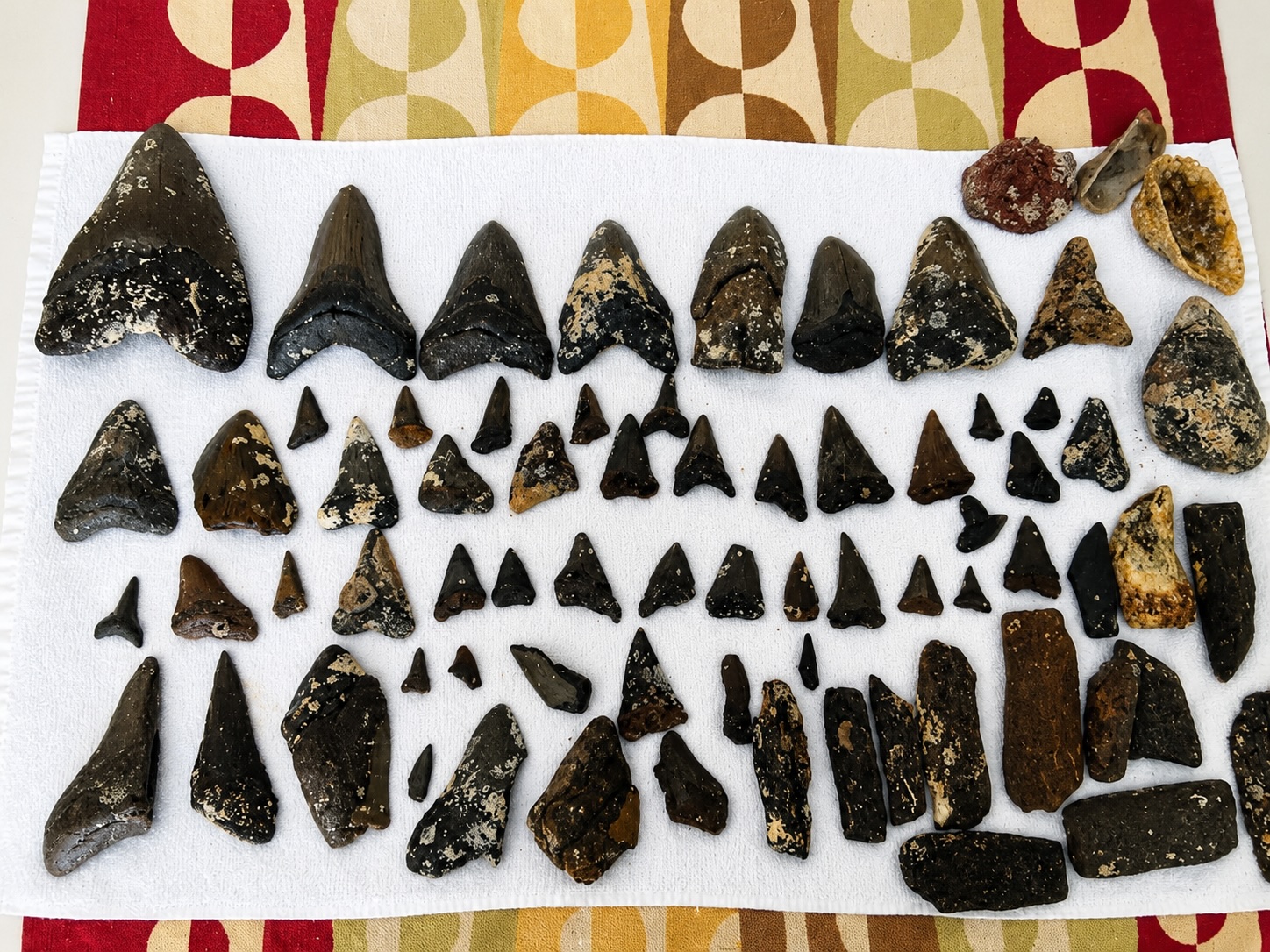
Then you surface, climb back onto the boat, and watch divers dumping handfuls of ancient teeth onto towels while everybody talks at once like excited little kids. For a few minutes, nobody cares about work emails, mortgages, politics, deadlines, or traffic. Everybody is just standing there holding pieces of a lost world.
It is wonder. It is obsession. It is treasure hunting. It is deep time. And if you are not careful, it is also shark tooth fever.
Want to Try Megalodon Tooth Diving?
Dive With Frank runs several Megalodon shark tooth diving trips off the coast of North Carolina each year for qualified divers interested in wreck diving, fossil hunting, and underwater adventure.
These are advanced offshore dives that require good buoyancy, solid gas awareness, comfort at depth, and a healthy respect for the ocean. If shark tooth fever sounds like your kind of problem, check out the current DWF trip schedule and come find your own piece of deep time.