Who should take this course?
The PADI Public Safety Diver course is not just another specialty, and it is definitely not a casual “that sounds cool” class. This training is built for divers who are already affiliated with a public safety dive team, actively pursuing that role, or working in direct support of public safety diving operations.
If you are involved with law enforcement, fire and rescue, EMS, recovery operations, a dedicated rescue team, or a public safety dive unit in some other official capacity, this course may be exactly what you need. If you are simply looking for a new recreational challenge, this probably is not the right fit. Public safety diving is mission-driven work. It carries real responsibility, heavy logistics, and a level of seriousness that goes well beyond a typical sport-diving class.
This course is for divers who may be called upon to search, recover, document, communicate, and operate as part of a team in demanding conditions. You are not just underwater for the view. You are there to do a job, do it well, and come back safely. No sightseeing. No shortcuts. Just solid, dependable diving when it counts.
To enroll in a Public Safety Diver course, you must be certified as a PADI Advanced Open Water Diver and be at least 18 years old. You also must be able to show affiliation with a public safety team (law enforcement, fire service, paramedic, EMT, rescue team, public safety dive team, or similar organization), and you must earn your PADI Rescue Diver certification by the end of the course.
What will you learn?
This course gives you a solid operational foundation in the procedures, equipment, communication methods, documentation practices, and scene awareness involved in public safety diving. It is about becoming more disciplined, more capable, and more effective when the work actually matters.
During a series of open water training dives, you’ll practice and refine skills such as compass navigation, knot tying, arc searches, rope-pull communications, victim recovery techniques, and assisting a distressed public safety diver. You’ll also work through the mindset and structure that make public safety operations different from ordinary recreational dives. This is not sightseeing in pretty blue water. Think lower visibility, more task loading, tighter teamwork, and a lot more purpose.
Good public safety divers are calm, methodical, and hard to rattle. That is the goal here. Slow down. Communicate clearly. Stay sharp. Do the job right.
What does this kind of diving really look like?
Public safety diving can involve cold water, blackwater conditions, zero visibility, entanglement hazards, contaminated environments, evidence-sensitive scenes, and physically demanding recoveries. It is challenging work. Sometimes gritty. Sometimes uncomfortable. Always serious.
That is exactly why proper training matters. When visibility drops to pond-scum levels and the task in front of you is bigger than “go look at the fish,” you want training that helps you stay composed, useful, and safe.
How do you get started?
If you are exploring Public Safety Diver training for yourself or your team, let’s talk through team needs, prerequisites, scheduling, logistics, and the best way to build training that fits the real work.
This is not a click-and-go course. Public safety diver training starts with a conversation, not a checkout page.
We need to talk about your affiliation, your role, your prerequisites, and your team if applicable. Every public safety organization operates a little differently, and training needs to align with real-world expectations, not just a standard outline.
The knowledge development portion of this course can be completed either through traditional classroom sessions or through PADI eLearning, depending on what makes the most sense for you or your team. Some teams prefer in-person discussion to align with SOPs and operational procedures. Others prefer the flexibility of eLearning so divers can complete academics on their own time.
Once we’ve established the right approach, we’ll set up the knowledge development path and then coordinate classroom and in-water training accordingly.
Because of the logistics involved, this is not something I throw on a calendar like a weekend specialty. It requires planning, coordination, and the right fit from the start.
If you are an affiliated diver or part of a team exploring training, reach out and let’s talk through what makes sense.
Working with public safety dive teams
If you are a public safety dive team member, team leader, coordinator, supervisor, or part of an agency exploring training needs, I welcome the opportunity to talk with you about what your team actually needs and how to build training that supports it.
Every team is different. Experience levels differ. Operational environments differ. Training gaps differ. Some teams need a strong foundational course. Some need skill refinement. Some need help building a more consistent training framework. That is why this kind of course starts with a discussion, not a checkout cart.
What scuba gear will you use?
Beyond your basic scuba equipment, you’ll want gloves, a dive knife, an additional cutting tool, and at least two scuba tanks. Depending on your team role, training objectives, and environment, additional gear may be appropriate. We’ll discuss that as part of planning the course.
How Long Will It Take?
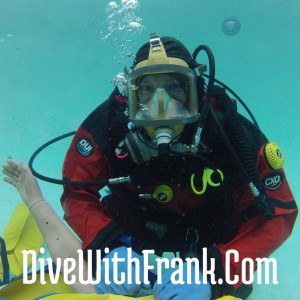
Public Safety Diving is serious business. Expect two long classroom sessions and a full weekend of open water training, typically four open water dives over two days. The exact pacing may vary based on team needs, site logistics, prerequisites, and the overall scope of training.
This is one of those courses where the details matter and the planning matters. That is part of doing it right.
This course starts with a conversation, not a checkout cart.
NOTE:
I also teach the PADI Public Safety Diver Surface Support Specialist distinctive specialty course. That course is an excellent fit for surface support personnel, tenders, and team members who need a strong working foundation in public safety diving operations without serving in the diver role. Strong topside support makes better operations, plain and simple. Contact Dive With Frank for more information.
If you’re doing this kind of work, you already know why it matters. Let’s make sure the training reflects that.