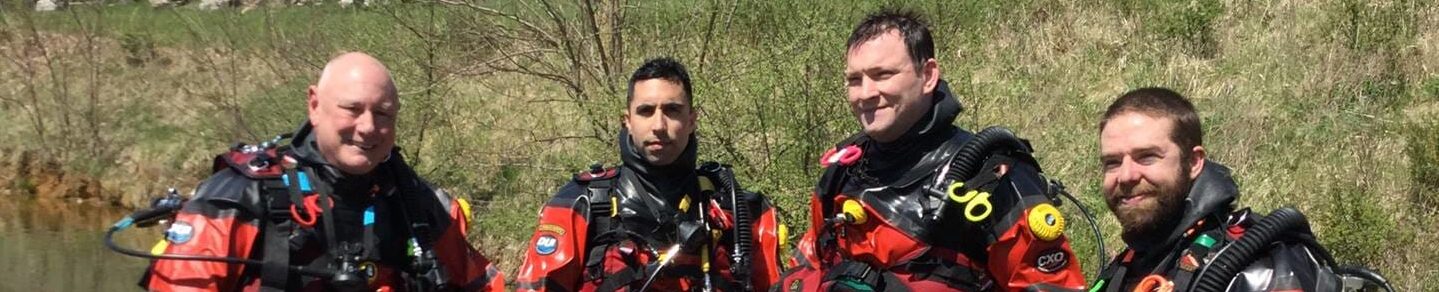
60% Excited, 40% Nervous
Advanced Open Water, two families, one cold quarry, and a whole lot of pride.
“I’m about 60% excited and 40% nervous.”
One of my students said that before our Advanced Open Water weekend at Lake Hydra, and I thought that was just about perfect. Not fearless. Not terrified. Just excited enough to want the adventure and nervous enough to respect it.
That is a healthy place for a newer diver to be.
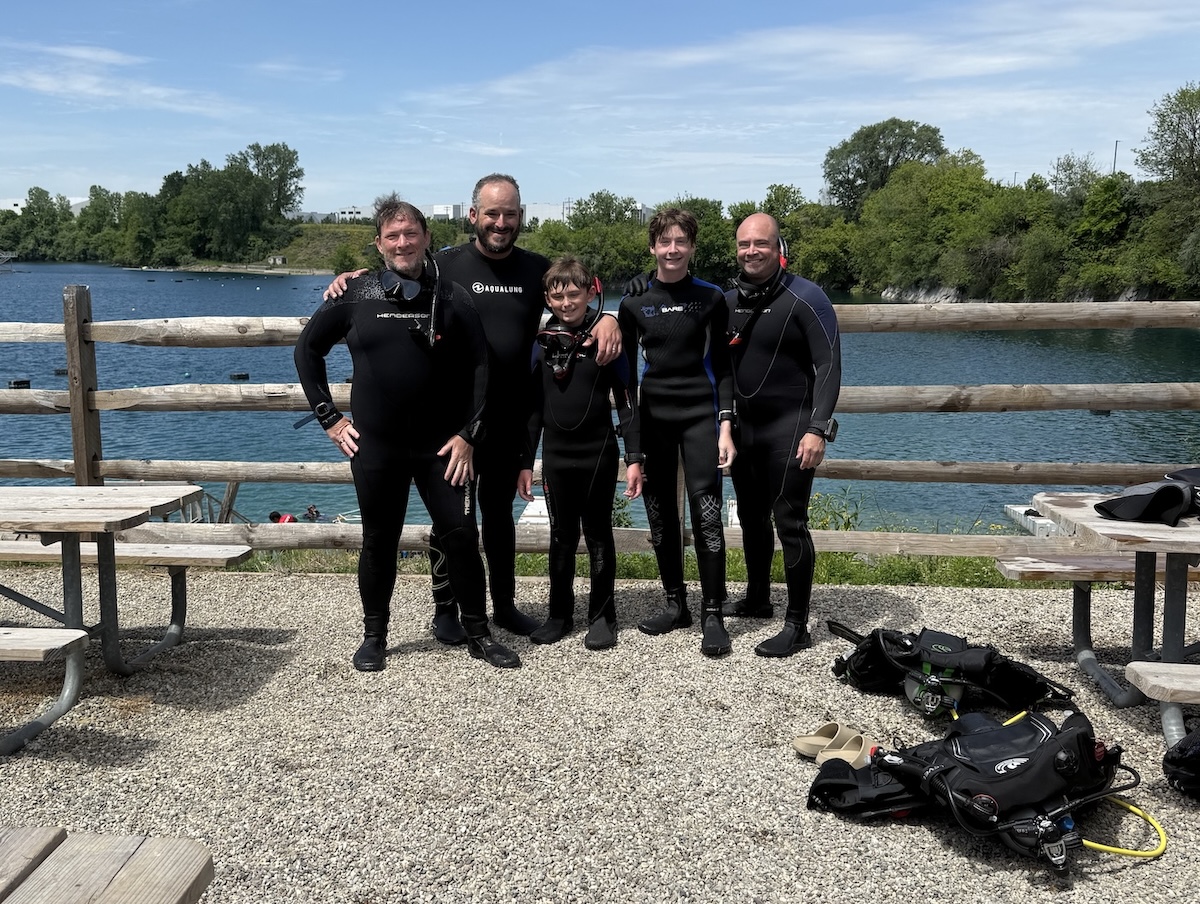
This weekend was special for me. Two fathers and their sons joined me for Advanced Open Water training. All four had earned their Open Water certifications with me last year, and now they were back for the next step. That alone meant a lot.
As an instructor, I meet a lot of students. Some take a class, have a good time, and I never see them again. That is normal. Life is busy, diving is expensive, and people have a lot competing for their time. But sometimes students come back. Sometimes they keep diving. Sometimes they become friends.
This was one of those weekends.
Getting Started
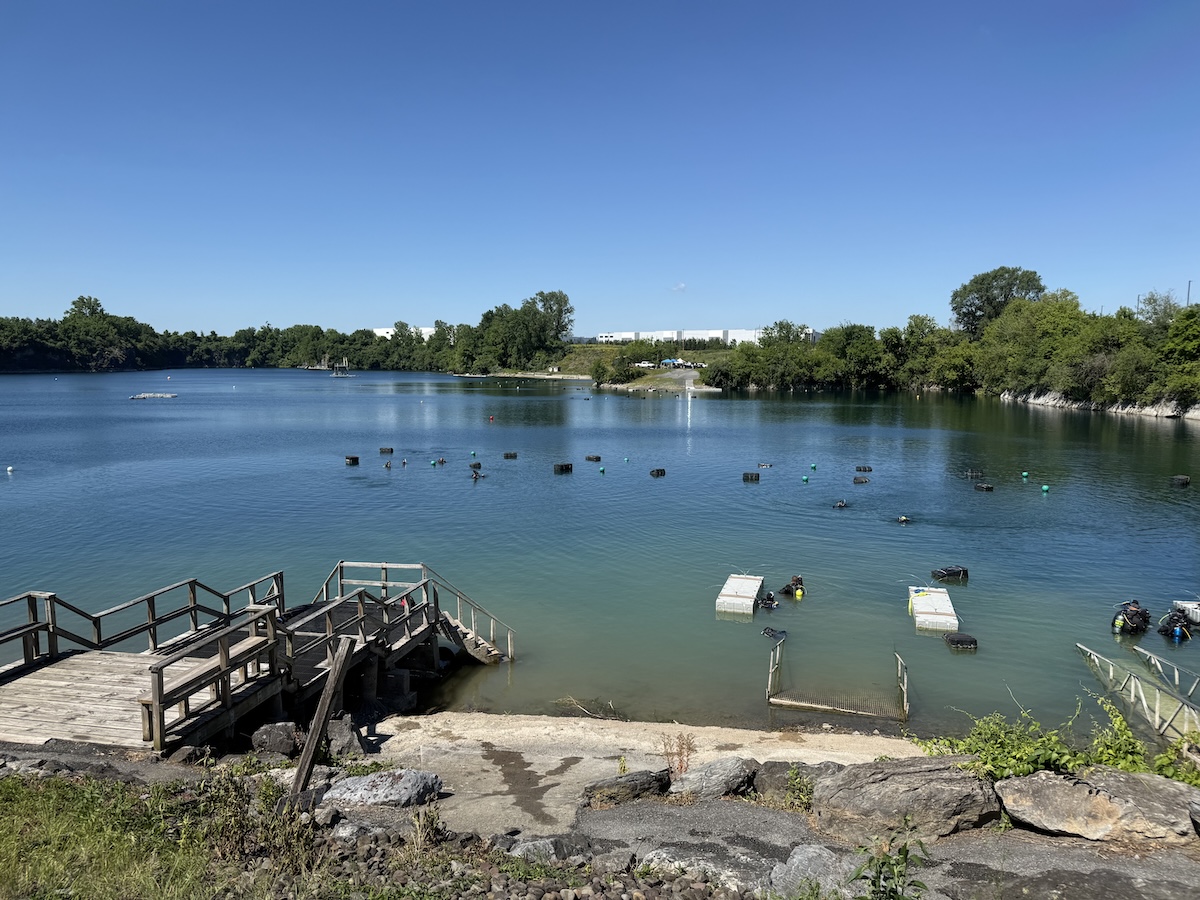
Lake Hydra is a few hours from home, so we all drove up Friday night and took advantage of the hotel rate Hydra has arranged nearby. By the time we arrived, the gear had been packed, the cars had been loaded, and everyone had already put in a full day before anyone touched the water.
Saturday morning came early. We rolled into Hydra, and at first we moved like a group still finding its rhythm. Gear had to be unpacked. Wetsuits had to be wrestled into. Weights had to be sorted. Briefings had to happen. Minds had to shift from “I am standing in a parking lot” to “I am about to spend the day underwater.”
That takes a minute. On Saturday, it took a lot of minutes.
But that is part of the process too. Advanced Open Water is not supposed to create expert divers. It is supposed to help newer divers stretch a little, learn a little, and start taking more ownership of their dives. The point is not to stop being nervous. The point is to learn what to do with that nervousness.
Saturday: Skills, Confidence, and a Few Little Mysteries
Our first day included Peak Performance Buoyancy, Underwater Navigation, and then the group split. One father and son worked on underwater photography. The other father and son worked on search and recovery.
Those sound like class names, but the real lessons are bigger than the titles. Buoyancy is not just hovering. It is awareness. It is learning when to use your BCD for larger adjustments and when to use your breathing for smaller ones. Navigation is not just swimming a square. It is learning to pay attention to where you are, where you have been, and how the underwater world fits together.
Photography is not just pushing a button. It is slowing down and noticing things. Search and Recovery is not just finding an object and tying knots. It is solving a problem underwater.
And we had some real problem-solving this weekend.
At one point, one of the boys was working on hovering. One moment he looked good. A few seconds later he started floating up. We brought him back down, dumped air, and tried again. Same result. That was strange. After some troubleshooting, it became clear that the issue was not simply buoyancy control. The gear itself was contributing to the problem.
That matters because newer divers are often quick to blame themselves. “I’m bad at this.” “I can’t do buoyancy.” “I’m messing up.” Sometimes, yes, the diver needs more practice. But sometimes something else is going on. Diving rewards patience, observation, and curiosity. When something does not make sense, slow down and figure out why.
The search and recovery team did exactly that kind of work too. They found a surprisingly small target multiple times, tied knots underwater, and used a lift bag to bring up a serious amount of weight. That was fun to watch, not because they checked off a skill, but because they were applying skills.
That is the good stuff.
The Diner Tradition
By the end of Saturday, our little group had started to gel. We were tired, hungry, and carrying that very specific kind of fatigue that only comes from hauling gear, diving all day, and spending hours in neoprene.
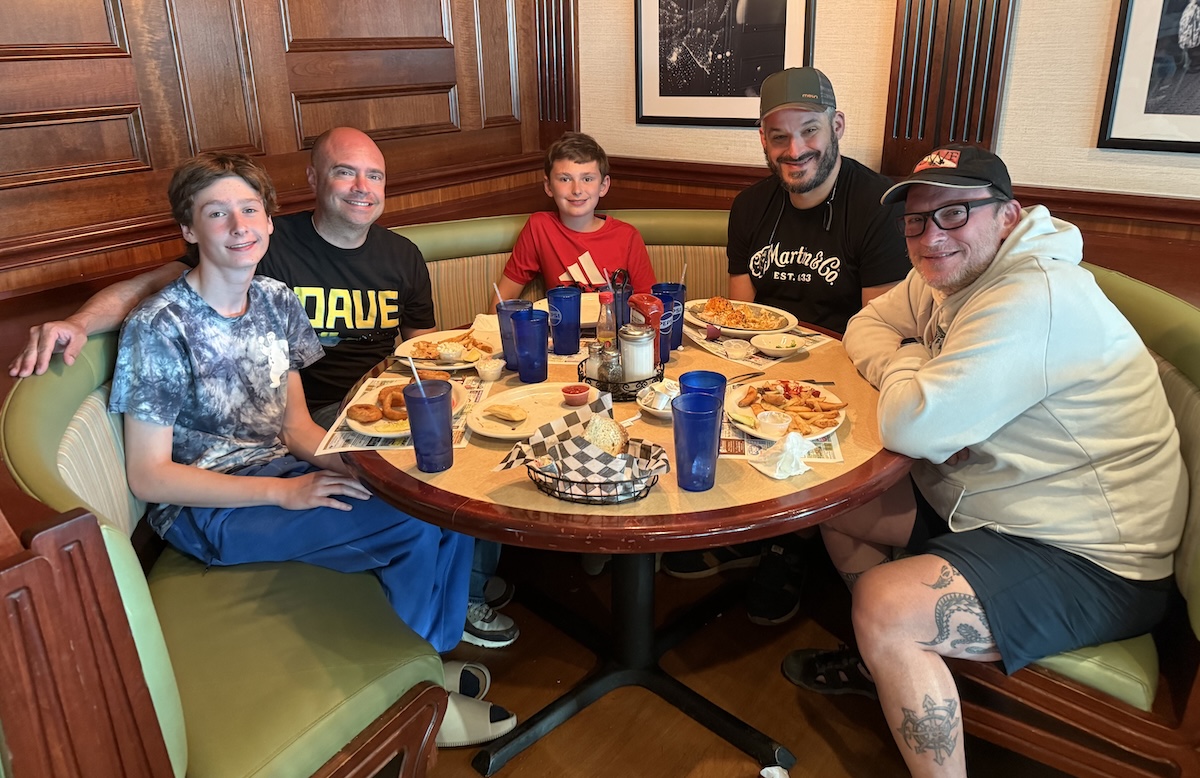
So we did something that has become a Dive With Frank tradition on overnight trips to Lake Hydra. We went to dinner.
There is a local diner I found by accident on one of these trips, and somehow it has become part of the ritual. The food was good. The company was better.
One of my favorite parts of these weekends is not actually the diving. It is the chance to sit around a table after a long day and talk. We talk about scuba, of course, but we also talk about work, family, travel, hobbies, and whatever else bubbles up. The students stop feeling like “students,” and the weekend starts feeling like a shared adventure.
That is a big part of why diving sticks. It is not just the water. It is the people.
Sunday: The Cold Arrives
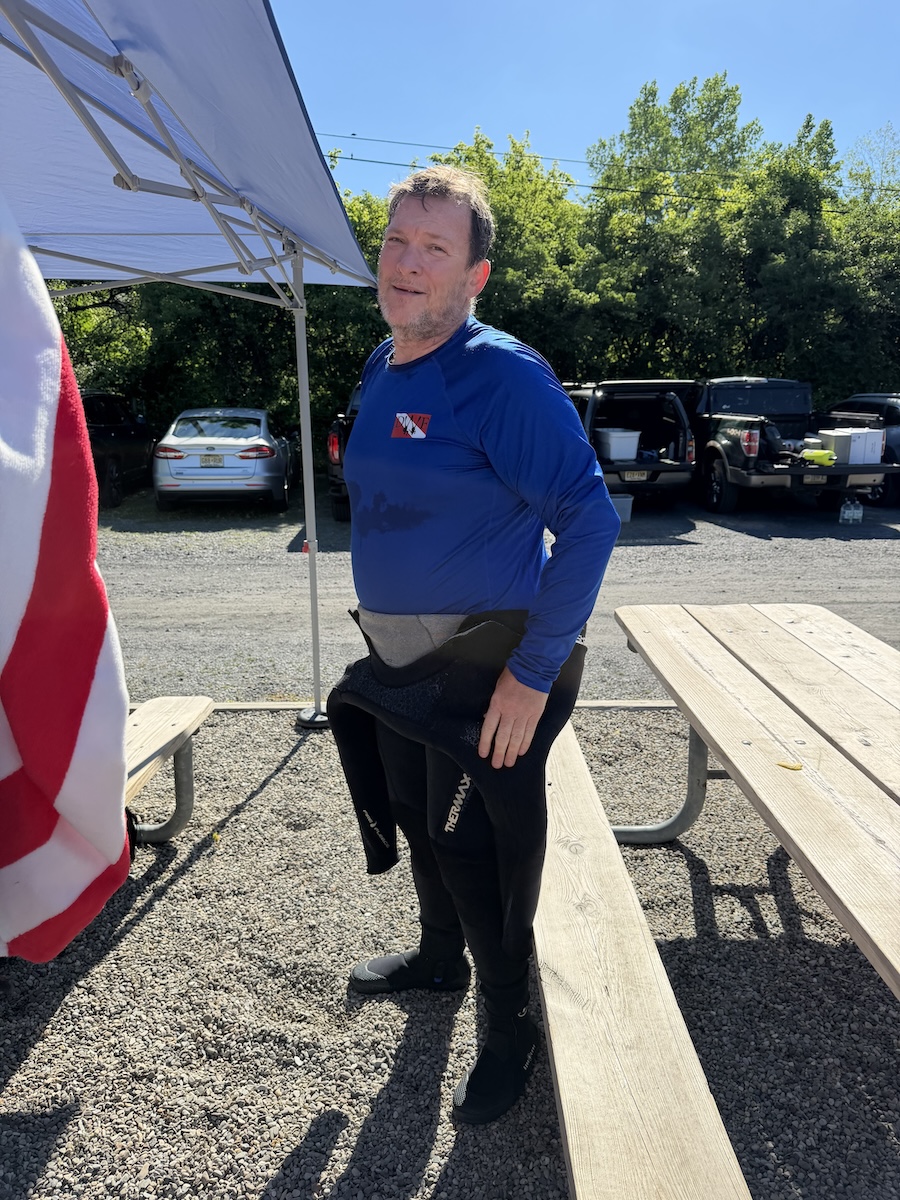
Sunday morning arrived, and I woke up feeling like I had been worked over by somebody with a rubber hose and a grudge. Everything hurt. That is the glamorous side of scuba nobody puts in the brochures.
We met for breakfast and talked through the plan for the day: deep dive first, wreck dive after that. The kids were worried about the cold. Not mildly concerned. Not casually curious. Worried.
They were right to be.
The surface water was pleasant enough, but the deep dive was going to be a different animal. I reassured them. I told them I would be right there with them. I told them it would not be that bad. I told them it would be 20 minutes max.
“We can do anything for 20 minutes.”
That was my line.
Then Lake Hydra made me look wildly optimistic.
The water at depth was 44 degrees. That is not “a little chilly.” That is the kind of cold that comes through your wetsuit and introduces itself personally. The cold hit me like a sledgehammer, and I was not exactly wearing a thin wetsuit.
I do not wear gloves for dives like this because I want my dexterity. If the fit hits the shan, I would rather be cold and able to work than warm and clumsy. But let me be clear. I was cold too. Very cold.
And I felt bad for the boys.
As we descended, I could see it in their eyes. One of the boys was not happy. I reached over, gave him a reassuring squeeze on the hand, and exchanged OK signals with both him and his dad. Nobody was pretending this was comfortable, but everybody was still in the dive.
Because the boys were 12 and 14 years old, their maximum depth was 70 feet. We planned the dive to approximately 65 feet, giving us a comfortable margin while still allowing them to experience a true deep dive.
We descended along an old underwater framework, using it as a visual reference as we made our way down. Once we reached depth, I did not waste time.
We compared dive computers so the students could see how the information changed at depth. I pulled out a plastic water bottle I had emptied at the surface. At depth, it looked crushed and collapsed because the air inside had compressed under pressure.
That bottle stole the show.
Pressure can be a classroom concept. A chart. A number. A thing we talk about. But when a student sees a bottle that looked normal at the surface suddenly crumpled at depth, the concept becomes real.
We also looked at a color slate so they could see how muted colors become underwater. So yes, it was cold. Really cold. But it was also a real deep dive lesson. Not a pretend one. Not a box-checking one. A real one.
We stayed long enough to learn what we came to learn, and then we started back up. As we rose through the thermoclines, the relief was almost funny. Water that had seemed cold earlier suddenly felt downright comfortable compared to 44 degrees.
Perspective is a wonderful thing.
Thinking Like Divers
When we surfaced, I told them how proud I was. I meant it. Not because they hit a number on a depth gauge or completed a requirement, but because they handled it. They were cold, nervous, and uncomfortable, and they did the dive anyway.
That is how confidence gets built. Not by being told, “You’ll be fine,” but by doing the thing and realizing afterward, “I was fine.”
Before we moved on, I reminded everyone of something we had talked about from the beginning. At 30 feet, divers can get away with a lot. At 65 feet, the margin gets thinner. People do not magically run out of air. People do not magically blow through their no-decompression limits. The information is there, but you have to look.
That is one of the big transitions in Advanced Open Water. Students have to start taking more responsibility for their own diving. They need to check their own air, monitor their own computers, think through their own dives, and take responsibility for their own safety.
That does not happen all at once. This weekend, I could see it starting.
The Wreck Dive
After the deep dive, the cold had taken some of the wind out of everyone’s sails, mine included. I had originally hoped to take them down to one of the bigger attractions at Hydra, but good diving means adapting. The plan that sounds great before the dive does not always make sense after the dive.
So we adjusted.
For the wreck dive, we stayed shallower and visited three different wrecks: a fire truck, a van I lovingly refer to as the Scooby-Doo Mystery Machine, and an old boat nearby.
The first wreck dive in Advanced Open Water is not about charging into a wreck. It is not about pretending we are in an adventure movie. It is about observation.
Where are the hazards? Where are the points of interest? Where are the possible entrances? Where are the exits? What would make this environment dangerous?
That is an important lesson. Wreck diving is fascinating, but the first lesson of wreck diving is restraint. You do not just swim into a wreck you have never seen before because it looks cool. You spend time learning it. You understand the layout, identify hazards, and think about how you would exit if something went wrong. You understand it. You respect it.
That is not sexy. That is survival.
By the end of the dive, there were smiles all around. Tired smiles. Cold smiles. Proud smiles. The best kind.
The Part That Sticks
A year ago, one of these young divers wanted absolutely nothing to do with quarry diving. Too cold. Too dark. Too gross. Fair enough. We ended up doing his checkout dives in Florida, with dives at Blue Grotto and off Boynton Beach with Starfish Scuba.
That was a great experience. It helped him fall in love with diving before asking him to fall in love with local quarry diving.
This weekend, that same young diver voluntarily spent two days at a quarry, completed a deep dive in 44-degree water, explored wrecks, monitored his air, followed his computer, and started thinking like a diver.
The quarry did not change. He did.
That is the part I keep coming back to. This weekend was not meaningful because everything was easy. It was meaningful because it was not easy. The cold was real. So were the nerves, the sore muscles, and the endless hauling of scuba gear from one end of the quarry to the other. The dried quarry water smell was also very real, which is why I cleaned my gear as soon as I got home.
For the record, dried quarry water starts smelling suspiciously like dried toilet water if you let it sit too long. I do not recommend testing this theory.
But the pride was real too. So was the fun. So was the trust.
Two fathers trusted me with their kids this weekend, and that is no small thing. They did not just sign up for a class. They showed up. They learned alongside their sons. They got cold together. They laughed together. They worked through discomfort together. They made memories together.
When I got home, unpacked, rinsed gear, showered, and finally sat down, one of the dads sent me a message. He thanked me for the weekend and wrote that they had accomplished a lot, had fun doing it, and most importantly, had done it as a family.
I wrote back, “That was the entire point.”
And it was.
Congratulations to Dive With Frank’s and PADI’s newest Advanced Open Water Divers. I am proud of all four of you.
Now let’s go diving.