You Earned Your Open Water Certification. Now What?
How to spend your next 50-100 dives building confidence, gaining experience, and discovering what kind of diver you want to become.
Congratulations. You did it. You survived the academics, the confined water sessions, the skills, the open water dives, and at least one moment where somebody intentionally flooded your mask and called it education.
You earned your Open Water certification.
Now what?
This is where the questions usually start. Should I buy gear? What class should I take next? Where should I travel? Am I ready for Cozumel? What about Fiji? How soon can I get to Raja Ampat?
Before we answer any of that, let’s talk about what your Open Water certification actually means.
A Driver’s License, Not The Indy 500
I’ve used the same analogy for years. Getting your driver’s license doesn’t mean you’re ready to race in the Indy 500. It means you’ve demonstrated the basic skills necessary to safely operate a vehicle on public roads.
Open Water certification is similar. You demonstrated mastery of the required skills for certification. You can plan and conduct dives within the limits of your training.
That’s a big accomplishment, and you should be proud of it.
But earning your Open Water card doesn’t make you an experienced diver any more than a driver’s license makes you a race car driver. The course teaches the skills. The next hundred dives teach you how to use them.
The certification card says you’re allowed to go diving. The next fifty to a hundred dives are where you start figuring out what kind of diver you’re going to become.
This Isn’t A Race
The pixels aren’t even cold on their eCard before they’re planning bucket-list trips halfway around the world.
But the ocean isn’t going anywhere.
I earned my Open Water certification at 38 years old. I’ve been diving for sixteen years now, and there are still places I want to visit, skills I want to improve, and animals I want to photograph.
I still have time. So do you.
If this article has one thesis, it is this: you have time.
You don’t need to rush to Raja Ampat, buy every piece of gear tomorrow, or collect certifications like Pokémon cards. Take the next dive. Then take another. Build experience, build confidence, and figure out what actually excites you.
Diving is a marathon, not a sprint. There is no prize for getting to a bucket-list destination first, and there is a strong argument for waiting until you have enough experience to fully appreciate it.
If you’re spending an entire dive worrying about buoyancy, gas consumption, depth, and where your buddy wandered off to, you’re not really experiencing Raja Ampat. You’re surviving Raja Ampat.
There’s a difference.
A Passport, Not A Diploma
I think a lot of divers look at their Open Water certification like a diploma. I think it’s closer to a passport.
A diploma says you’ve finished something. A passport says the adventure is about to begin.
Open Water gives you a foundation. What you build on top of it is up to you, and that’s one of the things I love most about diving. No two journeys look exactly the same.
What Should You Do Next?
When people ask me what class they should take next, I usually answer with another question.
What do you want to do?
Not what certification do you want. What do you want to do? Do you want to see sharks, take photos, explore wrecks, hunt lobsters, travel, drift over coral reefs, or spend an hour staring at tiny critters most people would swim right past?
When I was a newer diver, I wanted to dive deeper, so Advanced Open Water made sense. I wanted a better understanding of diving hazards and how things can go wrong, so Rescue made sense. Later, I wanted to hunt lobsters, which eventually meant getting comfortable diving at night.
The training followed the goal, not the other way around. Let your interests, not someone else’s, guide your journey. The best diving path is usually the one that grows naturally from the things you genuinely enjoy doing underwater.
Figure out what excites you and build from there.
How I Spent My First Hundred Dives
My path won’t work for everybody. I happened to get certified while living in Southern California, which meant easy access to shore diving, boat diving, kelp forests, islands, and an incredible variety of underwater environments.
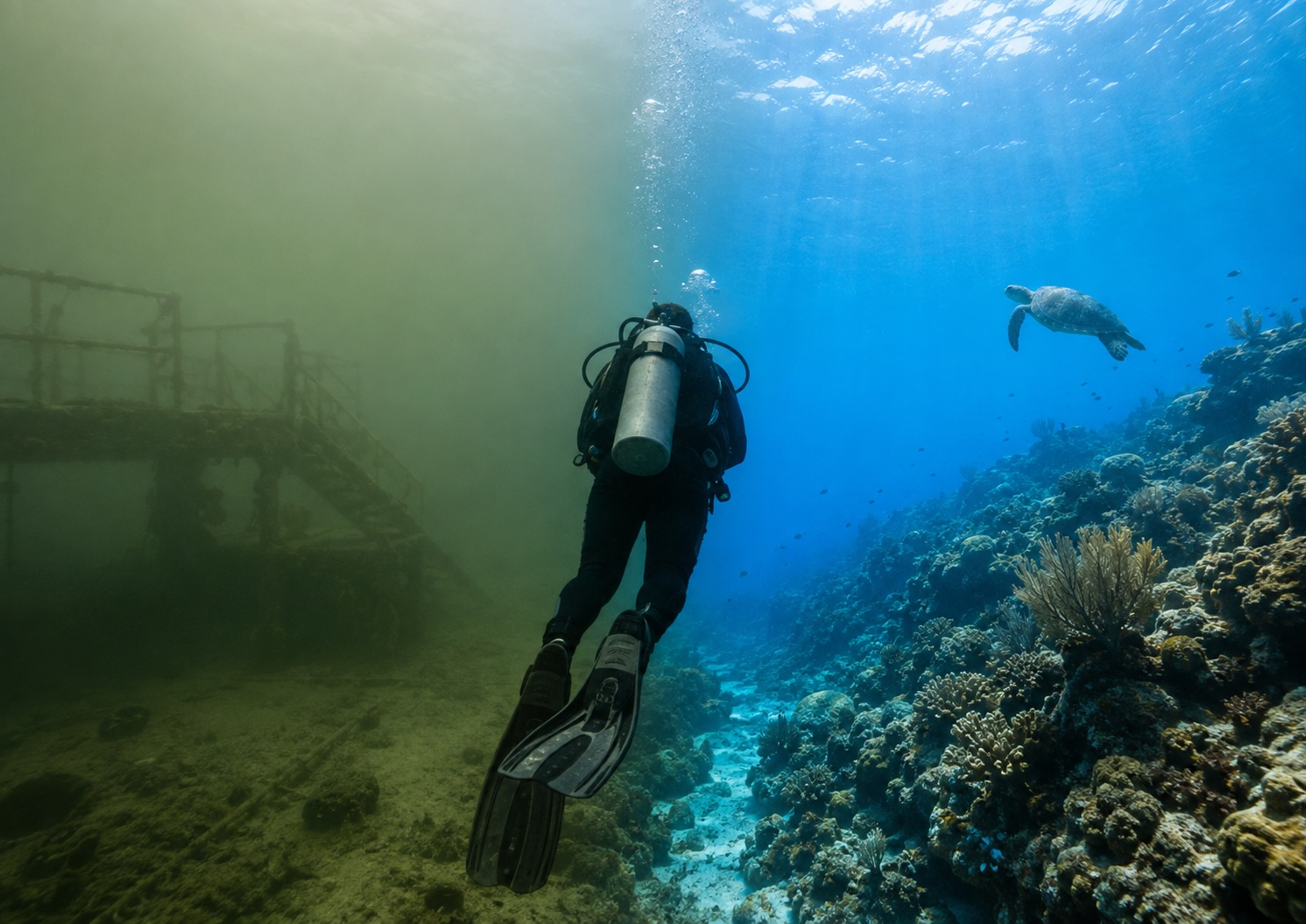
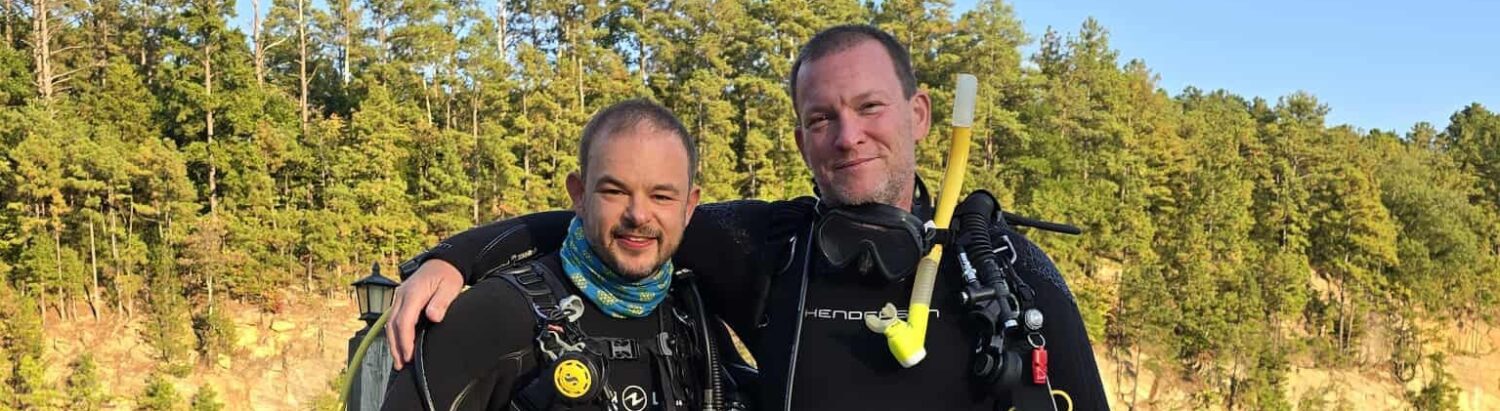
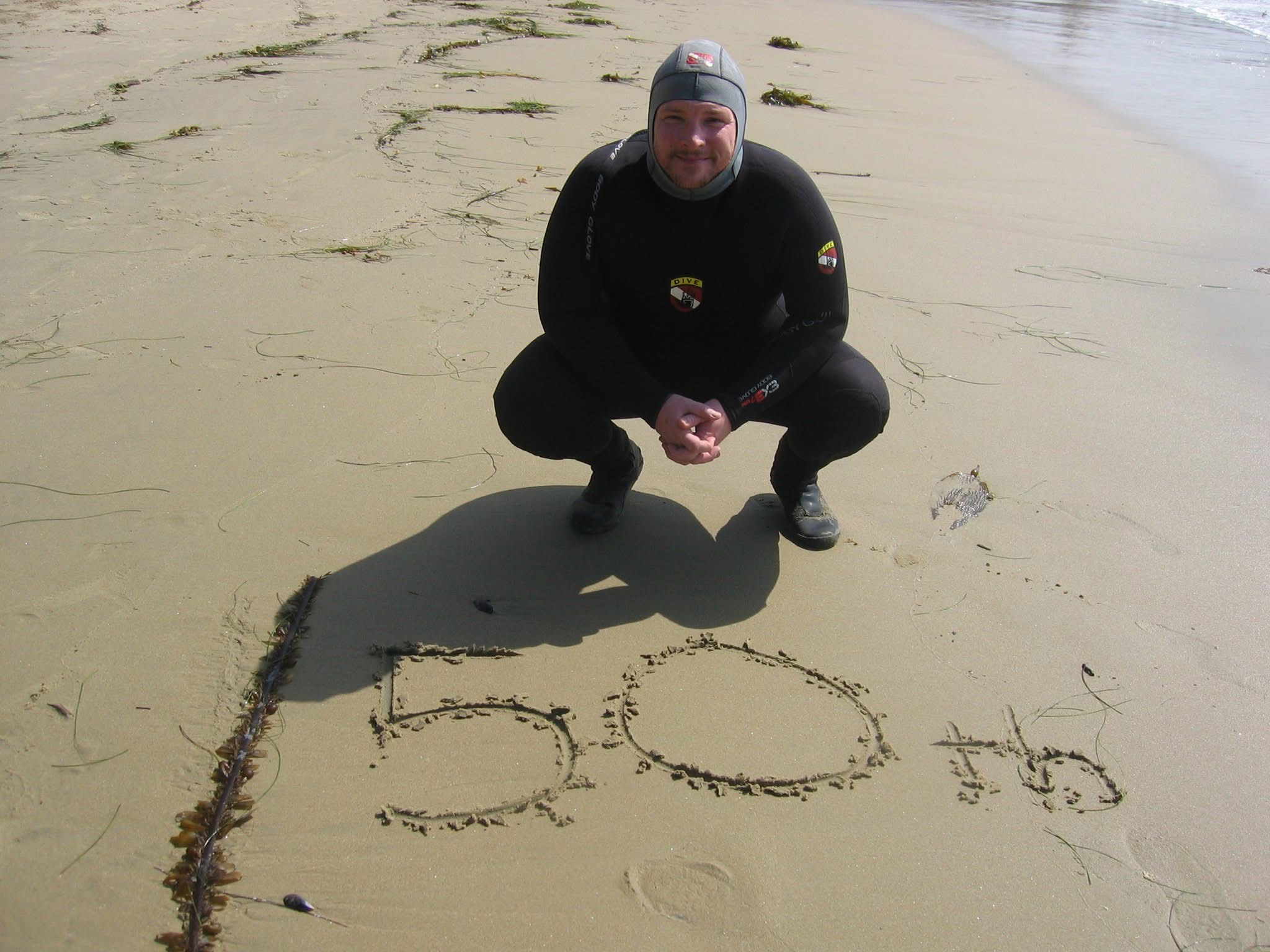
The photo above was taken around my 50th dive. Looking at it now, I smile because I remember thinking I was starting to know what I was doing. The truth is I was still learning every single dive.
In fairness, sixteen years later I’m still learning every single dive. I also got lucky and found a dive buddy who was almost always willing to go diving. To be clear, he wasn’t exactly what I’d call reliable. If memory serves, punctuality was often viewed as more of a suggestion than a requirement. But if somebody wanted to dive, there was a very good chance he’d say yes.
We dove constantly.
Looking back, I also did something that was probably a little nutty. I bought a complete set of gear before I even finished Open Water.
Did it work out for me? Absolutely. Would I tell every new diver to do the same thing? Not a chance.
The important thing isn’t copying my path. The important thing is finding yours.
If You Don’t Have Local Diving
Not everybody gets certified with Southern California sitting in their backyard.
I got lucky. Within a relatively short drive I had access to shore diving, boat diving, kelp forests, islands, and enough dive sites to keep me busy for years. Many new divers don’t have that luxury. They get certified on vacation, fly home, look at their shiny new certification card, and immediately run into a problem:
Now what?
This is where I’ll repeat something I’ve said for years:
Don’t squander your vacation on scuba training.
Training is important. I love training. Heck, I’m an instructor.
But if you’re spending thousands of dollars and precious vacation time to visit a beautiful destination, I’d generally rather see you diving than sitting in a classroom.
If local opportunities are limited, look for destinations that help you build experience without overwhelming you:
- The Florida Keys: Much of the diving is relatively shallow, the logistics are straightforward, and if your buoyancy isn’t perfect you’re generally less likely to cause damage than you would be hovering over a pristine coral reef in some far-flung bucket-list destination.
- Bonaire: The shore diving is easy, the pace is relaxed, and you’re free to gain experience on your own schedule instead of racing from one boat briefing to the next.
- Other Great Options: Curaçao, Puerto Galera, CoCo View in Roatán, and Volivoli in Fiji all have qualities that make them attractive to newer divers. They aren’t identical destinations, but each offers an opportunity to gain confidence while still having a fantastic vacation.
The goal isn’t finding the most famous place you can afford. The goal is finding places where you can safely enjoy yourself, gain experience, and come home as a better diver than when you arrived.
What About Gear?
Sooner or later, every new diver asks about gear.
I remember asking my Open Water instructor the same questions nearly sixteen years ago. Looking back, I realize he was surprisingly reluctant to tell me exactly what to buy. At the time I found that frustrating. Today I completely understand it.
Not everybody who earns an Open Water certification falls in love with diving. Some do. Some don’t.
Spending thousands of dollars on gear makes a lot more sense once you’ve figured out which category you’re in.
That said, if you’re determined to twist my arm, I’d start with a mask, snorkel, fins, and boots. Those items need to fit properly, and they’re the pieces you’ll use almost regardless of where you dive.
After that, I’d strongly consider a simple wrist-mounted dive computer.
I still remember reading a question during Open Water about carrying a backup dive computer and thinking, “What kind of scuba nerd owns multiple dive computers?”
Apparently me.
Funny how life works sometimes.
Beyond that, the most important thing about gear is surprisingly simple: fit and function.
Does it fit? Does it do what it’s supposed to do? Great.
I’ve seen divers with gorgeous, expensive equipment. I’ve also seen dive guides in places like Roatán using gear that looked like it had survived several small wars. The guide was usually the better diver.
Gear doesn’t make you a good diver. Experience, judgment, awareness, and skill make you a good diver. Nice gear can support those things. It can’t replace them.
If You’re Nervous, That’s Normal
I’ve had students finish Open Water, get handed a certification card, and then immediately look a little uneasy when I remind them they’re now allowed to go diving without me.
That’s completely normal.
Some people leave class feeling confident and ready to tackle the world. Others need a little more time. Neither reaction is wrong.
I’ve watched students become noticeably more comfortable during post-certification fun dives than they were during training. In some cases the skills didn’t change at all. The pressure did.
One of my best friends completed Open Water with me. He did great throughout the course, but he also cared deeply about doing well and didn’t want to disappoint me. Once certification was complete and we were simply buddies going diving together, much of that pressure disappeared.
The diver was the same diver. The circumstances had changed.
If you’re nervous about diving independently, start conservatively.
Hire a guide. Hire a divemaster. Ask questions. Take it slow. There is absolutely no shame in any of that.
If you’ve already spent money on travel, accommodations, and diving, spending a little more to reduce stress and increase safety is usually money well spent.
I think of guides the same way I think of training wheels on a bicycle. They’re not there because you’re incapable. They’re there because learning is easier when somebody helps steady the bike.
Eventually the training wheels come off. Until then, there’s nothing wrong with using them.
The goal isn’t proving you can ride the bike. The goal is enjoying the ride.
Find Your People
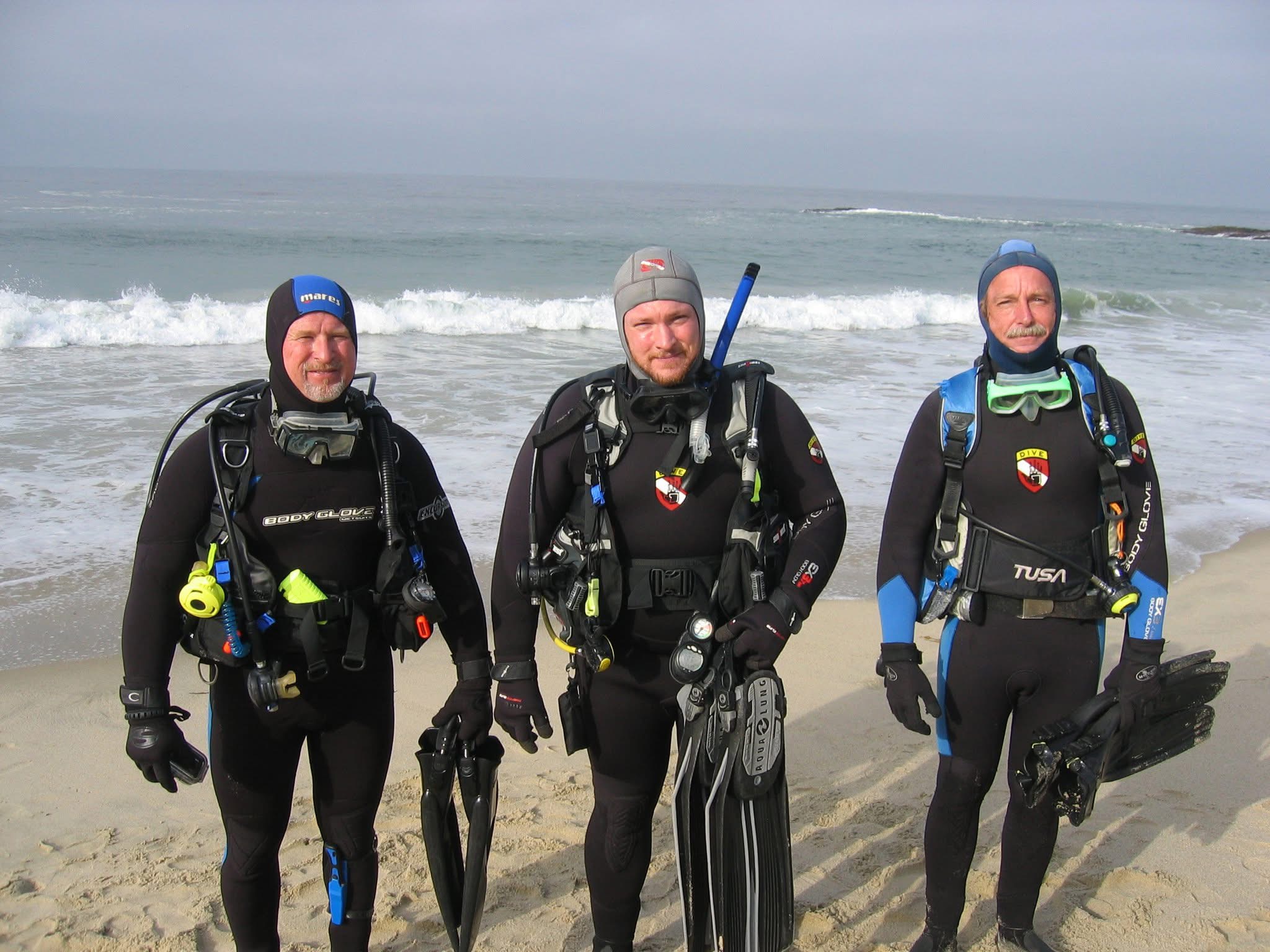
If you don’t have a dive buddy, you’re not alone.
Finding dive buddies is one of the most common challenges new divers face. Local dive clubs, Facebook groups, dive shops, and community events can all help you meet people who are looking for the same thing you are: more opportunities to get in the water.
Some of those connections become dive buddies. Some become lifelong friends. Some become both.
And some become the people who record you doing something embarrassing and post it online before helping you.
Which brings me to my next point.
Everybody Gets A Turn
New divers spend a surprising amount of energy worrying about looking stupid.
Allow me to save you some anxiety: on a long enough timeline, everybody gets a turn. Everybody.
Forget a fin. Forget a mask. Forget a weight belt. Forget to turn their air on. Forget something important. Sooner or later, every diver does something they’ll laugh about later and wish nobody had witnessed at the time.
I’ve literally jumped into the water without my weights.
My so-called friends somehow managed to record the event and post it to Facebook before handing me my weight belt. Thanks, guys.
You’re not going to avoid every mistake. What matters is learning from them. In fact, I’ve found that the truly mortifying mistakes are often the ones I never repeat.
The funny thing is that new divers worry about looking foolish, while experienced divers spend most surface intervals telling stories about the foolish things they’ve already done.
Ask a group of divers about their most embarrassing moment and you’ll probably miss the next dive briefing.
Everybody has a story because everybody gets a turn.
Dive Counts, Fancy Gear, And Other Things We Worry About
When I was a newer diver, I worried about some things that turned out not to matter nearly as much as I thought they would.
Fancy gear was one of them. Dive counts were another.
Nobody cares what brand name is stamped on your regulator if you’re a good buddy and a competent diver. I’ve seen incredibly expensive gear. I’ve also seen gear that was held together by equal parts maintenance and stubbornness. What matters is whether it’s comfortable, reliable, and does the job.
Dive counts fall into a similar category. They matter, but not as much as some people think.
Dive counts are a rough estimate of experience. Very rough.
I’ve met divers with fifty dives I’d happily jump in the water with. I’ve also met divers with hundreds of dives who still made me nervous.
Experience matters. Judgment matters. Awareness matters. The ability to recognize your limits matters.
A number in a logbook only tells part of that story.
What I Hope You Take Away From All This
If you’ve made it this far, you’ve probably noticed that I haven’t told you what class to take next, where you absolutely must travel, or handed you a checklist for becoming a diver.
That’s intentional.
Because the best part of diving is that your path won’t look exactly like mine.
Maybe you’ll become an underwater photographer. Maybe you’ll fall in love with wrecks. Maybe you’ll spend years exploring reefs. Maybe you’ll become an instructor. Maybe you’ll never take another class beyond Open Water.
All of those paths are perfectly valid.
The goal isn’t to reach a certain dive count, collect a stack of certification cards, or become an instructor. The goal is to build a diving life that you enjoy.
The important thing is getting back in the water, building experience, gaining confidence, and figuring out what excites you.
Don’t Forget To Enjoy This
This may be the most important thing in the entire article.
Have fun. Seriously. Excitement can’t be taught, and it matters more than people realize. It helps create good divers, and it helps create great instructors.
Don’t get so wrapped up in certifications, gear purchases, dive counts, travel plans, and future goals that you forget why you started.
From my first Discover Scuba experience to the dives I’ll be making this weekend, I’ve loved being underwater.
I love the sensation of breathing beneath the surface. I love seeing things most people will only ever experience on a television screen. I love learning new skills. I love the feeling of accomplishment that comes from mastering something difficult.
I love the people…well, most of them. I love the travel. I love the ocean.
Scuba diving can genuinely change the way you see the world.
Most hobbies don’t survive sixteen years. Many don’t survive sixteen months. Some don’t survive sixteen weeks.
Diving did.
Somewhere along the way it became more than something I do. It became part of who I am.
Your Open Water certification isn’t a finish line. It’s a passport. The adventure is just beginning.