The Easy Button, The Big 4, and Bringing the Ocean Home
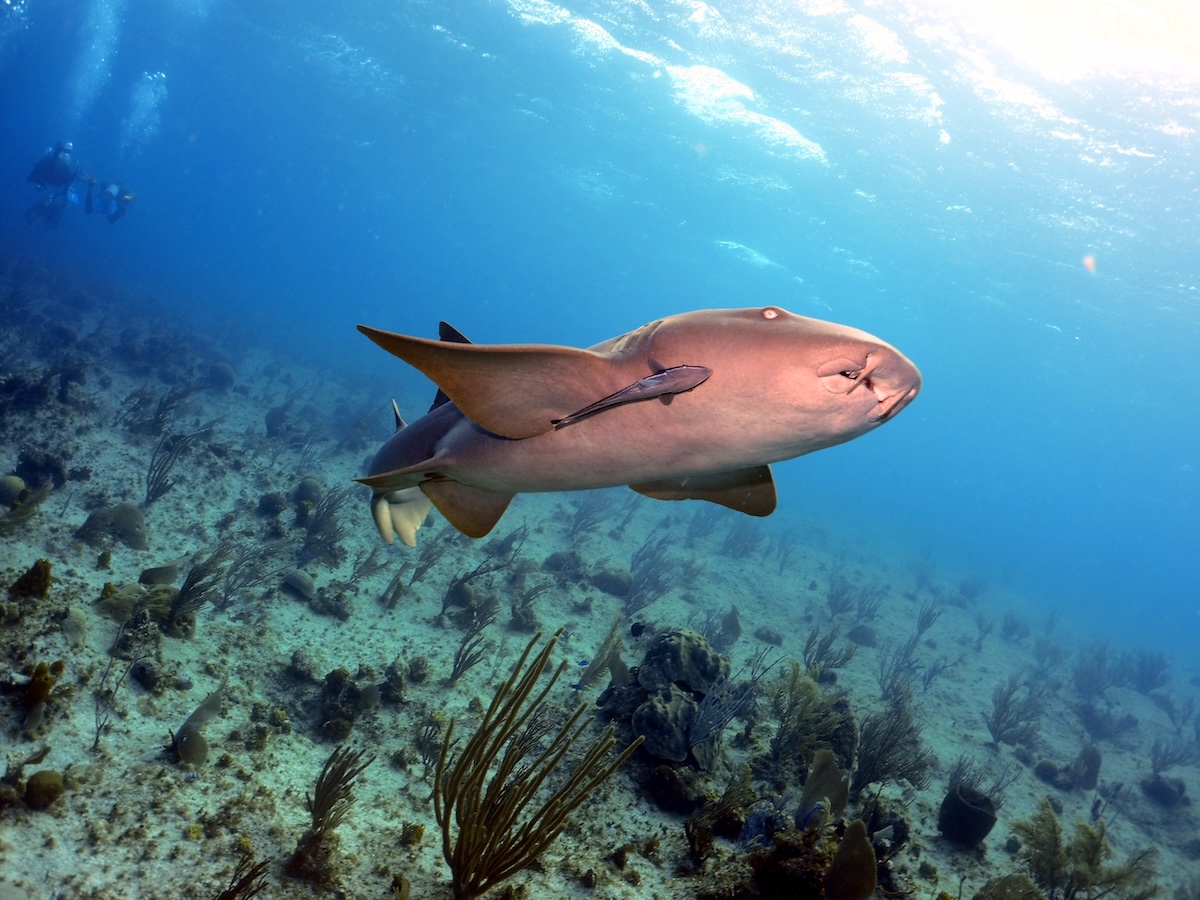
How a point-and-shoot camera, a few great mentors, and a lot of ruined photographs taught me to share the underwater world.
The First Five Seconds
I still remember my checkout dives at Casino Point in Avalon (Catalina Island), California.
The water was cold. Not “jump in and cool off” cold. Pacific Ocean cold.
I was nervous too. Most of my attention was focused on becoming a scuba diver. I was thinking about skills, procedures, breathing, buoyancy, and trying not to do anything spectacularly stupid in front of my instructor.
Then I put my face in the water.
Within seconds, everything changed.
Kelp stretched toward the surface like an underwater forest. Bright orange California Garibaldi darted between the stalks. Fish moved through the water in every direction. I hadn’t swum anywhere yet. I hadn’t descended very far. I simply looked around and found myself surrounded by an entire world I never knew existed.
That was the moment I got hooked.
Not because of the gear. Not because scuba diving looked cool. Not because I thought I had discovered a new hobby.
I got hooked because I couldn’t believe this place existed.
I wanted to share it.
I wanted my friends and family to understand why I was so excited. I wanted to describe the kelp forests, the fish, and the feeling of floating through an environment that most people would never experience for themselves. The problem was that words never seemed quite good enough.
How do you explain your first dive to someone who has never been underwater?
You can try. I certainly did. But no matter how enthusiastic I became, something always seemed to get lost in translation.
Years later, I would discover that photography could help bridge that gap. A photograph could never fully recreate the experience, but sometimes it could capture a small piece of it.
At the time, though, photography wasn’t even on my radar.
I was still too busy staring at fish.
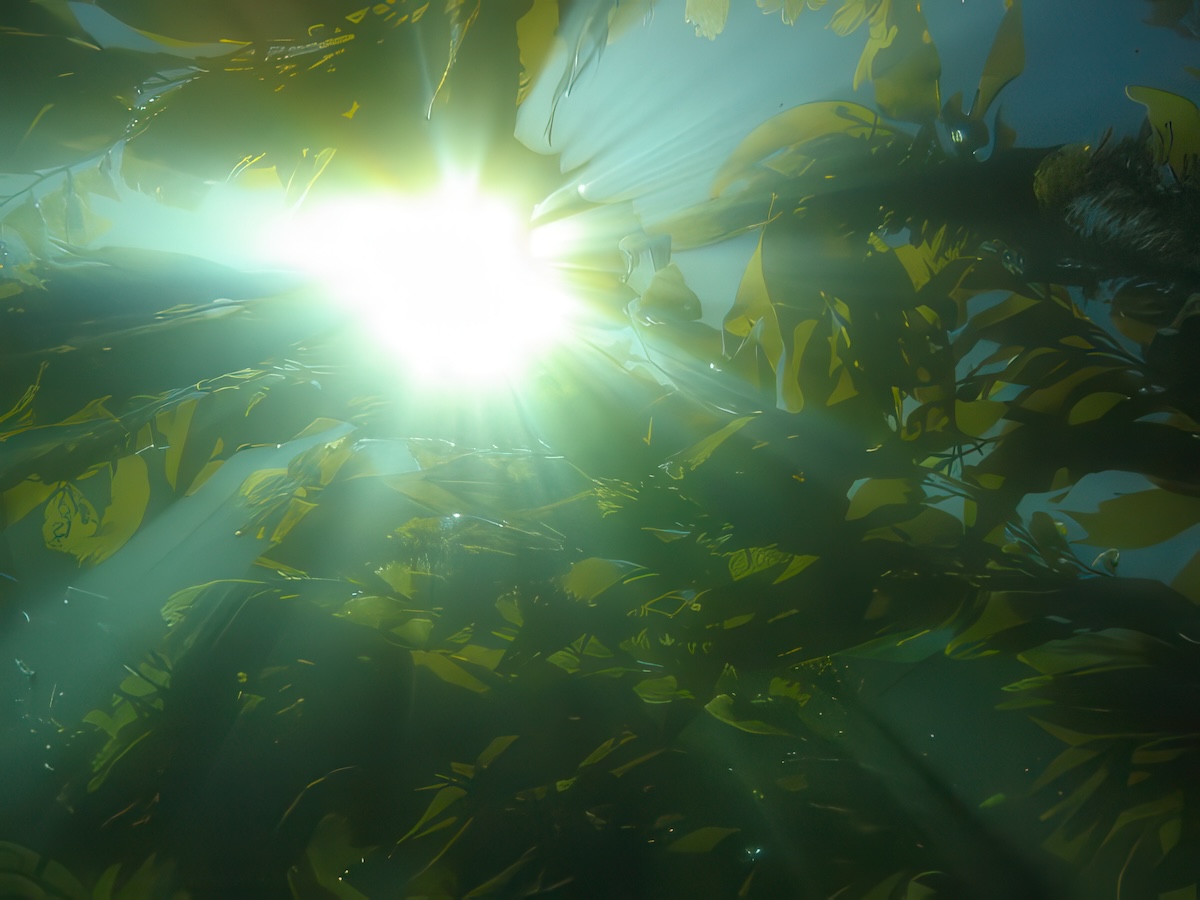
Sunlight filtering through a Catalina kelp forest during some of my earliest dives. The photographs weren’t great yet, but the fascination was already there.
Everything Looks Better Underwater
Somewhere along the way I noticed something strange.
Almost anything becomes more interesting after it spends six months underwater.
A rope becomes covered in algae, hydroids, and tiny critters. A piling becomes a miniature reef. A sunken boat stops looking like a boat and starts looking like an ecosystem. Even random junk begins developing personality once marine life starts colonizing it.
Divers know exactly what I’m talking about.
We spend enough time underwater and suddenly we’re fascinated by things that would be completely unremarkable on land.
Part of that comes from slowing down. Part of it comes from learning to look more closely. Either way, the underwater world has a way of rewarding curiosity.
What started with kelp forests and Garibaldi eventually expanded to nudibranchs, shrimp, blennies, crabs, and all the other tiny creatures I had spent years swimming past without noticing.
The more I dove, the more I realized there was always something new to see.
Eventually I reached a predictable conclusion.
If all this stuff was so fascinating underwater, I wanted a way to bring some of it home with me.
That’s when I picked up my first underwater camera.
The Easy Button Was My Friend
My first underwater camera was a Canon S110. I already owned the camera, so I picked up a used housing on eBay, installed a fresh seal, and declared myself ready for underwater photography.
My entire photography strategy could be summarized in three easy steps:
Point. Click. Bloop.
I loved the Easy Button.
The camera made most of the decisions and I was perfectly happy to let it. Looking back, I don’t think that held me back at all. In fact, I think it was exactly what I needed at the time.
As for keeping water out of the housing, I handled that with mixed success.
People sometimes forget how much is going on when a new diver gets underwater. You’re monitoring your air supply. You’re paying attention to your buddy. You’re working on buoyancy. You’re navigating. You’re trying not to kick coral, stir up silt, lose the group, or drift into something embarrassing.
Adding a camera to that mix doesn’t reduce task loading. It increases it.
There’s a reason most instructors don’t let Open Water students bring cameras to class.
They already have more important things to focus on.
Air first.
Buddy second.
Everything else after that.
Photography should never compete with the fundamentals.
For years, the Easy Button allowed me to enjoy underwater photography without spending mental energy worrying about camera settings. Instead, I could focus on becoming a better diver while still bringing home photographs of the things that fascinated me.
And honestly, it worked.
I took hundreds of photographs that way. Some were terrible. Some were decent. A few were surprisingly good. More importantly, I was building experience underwater and developing the habits that would eventually make everything else possible.
At the time, I wasn’t trying to become a great underwater photographer.
I was trying to become a competent diver who happened to carry a camera.
The distinction matters.
The Art of the Possible
As the years went by, I started attending underwater photography seminars whenever I had the opportunity. One of the most memorable was with Cathy Church, whose work and reputation in the underwater photography world are well deserved.
Cathy introduced me to concepts that would eventually become incredibly important: ISO, shutter speed, aperture, and white balance. Photographers already know these concepts well. At the time, I was mostly learning the vocabulary.
I understood what ISO was. I understood what shutter speed did. I kind of understood white balance. Aperture made enough sense that I could repeat the definition if somebody asked.
What I didn’t understand yet was the relationship between them.
I knew the individual ingredients. I didn’t know how to cook with them.
Looking back, that’s perfectly normal. Learning photography is a lot like learning to dive. You don’t master a skill because somebody explained it once. You hear it, practice it, forget parts of it, revisit it later, and gradually connect the pieces through experience.
What Cathy really gave me wasn’t mastery. She gave me a glimpse of what was possible.
I started seeing photographs that looked dramatically different from anything I was producing. Better composition. Better lighting. Better storytelling. Images that didn’t just document what was underwater but helped the viewer feel something about it.
I wasn’t intimidated by that.
I was fascinated.
The more I learned, the more I realized there was an entire craft hiding beneath the surface. I just wasn’t ready for all of it yet.
That would come later.
CoCo View, Mickey, and The Big 4
A few years later, I found myself at CoCo View Resort in Roatán, Honduras.
As a Christmas gift, my best dive buddy and I decided to spend a day with CoCo View’s resident photo pro, Mickey Charteris, author of Caribbean Reef Life. Looking back, it was one of the best diving-related gifts I’ve ever given myself.
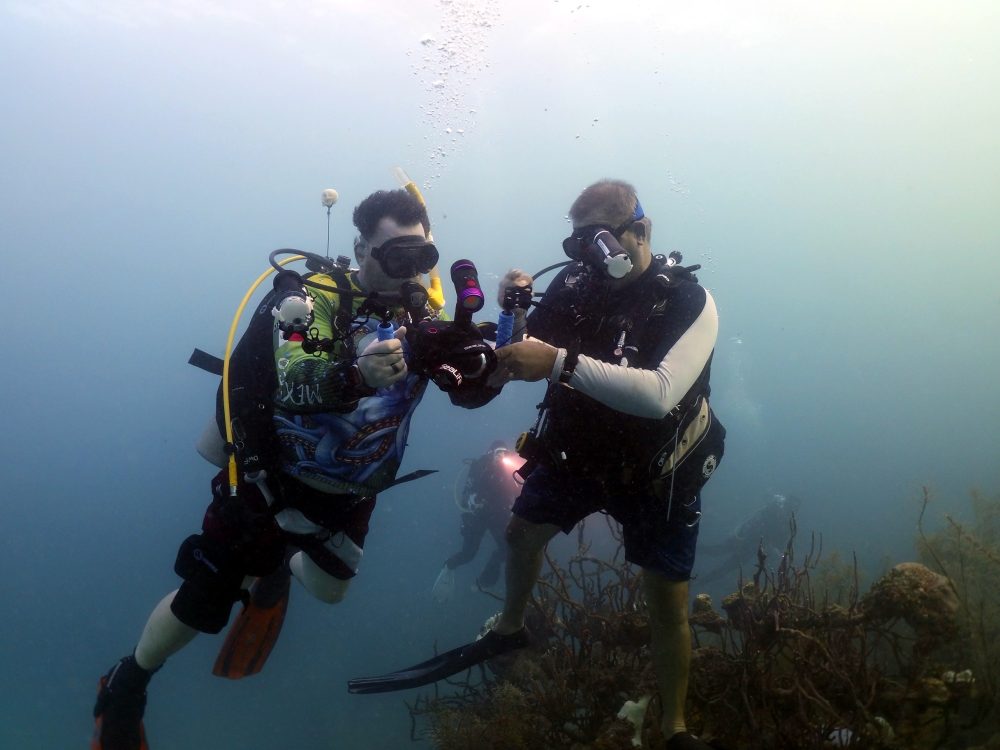
Mickey Charteris giving me a few underwater photography pointers at CoCo View. Some lessons stick better when they happen on a dive.
Cathy had already taught me the vocabulary. I knew what ISO, shutter speed, aperture, and white balance were supposed to do.
What I still didn’t quite understand was the conversation happening between them.
Mickey spent part of the morning sitting with me in the photo hut, taking photographs, changing settings, and discussing why the results changed. Sometimes we’d alter a setting and get exactly what we expected. Sometimes we’d alter a setting and get something completely different.
That was where things started getting interesting.
Photographers usually talk about the Exposure Triangle—aperture, shutter speed, and ISO. But shooting underwater changes the rules. Somewhere along the way, I realized that ignoring water’s effect on color was a recipe for frustration, so I added white balance to the mix and started thinking of it as The Big 4.
The names weren’t the problem. I’d known the names for years.
The relationships were the problem.
I understood that aperture affected depth of field. What I didn’t fully appreciate was how changing aperture also changed the amount of light reaching the sensor. Every adjustment seemed to create a chain reaction somewhere else.
Open the aperture, and one thing improves—but something else changes. Close it down, and a completely different tradeoff appears. Suddenly shutter speed matters, then ISO matters, and suddenly the image looks completely different than intended. Now you have to figure out why.

Christmas tree worms photographed with multiple settings
After lunch we headed to the house reef and started putting those ideas into practice. Mickey would have me photograph the same subject repeatedly while changing individual settings. Sometimes I’d take five or six photographs of the same Christmas Tree Worm or sponge before moving on.
For the first time, I wasn’t just taking pictures. I was experimenting.
Mickey gave me a framework. He gave me a way to think about the camera that actually made sense to me.
Want to play with the Big 4?
If you are trying to move beyond the Easy Button too, I built a DWF Labs sandbox to help make aperture, shutter speed, ISO, and white balance feel a little less mysterious.
The Underwater Exposure Triangle Sandbox lets you experiment with camera settings, watch the photo preview change, and see how one adjustment can affect everything else.
Heads up: this is a dense interactive teaching tool, so it works best on a tablet, laptop, or desktop. Phones can load it, but your thumbs may start filing complaints.
One Ruined Photo at a Time
If CoCo View was where the concepts started connecting, the years that followed were where those concepts slowly became instinct.
Not quickly. Certainly not overnight. One dive, one photograph, and one mistake at a time.
Like many things, mistakes have a way of teaching lessons that success never does.
Every time a photograph came out darker than I expected, brighter than I intended, or focused on something completely different than the subject I thought I was photographing, I learned a little more about what those settings were actually doing.
A surprising amount of my photography education came from staring at a photograph and asking myself, “Well, what the heck happened there?”
Over time, the patterns started to emerge.
I started recognizing how changes to aperture affected not just depth of field, but also the amount of light reaching the sensor. I started predicting how changes to shutter speed or ISO would affect the final image. The camera stopped feeling mysterious and started feeling more conversational.
Not because I had mastered anything, but because I was finally developing intuition.
One of my favorite examples involves white balance.
At some point I learned that if I wanted a custom white balance underwater, I needed something reasonably white to point the camera at.
Unfortunately, reasonably white objects can be surprisingly difficult to find underwater.
Fortunately, I am spectacularly pale.
More than once, I’ve pulled up my rash guard, pointed the camera at my stomach, and used my own pasty belly as a custom white balance target.
I wish I were making that up. I’m not. It worked.
The funny thing is that the deeper I got into underwater photography, the less interested I became in collecting photographs and the more interested I became in understanding why certain photographs worked.
The process itself became part of the fun.
Sometimes I’d spend an entire dive experimenting with a single technique. Sometimes I’d revisit the same subject repeatedly while trying different approaches. Honestly, one of the most productive dives I can imagine today isn’t some bucket-list destination packed with sharks or manta rays.
It’s a boring shore dive with a cooperative subject and enough time to experiment.
That’s where muscle memory gets built.
That’s where information slowly becomes understanding.
The Humbling Part
A few years after my trip to CoCo View, I found myself in Anilao, Philippines for a dedicated underwater photography trip.
By that point, I was comfortable shooting manually. The Big 4 no longer felt mysterious. I wasn’t fumbling through menus or blindly guessing at settings anymore. I was starting to develop confidence in my ability to create the images I wanted.
Then I met the other photographers.
One photographer had been involved in developing Blackwater Diving. Another could make Lightroom perform what appeared to be actual sorcery. A third produced underwater video work with such patience and skill that I still don’t understand why National Geographic hasn’t hired him.
It was humbling.
Part of me found it inspiring.
Part of me found it mildly irritating (and sometimes not so mildly).
After all, I’d already spent years learning this craft. I’d taken classes. I’d practiced. I’d wrestled with manual settings and ruined plenty of photographs along the way. Discovering entire branches of underwater imaging that I had barely explored was exciting, but it was also a reminder of just how much I still didn’t know.
Eventually, inspiration won.
Most of the time, anyway.
Until that trip, I think I viewed underwater photography mostly through the lens of the camera itself. Anilao reminded me that underwater imaging is an enormous field with entire specialties, techniques, and skillsets that I had barely explored.
One of the biggest surprises involved editing.
I’d always thought of photography as something that mostly happened underwater. You take the photograph, make a few adjustments afterward, and you’re done.
Anilao challenged that assumption.
I watched photographers use Lightroom in ways I genuinely didn’t know were possible. Arthur C. Clarke once wrote that “Any sufficiently advanced technology is indistinguishable from magic.” I’m not saying Lightroom is magic, but I wasn’t completely convinced it wasn’t.
The experience changed how I thought about post-processing.
Not because I wanted to create things that never existed. Quite the opposite. I became interested in using editing to help photographs better communicate what I’d actually seen underwater.
These days, there are times when I take a photograph, look at the screen, and think, “I’ll fix that in post.”
The trip changed something else too.
I bought my first snoot.
Up until that point, most of my underwater photography had focused on illuminating subjects. A snoot allowed me to become much more selective about where the viewer’s attention went. Suddenly I wasn’t just lighting a scene. I was directing attention within it.
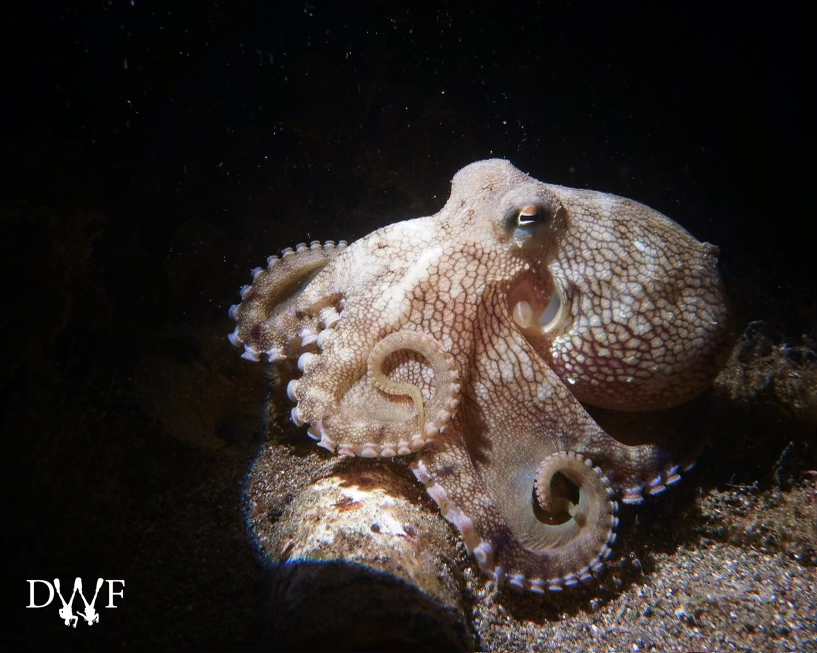
The nature of my photographs changed again.
Not because the equipment made me a better photographer.
Because it gave me new creative choices.
Anilao didn’t make me feel like I’d fallen behind.
It reminded me that there were still entire branches of underwater photography waiting to be explored.
The 3% Rule
Over the years, I’ve developed a completely unscientific way of judging how a dive went from a photography perspective.
I call it The 3% Rule.
If I take 100 photographs and come home with three that I’m genuinely happy with, I consider that a successful day.
That may not sound particularly impressive.
Oddly enough, the number used to be higher.
Years ago, I would have told you my success rate was closer to seven percent. As I’ve improved, that number has actually gone down.
Not because I’m taking worse photographs.
Because my standards keep moving.
I notice things now that I would have completely ignored ten years ago. Focus. Composition. Lighting. Distracting elements in the background. Tiny details that once escaped my attention now jump out immediately.
The good news is that photography gives you an endless supply of opportunities to improve. The bad news is that photography gives you an endless supply of opportunities to improve.
That’s the deal.
You get better, but your definition of good (or even just acceptable) gets better too.
Learning to Bring the Ocean Home
Today I shoot with a Nauticam housing and an OM-1 camera. I have strobes, a snoot, more accessories than I care to admit, and enough camera gear to make my younger self wonder what happened.
But here’s the funny thing. The goal hasn’t really changed.
Not since those first few seconds at Casino Point staring at kelp and Garibaldi.
I’m still trying to bring a piece of the underwater world home with me.
Sometimes that means a sea turtle gliding effortlessly through blue water. Sometimes it’s a tiny nudibranch no larger than my fingernail. Sometimes it’s a pygmy seahorse that my camera insists on focusing behind instead of on.
The camera helps, but the camera isn’t really the point.
A more expensive camera doesn’t automatically make somebody a better photographer any more than a more expensive regulator makes somebody a better diver.
The gear creates opportunities. The photographer still has to make something of them.
That’s one of the reasons I don’t regret spending so many years with the Easy Button. Every stage of the journey taught me something. Every camera taught me something. Every mistake taught me something.
Even the flooded camera taught me something.
Actually, it taught me several things.
The biggest lesson, though, has nothing to do with photography.
It’s that learning never really ends.
There will always be another technique to try. Another subject to photograph. Another photographer doing something that makes me stop and say, “Wait…you can do that?”
And honestly, I kind of love that.
One of the unexpected side effects of becoming an instructor is that I’ve developed a strange form of jealousy.
Not the bad kind.
The fun kind.
I watch new divers experience their first sea turtle. Their first lobster. Their first squid. Their first octopus. Their first nudibranch. Their first shark. Their first sea lion. Their first whale shark.
And sometimes I find myself thinking, “Man, I wish I could do that again.”
Not because the experiences become less special over time. They don’t.
But there is something magical about a first encounter.
The first time you realize that sea turtles are somehow even cooler in person than they are in photographs. The first time a sea lion decides you’re worth investigating and spends the next few minutes treating you like an underwater toy. The first time you encounter an animal you’ve only ever seen in documentaries and suddenly it’s right there in front of you.
As instructors, we get a front-row seat to those moments. We know what’s coming before our students do. Sometimes I find myself grinning behind my regulator because I know somebody is about to have a memory they’ll still be talking about years from now.
Photography has always been my attempt to hold onto a little piece of that feeling.
Not because a photograph can recreate the experience.
It can’t.
But every once in a while, a photograph comes close enough to remind me why I fell in love with the underwater world in the first place.
Because after all these years, I still feel a little bit like that new diver at Casino Point putting his face in the water for the first time.
I’m still looking around in amazement.
Now I just happen to have a camera with me, and I’m ready for the dives I’ll be making this weekend.