Zero Feet. Zero Speed. Build Your Scuba Emergency Action Plan Before You Need It
We spend a lot of time in scuba classes talking about problems we sincerely hope never happen. An injured diver. A missing buddy. A suspected case of decompression illness.
Then we look at the reality of real-world dive sites: an emergency unfolds where nobody can remember the exact physical address, the cell signal is terrible, and the ambulance entrance is behind a locked gate nobody thought to ask about.
That might sound a little grim, but the point is not to convince everyone that catastrophe is waiting behind the next coral head. The point is much simpler: The first time you think about a problem should not be while that problem is unfolding in front of you.
To make getting organized painless, we just launched the DWF Labs Emergency Action Plan Builder. But before you use it, we need to talk about how a real emergency plan works, and why a piece of paper is entirely worthless unless you use it to build real muscle memory.
Zero Feet. Zero Knots.
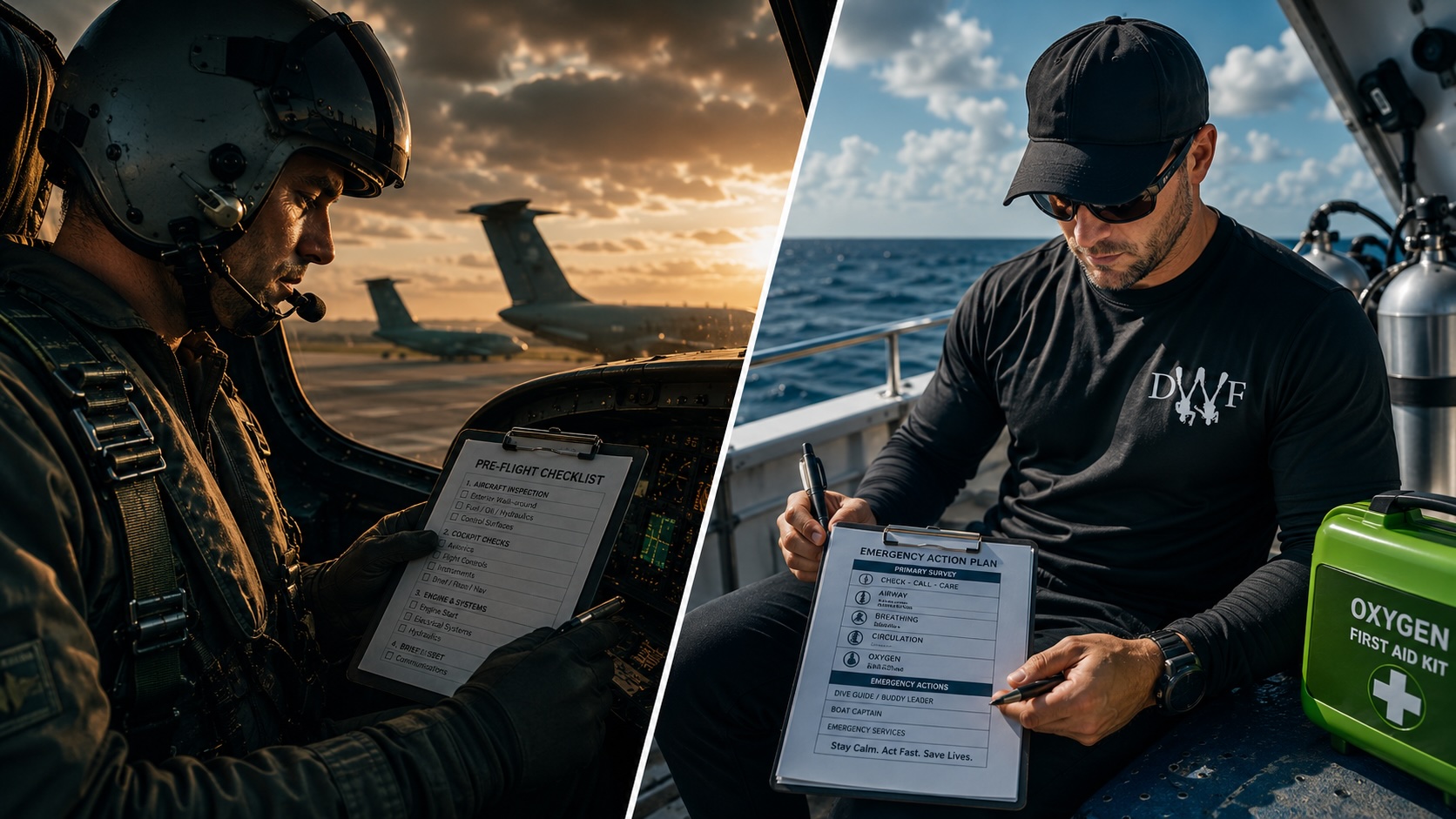
Years ago, I worked as a civilian engineer and aircrew aboard the Airborne Laser aircraft, which was a platform built to track and destroy ballistic missiles using a megawatt-class laser. We did a massive amount of emergency preparation. We studied procedures, discussed contingencies, practiced responses, and thought through the things that could go wrong before anybody ever left the ground.
One phrase from those aviation days has always stuck with me:
“The best time to plan for an emergency is at zero feet altitude and zero knots.”
On the ground. Parked. Calm.
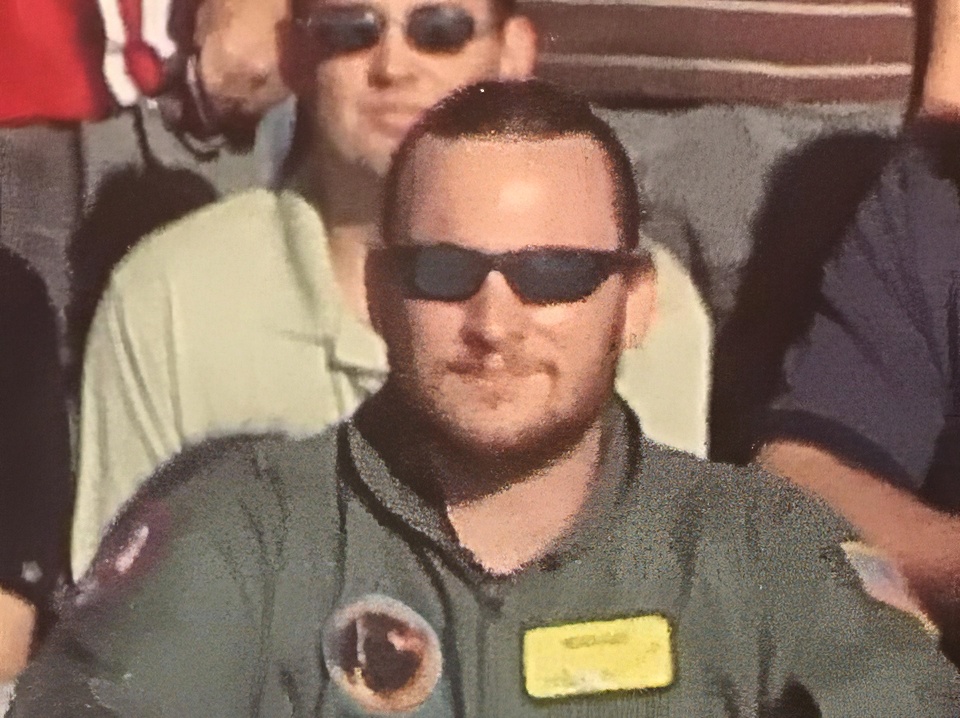
A throwback to my aircrew days. We didn’t make things up on the fly with a megawatt-class laser on board, and you shouldn’t do it with life support equipment at a dive site, either.
Nobody is yelling. No warning lights are flashing. Nobody is trying to make a split-second, life-or-death decision while half the available information is missing.
A scuba Emergency Action Plan (EAP) works the exact same way.
- The best time to figure out how emergency services will physically navigate a quarry or a boat dock is not while somebody is injured.
- The best time to locate the oxygen kit or find the physical AED is not while somebody needs it.
- The best time to decide who will call EMS, who will meet the ambulance, and who will manage the rest of the group is not while everyone is standing around in wet exposure protection asking, “What do you want me to do?”
You make those decisions at zero feet and zero knots. Before the dive. Before the class. Before the trip.
Why We Foot Stomp the Reality Check
Before you click “Generate,” let’s clear the air. This tool is built to drastically reduce the administrative friction of getting organized, but it is not a magic wand. Safety is an active human process, not a PDF.
| What This Is | What This Is NOT |
|---|---|
| A Friction Reducer: It takes the painful chore out of organizing emergency details so you actually do it. | A Substitute for Training: If you and your crew don’t have rescue and first aid skills locked down, a printed PDF won’t save you. |
| An Organization Tool: It brings your data points, gate codes, and local EMS entry points into one printable sheet. | A Guarantee of Safety: No software tool can eliminate environmental risk, prevent an accident, or guarantee a positive medical outcome. |
| A Local, Secure Builder: A private workspace running entirely in your browser that respects your data and student privacy. | A Self-Updating System: It won’t call the quarry to check if they changed the gate code this week. You still have to verify the data. |
The builder handles the administrative heavy lifting so you can focus 100% of your energy on preparation, role assignment, and muscle memory. It helps you get organized, but you still have to lead.
Muscle Memory Over “Figuring it Out”
When adrenaline hits, your conscious, problem-solving brain completely goes out the window. In a crisis, you do not rise to the occasion, you instantly sink to the level of your training.
Muscle memory is what saves lives. We don’t write an EAP so someone can read a manual during an active rescue; we write it to codify the exact procedures we intend to make automatic. You simply cannot rely on folks to “figure it out on the fly.” They won’t. People freeze, or they duplicate efforts.
This is exactly why emergency planning is baked so deeply into our leadership courses:
- In the PADI Rescue Diver Course, you learn to look beyond yourself, recognize developing problems, manage an emergency scene, and start organizing the response.
- In the PADI Divemaster Course, you take that responsibility another step further and learn to think like a true leader.
Key Features of the DWF Labs EAP Builder
We built a streamlined, local-first web tool to replace the nightmare of copying and pasting ancient Word documents or squinting at Google Maps under pressure.
- Zero Server Storage: Your data is yours. The tool processes everything locally in your browser. Student names, private phone numbers, and emergency contacts are never sent to or stored on our servers.
- Smart Prompts: Granular fields remind you to look up gate codes, cell service blind spots, local EMS access points, and the nearest physical AED location.
- Assigned Roles Section: Explicitly designate your Person in Charge, EMS Caller, Oxygen Provider, EMS Guide / Runner, and Log Keeper before anyone gets wet.
- Built-In “Do Not Delay” Checklists: Includes standard, un-cluttered protocols for an injured diver, suspected DCI, missing diver, and clear evacuation routing instructions.
Print It. Share It. Drill It.
An EAP should not be created merely so an instructor can say one exists. Once you hit “Print/Save PDF” on the builder, follow the Rule of Three:
- Copy 1 (The Leader): Stays on the dive briefing clipboard.
- Copy 2 (The Kit): Laminated or kept in a dry bag inside the Oxygen/First Aid kit.
- Copy 3 (The Access Vehicle): Placed on the dashboard of the primary shore vehicle or at the vessel’s exit point.
Make it a Briefing Habit
Instead of trying to teach a plan at the last second or verifying data while balancing a 30-pound tank on your back, use the printed EAP to quickly activate the training your team already possesses during the morning briefing:
“Alright team, we’re running our standard medical response protocol today. Frank is Person in Charge, Sarah is EMS Caller, and John is the runner. The O2 kit and the printed EAP with our exact GPS coordinates are right here. We verified the gate codes and cell service spots during pre-trip planning, so we all know our jobs, let’s look out for each other.”
Five calm minutes at zero feet and zero speed saves a whole lot of frantic, chaotic minutes later.
Build Your Next EAP Now
Ready to build a clean, comprehensive plan for your next class, club trip, or local shore dive?
Click Here to Launch the DWF Labs EAP Builder
Build the Muscle Memory to Back It Up
An emergency plan is only as good as the training behind it. If you want to turn safety protocols into automatic reflexes, it is time to take the next step in your dive training.
PADI Rescue Diver
Learn to look beyond yourself, manage a chaotic emergency scene, and effectively organize a response team before EMS arrives.
PADI Divemaster
Take full responsibility as a dive leader. Master site planning, mapping, and supervising emergency scenarios as a pro.
Fill out your plan, assign the roles, and build the muscle memory long before you ever gear up. Dive safe!