When the Drill Became Real
We practice emergencies because the first time we think about a problem should never be while it is unfolding in front of us.
Not long ago, I was out for a day of wreck diving off North Carolina.
My buddy and I made it down to the wreck at 80 feet on our second dive and began working our way around the hull. It was the kind of diving that holds your attention completely. There was structure to explore, marine life tucked into the wreck, and monofilament fishing line seemingly everywhere. I had brought my shears with me, so as we moved around the hull, I began cutting away some of the line. It wasn’t going to transform the wreck, but every little bit removed was one less entanglement hazard waiting for another diver or animal.
Oh, and there were sharks. Tons of them. Well, actually, at least three solid sand tigers patrolling the structure, which was predictable given that I had left my camera back at the hotel room.
Another diver from the boat had fallen in behind us as we worked our way around the wreck. She was not part of our dive group, and at that point, I had no indication that she needed assistance or that she had become separated from her buddy. I remained aware that she was there, but my attention was primarily on my own buddy, our position on the wreck, and the dive we were making together.
Eighty Feet Down
Then I felt a tug on my shoulder.
I turned around, and the other diver gave me the out-of-air signal.
For a moment, I wasn’t sure I had understood her correctly. I pointed to her and repeated the signal back as a question.
“Out of air?”
She gave me the signal again, this time with an urgency that seemed to say, “Yes, dummy. Out of air.”
The instant she confirmed it, my hands took over. There was no debate, no lengthy diagnostic process, and no time spent wondering whether she was my student, my assigned buddy, or part of my group. She needed air. I had air.
At first, she put my alternate in her mouth and tried to breath-purge it, but then signaled that she wasn’t getting gas. That was my only moment of real dread during the entire crisis. If a diver in a panic cannot or will not take gas at depth, you cannot force them to breathe. I pressed the purge button lightly for her, she felt the gas begin to flow, and she started breathing. That was the moment the immediate crisis was over.
We still had eighty feet of water sitting between us and the surface, of course, but she now had breathing gas. An emergency at depth can go bad fast if a diver panics and bolts, but having a working regulator turned an immediate, life-threatening situation into a problem we knew how to manage.
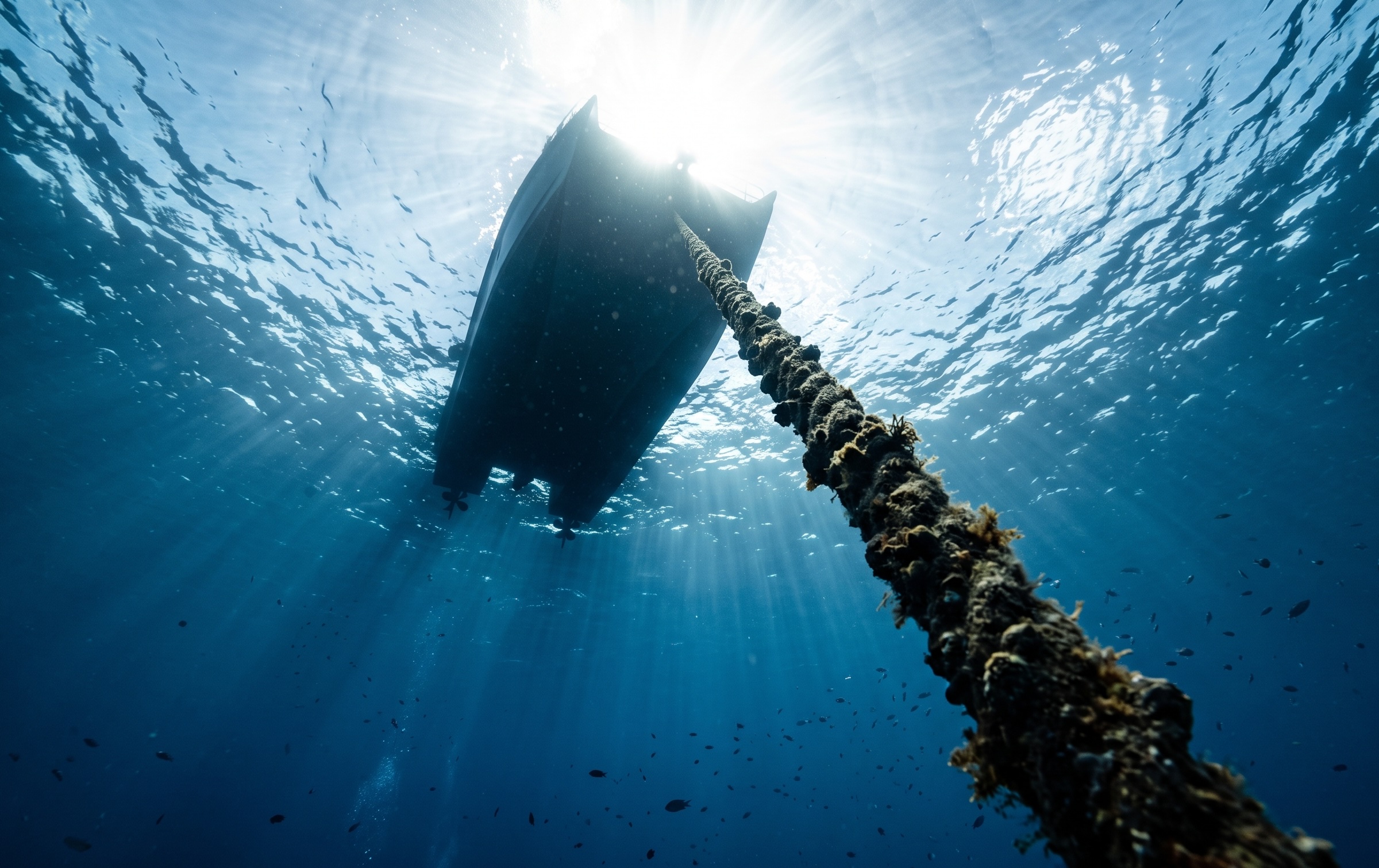
I checked that she was okay. I checked my gauge and confirmed that I had plenty of gas remaining, so I took a few breaths myself and allowed my brain to catch up with what my hands had already done. I signaled my buddy that the three of us were going up. We made our way back toward the anchor line while sharing air, arm in arm, exactly the way I teach the procedure in an Open Water Diver course. We reached the line and made a calm, controlled ascent together to the surface.
At the surface, she boarded the boat. She was safe, conscious, and apparently uninjured. Once she was in the hands of the boat crew, my buddy and I paused to check in with each other. We checked our remaining gas, confirmed that we were both focused and comfortable, and re-descended to finish our planned profile.
Everybody was okay.
That should have been the end of it, but these things don’t end when the immediate danger passes. The questions follow you home.
When the Drill Becomes Real
I have practiced out-of-air procedures hundreds of times with students.
I’ve demonstrated them, corrected them, repeated them, and watched divers slowly turn an awkward sequence of movements into something smooth and automatic. Donate the alternate. Establish contact. Make sure the receiving diver is breathing. Communicate. Ascend together.
Most of the time, it’s a drill. The student knows I’m not really out of air. I know the student isn’t really in danger. We’re practicing a response to something we sincerely hope will never happen.
But sometimes it does happen.
This was the fourth time in sixteen years that I’ve had to share air with another diver during a real emergency. They haven’t all been true out-of-air situations. Sometimes it’s a runaway free-flowing regulator, sometimes it’s a panicked diver blowing through their tank, but the end result is always the same. Someone needs breathing gas, and they need it right now.
The difference between a drill and the real thing isn’t the physical procedure. The equipment works the same way. The signals mean the same thing. The ascent still has to be controlled.
The difference is that, during a real emergency, the other person is looking at you because they actually need the gas you are carrying. There is no reset button. There is no instructor hovering nearby to intervene. There is no opportunity to stop, discuss what went wrong, and try the exercise again.
That is why we train. We rehearse these scenarios because the consequences of being unprepared are simply too high to leave to chance.
Reflexes Over Reasoning
When eighty feet of water is sitting above your head and someone reaches for your chest, your conscious mind is surprisingly slow to react.
If you have to pause to recall where your octo is routed, how to unclip it, or how to clear a dry second stage, you are wasting the few seconds where a situation remains manageable. Underwater emergencies escalate quickly when panic takes over, and panic thrives in hesitation.
That is why physical repetition is the only currency that matters in a crisis.
When that diver signaled that she needed gas, my hands moved on autopilot. I didn’t mentally review an instruction manual or run through a decision tree. I instantly freed my octo from its magnetic holder, handed it over, and helped her clear it so gas was flowing. My buddy saw the exchange, and the three of us turned toward the anchor line.
That entire sequence took seconds because my hands already knew their job. The physical movement was so deeply ingrained from years of pool work and student evaluations that my brain didn’t need to supervise the mechanics. It just had to keep us calm and manage the ascent.
You cannot improvise physical skill when your adrenaline spikes. You can only deploy the habits you have already built.
The Questions That Remain
I still don’t know exactly what happened.
When we were back aboard the boat after the dive, I sat with the diver and asked whether she was okay. I asked whether she knew why she had run out of gas. She didn’t. There are plenty of possibilities, but speculation isn’t the same thing as an answer. I don’t know whether there was an equipment issue, an unexpectedly high breathing rate, a gas-management problem, or something else entirely.
I also don’t know where her buddy was when she needed gas.
That is an important question, but searching the wreck for an absent buddy was never a realistic option. Once she was breathing from my alternate, the immediate crisis was under control, but sharing gas is a temporary fix, not a configuration for exploring a wreck. It is a little like driving on a temporary spare tire: it solves the immediate emergency, but your only goal is to get somewhere safe without unnecessary delay. In our case, that meant making a calm, controlled ascent to the anchor line so the boat crew could account for the rest of the divers.
I wasn’t going to grill a diver who had just experienced one of the most frightening events that can occur underwater. She already understood that the situation was serious. She was shaken, embarrassed, and clearly replaying it in her own mind. Besides, interrogating her wasn’t my place.
I told her that the important thing was that she was safe, and to stop beating herself up. Self-punishment doesn’t make anyone a safer diver. But I also encouraged her to take the time later to analyze everything that had happened: to trace the chain of events, figure out where the gaps were, and identify what needed to be done differently so that it never happens again.
On a long enough timeline, things go wrong. Sometimes several small problems line up in exactly the wrong order, equipment behaves unexpectedly, or a person makes a decision they wouldn’t make again. The goal after an emergency shouldn’t be humiliation; it should be learning. At that moment, she needed reassurance, leaving the technical debrief for when she was calm and back with her team.
She Was Not Part of Our Group
Nobody receiving an out-of-air signal should waste time debating organizational boundaries. We don’t tell another diver to find someone else because they boarded the boat with a different group or planned a different line. She needed air, and I had it.
At the same time, helping her didn’t mean assuming permanent responsibility for her dive. My buddy and I managed the emergency, escorted her safely to the surface, and transferred her to the boat crew.
My buddy also executed his role flawlessly. He stayed aware, understood my signal, and adjusted immediately when our dive changed without warning. We didn’t need a committee meeting underwater; we simply defaulted to our training.
The Camera I Left Behind
There was also an element of luck involved.
It had been a hot minute since I had done a non-training dive without a camera. But on this trip, I thought I had left my wide-angle wet lens back home in Maryland. Without that setup, I decided to just leave the whole camera rig back at the hotel room. At the time, it felt like an annoying oversight, especially on a dive with solid visibility and three large sand tiger sharks patrolling the wreck.
In hindsight, it was one of the luckiest decisions I could have made.
I wasn’t looking through a viewfinder when she reached for me. I wasn’t managing a heavy camera rig, adjusting strobes, or trying to protect an expensive housing while donating gas. My hands were free, my alternate air source was completely accessible, and my attention was where it needed to be.
Sometimes leaving a piece of gear behind turns out to be the exact thing that keeps your hands free when someone needs them.
Prepared for What Might Happen
Most dives end without an emergency. Most divers will never need to donate gas outside a training exercise. Many of the skills we practice will remain drills for an entire diving career.
That doesn’t make the practice unnecessary. It makes us fortunate.
Training isn’t only about preparing for what is likely. It is about preparing for what is possible. We rehearse failures, emergencies, and uncomfortable situations because the consequences of being unprepared are too serious to leave to improvisation.
On that dive, an unfamiliar diver reached out and told me she couldn’t breathe from her own system. The problem was real. The response was automatic. She received gas. My buddy understood the plan. We maintained contact, reached the ascent line, and returned her safely to the boat.
Nobody was injured. Everybody went home.
I am grateful for that outcome, but I will still think about that dive for a long time. I’ll think about what happened, what might have happened, and how quickly an ordinary wreck dive changed.
Most of all, I’ll think about why we keep practicing the same emergency procedures again and again.
The drills can feel repetitive. They can feel mechanical. They may even feel unnecessary when every dive has gone exactly as planned. But somewhere between the first awkward practice and the hundredth repetition, a drill becomes a skill.
And one day, someone may tug on your shoulder and need you to use it.