Learning to Scuba Dive After 40: You’re Not Too Late
Why starting later does not mean you have to hurry.
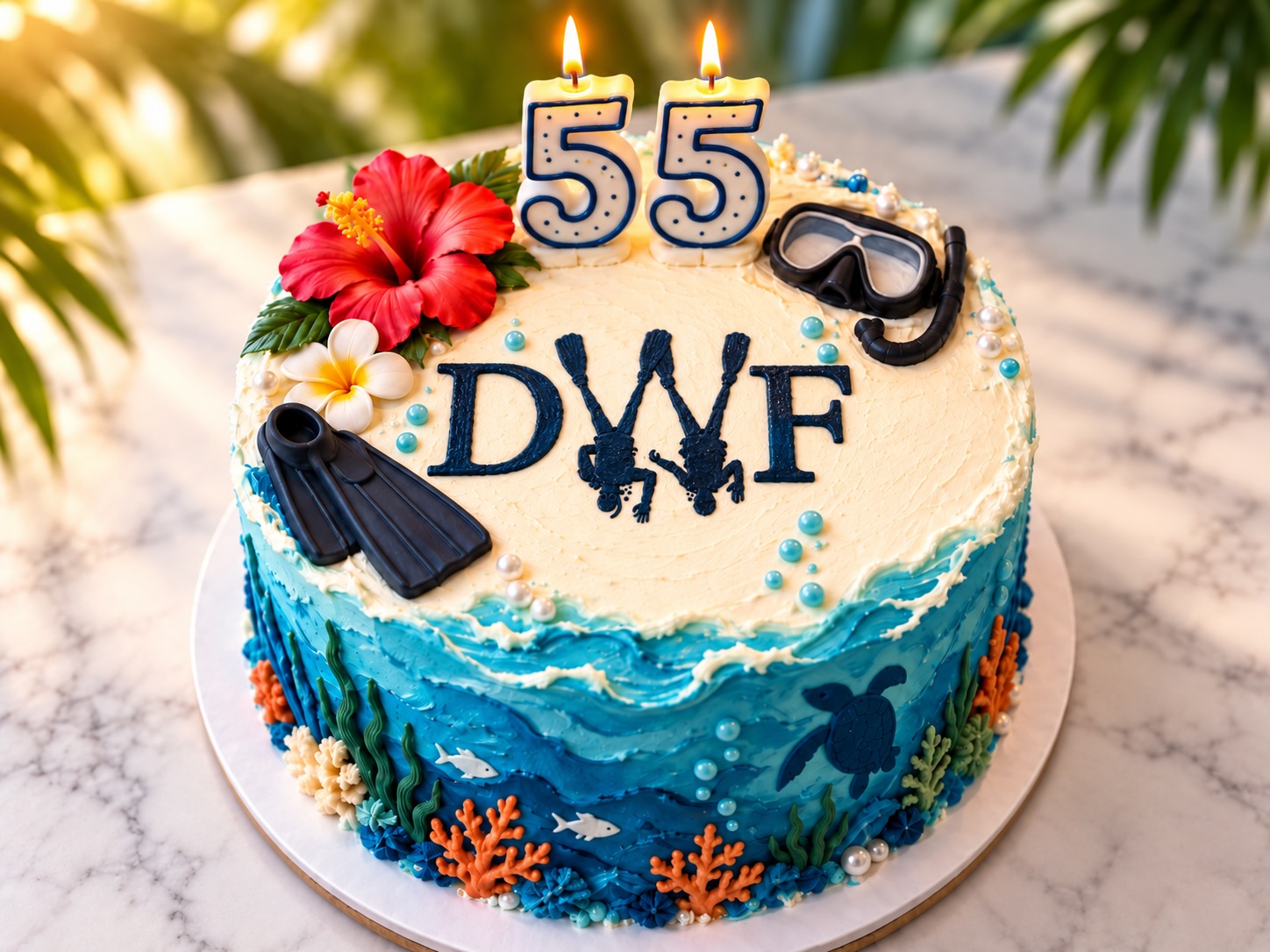
Today I turn 55.
When I was a kid, 40 was old. My father had a coworker who was right around that age, and this dude had seen some stuff. He had a craggy voice, skin that looked like a weathered baseball glove, and smoked unfiltered Marlboro Reds. One day he looked at me and said, “Hey kid, check this out.” Then he pulled up one of his pant legs and showed me an old injury that he claimed came from a bullwhip in Korea.
Somewhere in the back of my young brain, that became my snapshot of what 40 looked like: a grizzled survivor who had already seen it all, done it all, and had the scars to prove it.
Of course, that was just a snapshot. Decades later, I can see how ridiculous it was. But I think a lot of us still carry around similar snapshots when we think about trying something new later in life. Maybe I should have done that when I was younger. Maybe everyone else will be half my age. Maybe I am not athletic enough. Maybe I missed my chance.
If learning to scuba dive is something you have been thinking about, you haven’t missed anything.
I Learned to Dive at 38
I learned to scuba dive when I was 38 years old. Not quite 40, but a looooooong way from 18.
I grew up on the Oregon Coast. It is beautiful, cold, wet, and the smell of salt air still reminds me of home. But a scuba diving paradise it sure wasn’t. Even now, when I go back and look around for somewhere to dive, it seems like every dive business I find online has already gone out of business and I have stumbled across nothing more than the remnants of its contact information left behind on the Internet.
Later, I lived in Monterey in the early 90s, sitting right on top of some of the best cold-water diving in the country, and I still never once put on a tank. I doubt I could have afforded the gear, the classes, or the boat fees back then anyway.
My 30s were mostly work. For about eight years, I worked at least 60 hours a week. Looking back, a lot of that period is simply a blur. I could probably have afforded scuba by then, but time and attention were a different story.
Learning to dive wasn’t some grand plan I had been working toward since my 20s. I learned at 38 simply because I finally wanted to, and I finally could.
In 2010, while living up in the high desert north of Los Angeles, I walked into the Lancaster Sport Chalet on a whim. I wasn’t looking for gear. I wasn’t looking for scuba at all. I just happened to notice the dive counter and wandered over.
Those people knew exactly what they were doing. Discover Scuba was free. First hit is free, buddy.
It sounded cool. It sounded interesting. The price was certainly right. When I talk today about Discover Scuba being a low-cost, low-risk way to find out whether this is something you might enjoy, I know exactly what that looks like. Mine was about as low-cost and low-risk as it gets.
I also had absolutely no clue what I was getting into.
My first breath underwater was comfortable. I was always comfortable in the water, but there was something about breathing underwater that immediately felt familiar. It distinctly reminded me of every dream I had ever had about being able to breathe underwater. I was hooked.
The pricing experience that followed was considerably less magical. The class might have been advertised at one price, but then came books, gear, and everything else that somehow was not included in that number. It annoyed me then, and that experience is one of the reasons I price Dive With Frank the way I do now. I want people to know what something costs before they sign up. One number up front.
But none of that changed the important part. I started diving.
Starting at 38 did not mean I was behind. It was simply when I started. We often look at people who have been doing something for years and forget that every single one of them had a first day.
You Don’t Have to Be 22
People like to say, “Age is just a number.” No, it isn’t. A 50-, 60-, or 70-year-old body may come with considerations an 18-year-old body does not, and pretending otherwise does not help anybody.
Scuba can be physical. Cylinders are heavy, gear gets carried, and wetsuits occasionally become opponents in a wrestling match. Boat ladders can be unpleasant with a tank on your back, and shore entries, heat, cold, current, or rough water can all add physical workload.
You should respect the body you have. That includes taking the diver medical screening process seriously, answering the questionnaire honestly, and getting medical evaluation if your answers indicate that you need one.
But good scuba diving is not a contest of brute strength. It rewards technique, buoyancy, breathing, situational awareness, communication, judgment, preparation, and knowing your limits. You do not have to overpower the water. You are usually much better off when you stop trying. Water is dense, and fighting it only wastes energy and air. Learning to relax, get yourself into good trim, and let your fins and buoyancy do the work can make an enormous difference.
Nervous Is Allowed
Breathing underwater is weird. We can dress it up with technical explanations, but the first time you put a regulator in your mouth and deliberately submerge your face, you are doing something your brain has spent your entire life telling you not to do.
Some students take to it immediately. Others need more time. Neither tells me very much about the diver they may eventually become.
Being nervous about something unfamiliar does not automatically mean you cannot do it, and confidence does not have to arrive before you start. Confidence comes from experience. You learn a skill, practice it, realize you can handle it, and then do it again.
A good instructor will give you room to learn rather than make you feel as though you are holding up the class. If you need another attempt, take another attempt. The goal is not to look like a scuba diver. The goal is to become one.
It Isn’t a Race
If you are starting to dive later in life, you are not behind and there is nothing to catch up to. Scuba is not a race, and it certainly is not a sprint. It is a journey.
There is no leaderboard, no extra points for clearing a mask faster than someone else, and no prize for moving through certifications as quickly as possible. Nobody worth diving with cares whether another diver learned neutral buoyancy in fewer pool sessions than you did.
Need another attempt at a skill? Take it. Need another five minutes before getting back in the water? Take them. Not feeling a particular dive today? Don’t make it. You are allowed to progress on your own schedule.
Maybe eventually you want to explore wrecks, get into underwater photography, or fall in love with cold-water diving, which proves there really is something wrong with some of us. Or maybe you spend the next 20 years making beautiful 30-foot reef dives in warm water looking at fish. Sounds pretty good to me.
Certification is the beginning, not the destination. Take it one skill, one dive, one step, or one fin kick at a time. That is a perfectly acceptable way to make the journey.
Yes, Scuba Costs Money
I’m not going to tell you scuba is a cheap sport. It isn’t. Most water sports aren’t.
Training costs money. Equipment costs money. Boats cost money. Travel definitely costs money. Scuba also has an impressive ability to produce little pieces of gear you suddenly become convinced you absolutely need.
You do not have to buy everything at once. Think about how you furnished your first house or apartment. You probably did not walk in on day one and buy every piece of furniture, every picture for the wall, every lamp, and every little tchotchke you would eventually own. You did it one room at a time, one thing at a time.
Scuba can work the same way. Start with what you need. Rent some of the rest. Figure out what you like. Add things as you go and as your diving changes.
Admittedly, there is considerably less stuff to buy than there is for a house. It may still somehow cost about the same.
When you look past the gear receipts, think about what all of it gives you access to: adventure, travel, stories, and experiences with people you care about.
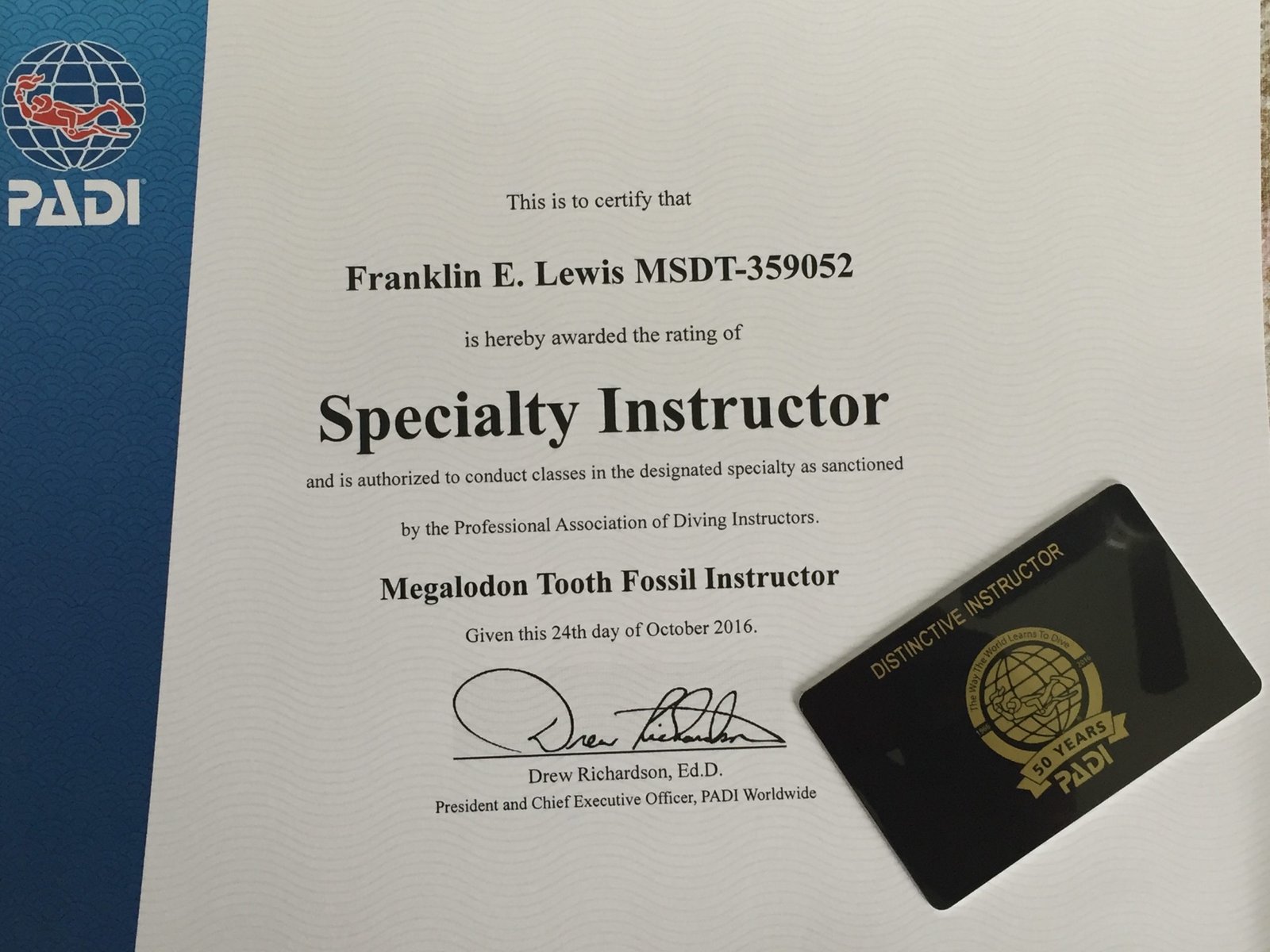
Scuba has given me some extraordinary memories. One of them was getting into the huge aquarium at EPCOT with my daughter. I also got to certify a set of twins I have known since the day they were born, two kids who have always known me as “Uncle Frank.” Watching people grow up is one thing. Getting to be the person who teaches them how to breathe underwater is something else entirely.
There are plenty of dives where I have forgotten the depth, the bottom time, or what cylinder I was carrying, but I remember the people who were there.
Scuba also creates an almost uncontrollable desire to share the underwater world with somebody else. You see something incredible down there and immediately start thinking about who you wish had been next to you to see it.
It Became About People
For an adult learner, the underwater part is only half of what you are signing up for. The other half is community.
Diving is not about collecting certification cards, racing through a training ladder, or owning the most expensive gear. It is about the people you meet, the people you dive with, and the experiences you share with them. Making genuine new friends as an adult can be surprisingly difficult, but scuba gives you an instant common denominator with people you might otherwise never meet.
I am a natural introvert. Engaging with strangers usually takes a lot of energy out of me, but teaching scuba is different. Because I teach in small, semi-private, or private settings, students get to learn at their own pace in the pool without feeling like they are on display. They usually don’t even meet each other until certification weekend. But when everyone gathers at the dive site for checkout dives, something clicks. Watching people who did their training separately come together, share the experience, and leave as dive buddies is one of the best parts of the job.
Most of what happens in scuba class isn’t dramatic. During one of my last classes of this season, I taught a father and daughter who completed their checkout dives a few weeks later. I still remember the moment she first hit the water. Her eyes got huge, and she had such a big smile on her face that her mask started leaking.
That is what you are stepping into when you decide to learn. You are not just acquiring a physical skill; you are entering a space where people step up, support each other, and discover something completely new together.
You Don’t Have to Know Where This Goes
You do not need a five-year plan before learning to dive. You do not need to worry about becoming a Rescue Diver, technical diving, deep wrecks, underwater photography, exotic travel, or filling half your garage with gear.
You just need to learn to dive, and that is enough. Learn the basics, get comfortable, make a dive, and then make another one. See what happens.
Maybe you become someone who makes ten dives a year while on vacation. Maybe you discover that local diving is your thing. Maybe wrecks grab you, or sharks, or photography. Maybe scuba becomes a much larger part of your life than you ever expected.
Every one of those outcomes is legitimate. You do not have to know the destination before you are allowed to begin the trip. I certainly didn’t.
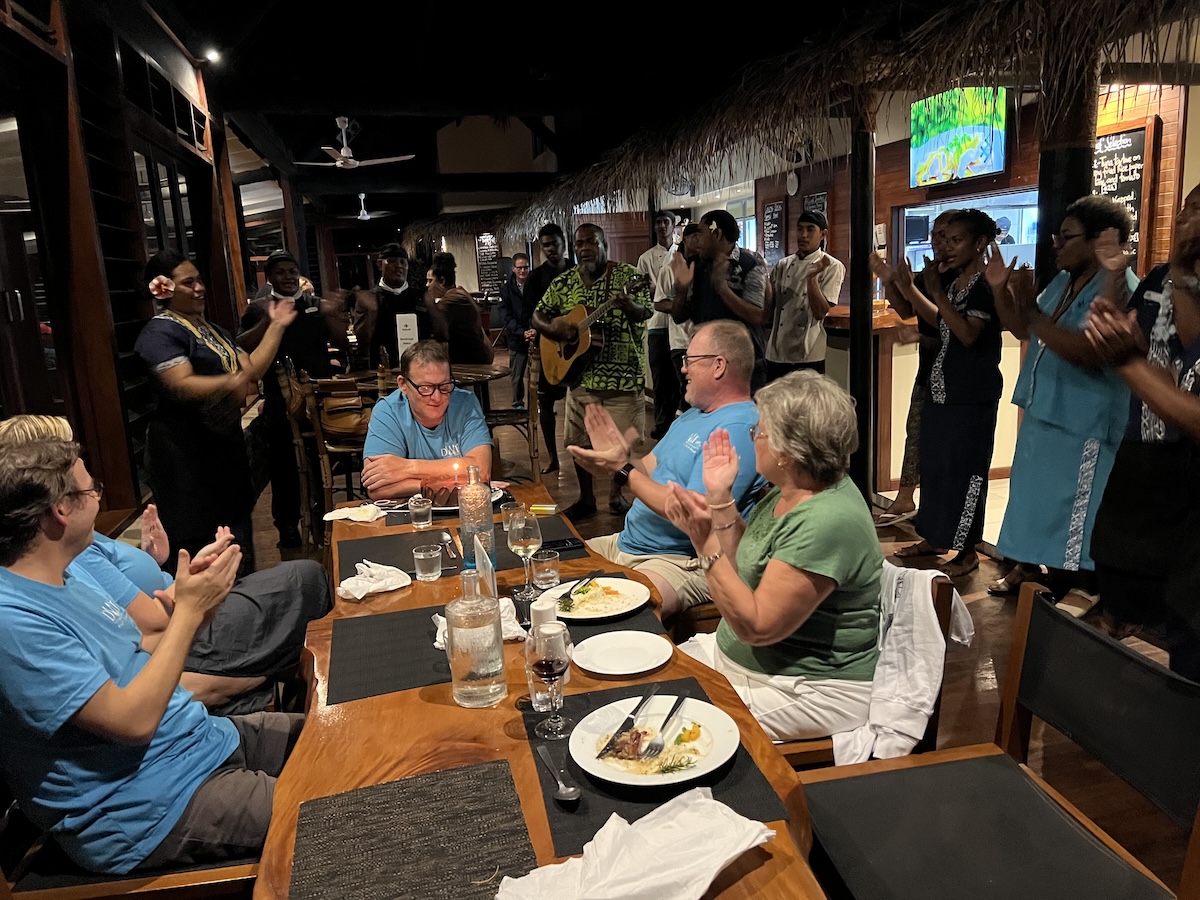
Fifty-Five
I arrived in Fiji at about six o’clock this morning. I am spending my 55th birthday here with ten days of diving ahead of me and a group of people who came halfway around the planet to experience it together.
Over the next ten days, I expect to see so many clownfish that at some point I will probably start looking for something else to photograph. Talk about first-world problems.
The tattoos are apparently very reasonably priced here too, so we will see how much wisdom 55 has actually brought me.
I am not spending my birthday worrying about mortality. I know I am not invulnerable, but worrying about the fact that life eventually ends does not seem particularly useful to me. Mostly, I feel incredibly lucky.
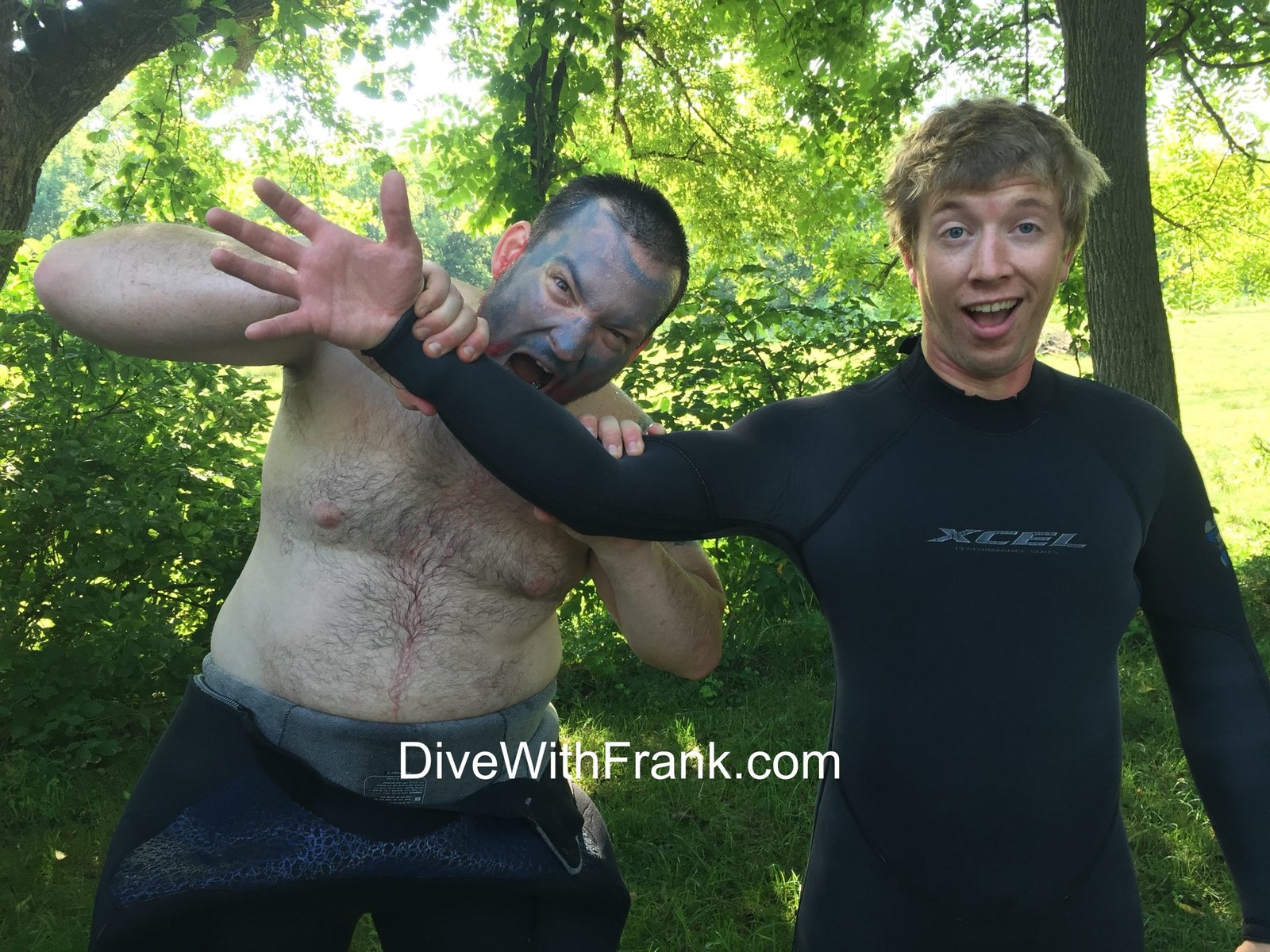
At 25, I think I would have taken one look at 55-year-old me and asked what the hell happened to the Viking beard. I probably would have thought I looked old as hell. But if that guy could see that starting a scuba class at 38 led to teaching over 500 students, building Dive With Frank, creating DWF Labs, and spending his 55th birthday preparing to dive in Fiji, I think he would say, “Holy shit, that’s pretty cool…also, you got fat, dude”
Careers get established. Families grow. Routines settle in. Somewhere along the way, it becomes very easy to start putting things into the “I always wanted to…” category instead of the “maybe I should…” category.
The kid who thought 40-year-olds were weathered survivors with bullwhip scars had no idea how much adventure was still waiting down the road. Turns out 40 wasn’t old. It wasn’t even particularly close.
If You’ve Been Waiting
Whether you’re 38, 55, or well beyond, if you’ve been putting this off for years, let’s do this. This is not a mountain to climb. Come with me and we’ll walk up this gently sloping hill together.
You do not have to know everything before you begin, and you do not have to race anybody once you start. We will take it one skill, one dive, one fin kick at a time.
You are not late, and you have nothing to catch up to. You just have to take the first step.
It may change your life.