

Why Diving Feels Like Therapy To Some People

The Zen of Overthinking: Why Scuba Diving Forces Total Presence in a Fractured World
The giant stride hits the water with a loud splash.
Then the world changes.
The noise of the boat fades. The chatter disappears. Gravity loosens its grip. Sunlight bends into shimmering columns beneath the surface while bubbles roar softly past your ears.
Then comes the breathing.
Slow inhale.
Slow exhale.
And just like that, the noise of the world starts slipping away.
Not because life suddenly became easier.
Not because the problems disappeared.
But because underwater, for a little while, your brain finally has something real enough to focus on.
I’ve noticed over the years that a surprising number of divers are overthinkers. People with busy brains. People carrying stress. People who struggle to quiet their minds on land.
Ironically, many of them become some of the calmest divers underwater.
That sounds backwards at first.
Scuba diving takes place in an environment that can absolutely kill you if you are careless. The underwater world is unforgiving of complacency. You cannot simply “zone out” underwater and hope for the best.
And yet, diving creates one of the calmest mental states many people will ever experience.
That contradiction fascinates me.
Because diving is not relaxing in the same way sitting on a couch is relaxing.
I’ve tried meditation before. Truthfully, I’m so chronically sleep deprived that if I relax too hard on land, I usually just fall asleep.
Underwater feels different.
Underwater does not feel like shutting off.
It feels like narrowing focus.
The Narrowed Focus: How the Ocean Demands Total Presence
At the surface, modern life constantly fractures our attention. Notifications. Emails. Politics. Doomscrolling. Deadlines. Bills. Meetings. Infinite little mental tabs left open in the background.
Underwater, most of that becomes irrelevant immediately.
At some level, you are down there staying alive.
The most important thing underwater is the here and now.
Worrying about surface nonsense underwater is not just unhelpful. It can become dangerous.
So the environment demands presence.
Not panic.
Not fear.
Presence.
That distinction matters.
I’ve told my kids growing up that we should be careful and cautious around hazards, but not scared of them. Scuba diving works the same way. If you are terrified underwater, you probably should not be scuba diving. We learn. We train. We practice until important skills become automatic.
And that automaticity changes everything.
New divers are often overwhelmed at first. They are thinking about buoyancy, breathing, equalization, hand signals, gauges, kicking, mask clearing, depth, air supply, navigation, and roughly a thousand other little things all at once.
Their brains are saturated.
But over time, something interesting happens.
The skills slowly turn into muscle memory.
A diver no longer has to consciously think about every breath, every fin kick, or every tiny adjustment. They simply do them.
That is not thoughtlessness.
It is intentionality through repetition.
And once divers stop spending all their cognitive bandwidth merely functioning underwater, they regain enough mental space to actually experience the underwater world itself.
That is when the magic really starts.
The Human Variable of Weighting: Why We Stop Fighting the Water
And yes, I mean magic.
Water is the closest thing to magic we have in this world.
People are instinctively drawn to it. Homes near water become dramatically more valuable. Entire vacations revolve around oceans, lakes, rivers, and coastlines. The sound of water calms people. The smell of salt air changes moods.
Water equals life in many places on Earth.
And underwater, everything changes.
Movement changes.
Light changes.
Sound changes.
Gravity changes.
Even your breathing changes.
Human beings were never naturally meant to exist underwater, and yet here we are anyway, suspended weightlessly beneath the surface like temporary visitors in another world.
How incredible is that?
And how lucky am I that I get to introduce people to it?
One of the most rewarding parts of teaching scuba is watching the exact moment people stop fighting the water.
You can literally see it happen sometimes.
Their shoulders loosen.
Their breathing slows.
Their movements smooth out.
Their eyes stop student-darting around nervously.
They stop trying to survive underwater and start experiencing it.
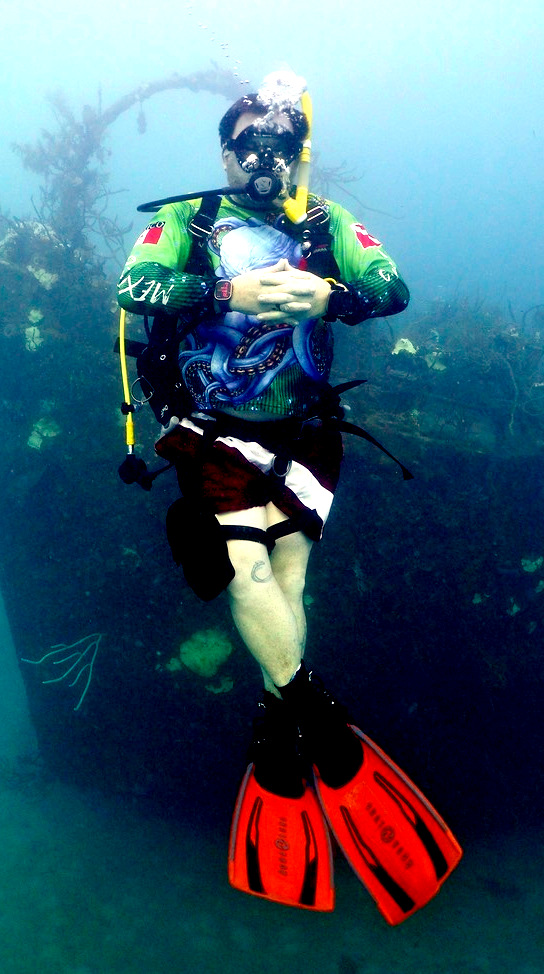
Comfortable underwater does not mean careless. It means calm, present, and no longer fighting the water.
Buoyancy is often deeply connected to this.
People tend to think weighting is purely physics, but there is an enormous human component to it. I’ve seen divers who were convinced they needed huge amounts of weight simply because they were tense and anxious underwater.
Then they finally relax.
They exhale fully.
They stop fighting the environment.
And suddenly they need far less weight than they thought.
I’ve even seen students who initially struggled to descend with one amount of weight, only to later need dramatically more because stress and tension had crept in during the dive. Mentioning anxiety sometimes frustrated them because they thought I meant it clinically.
I didn’t.
I simply meant:
Relax.
Breathe.
Trust yourself a little more.
The water responds to that.
In some ways, divers literally become lighter when they stop fighting the environment.
Measurable Relaxation: How Air Integration Tracks Mental Clarity
Even my dive computer reinforces this idea.
I use an Air Integrated dive computer. “AI” means something very different these days, so that clarification feels necessary.
The computer tracks my breathing and estimates how much gas time I have remaining based on recent consumption.
And every single dive, during those first few minutes underwater, I’m usually breathing harder than normal.
Excitement.
Task loading.
A little tension.
I glance down at my computer and it sometimes acts like I have enough air for approximately eleven minutes and a bad decision.
Then I settle down.
I slow my breathing.
I relax my shoulders.
I stop finning like I’m fleeing a shark.
And gradually, I watch my remaining gas time tick upward and upward and upward as my breathing slows and my body settles into the dive.
The feedback is immediate.
Relaxation underwater is not mystical.
You can literally measure it.
And maybe that is part of why diving affects people so deeply.
The underwater world rewards calm attentiveness.
Modern life rewards frantic fragmentation.
Those are very different states of mind.
Retraining the Attention: Finding Peace in an Uncluttered World
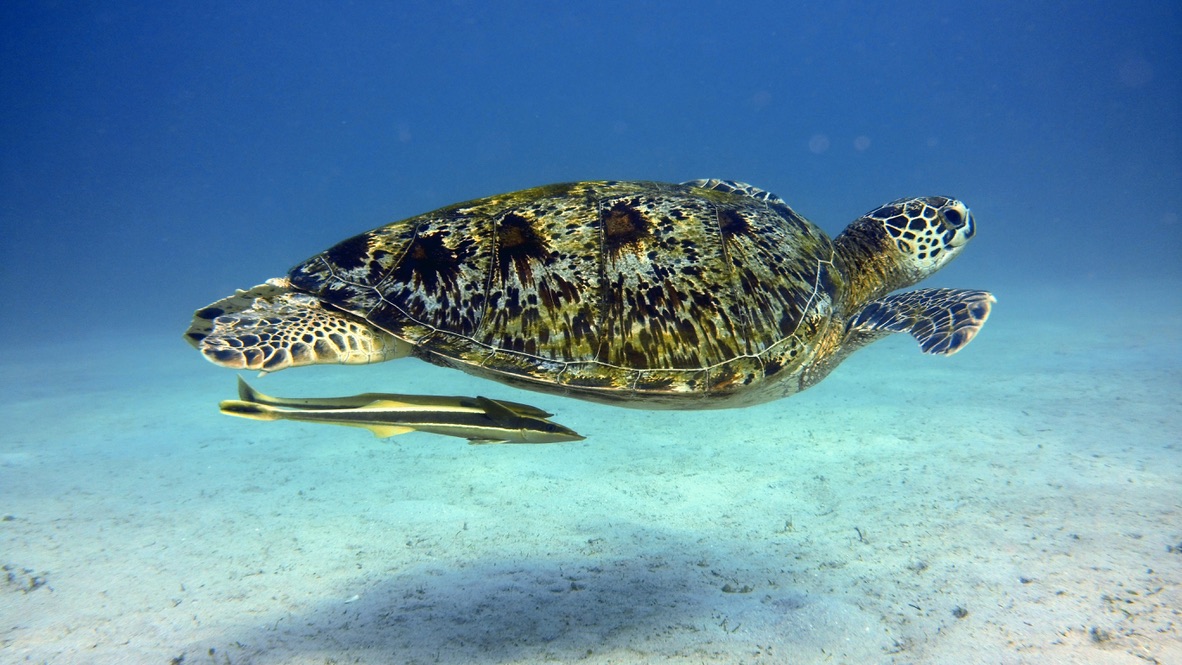
Eventually, even simple moments underwater start feeling extraordinary.
After enough time underwater, something else begins to happen too:
Everything starts becoming interesting.
I remember noticing this years ago.
Tiny fish become fascinating.
Light rays become hypnotic.
Algae swaying in the current starts looking beautiful.
Ripples in the sand become artwork.
Bubbles become mesmerizing.
The underwater world retrains attention.
You slow down enough to actually see things again.
And maybe that is another reason diving resonates so strongly with overthinkers and ADHD brains.
You cannot truly multitask underwater.
The ocean does not care about your inbox.
You move one kick at a time.
One breath at a time.
One moment at a time.
And in a strange way, that narrowing of focus becomes freeing.
Not because the world stopped existing.
But because for a little while, the fake priorities fall away.
The arguments.
The notifications.
The corporate nonsense.
The endless noise.
None of it matters very much underwater.
What matters is your breathing. Your awareness. Your buddy. Your surroundings. Your ability to remain calm and present.
And somehow, inside all of that responsibility and awareness, many divers find peace.
Not escapism.
Presence.
Maybe that’s why so many divers keep coming back.
Not because they want to escape life.
But because underwater is one of the few places left where they feel fully present inside it.








Love your articles Frank. Looking forward to meeting you maybe at one of the drive club meetings.